
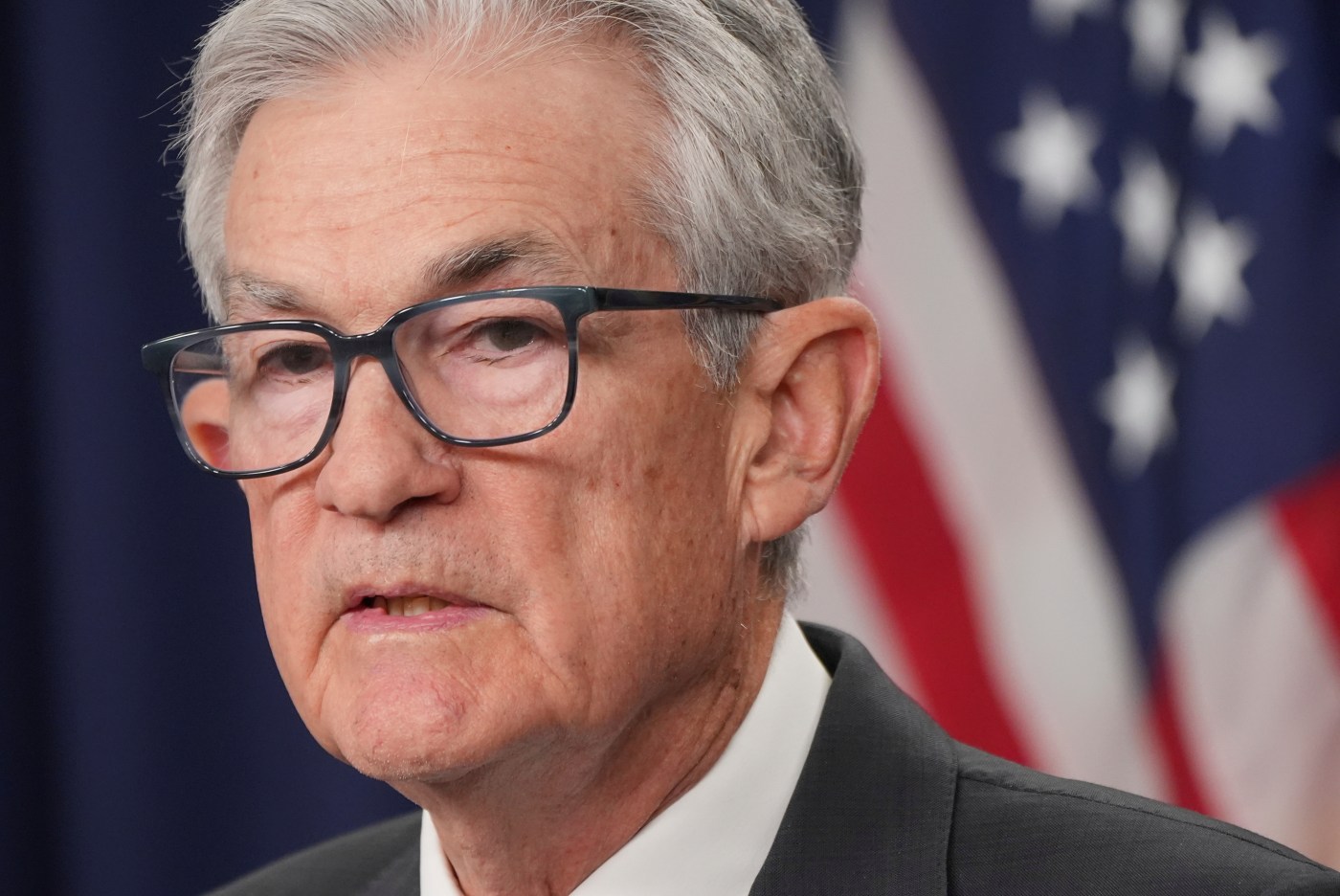
Federal Reserve cuts key rate

WASHINGTON — The Federal Reserve reduced its key interest rate for the third time in a row Wednesday but signaled that it may leave rates unchanged in the coming months, a move that could attract ire from President Donald Trump, who has demanded steep reductions to borrowing costs.
In a statement released after a two-day meeting, the Fed’s rate-setting committee signaled that it may keep its rate unchanged in the coming months. And in a set of quarterly economic projections, Fed officials signaled they expect to lower rates just once next year.
Wednesday’s cut reduced the rate by a quarter-point to about 3.6%, the lowest it has been in nearly three years. Lower rates from the Fed can bring down borrowing costs for mortgages, auto loans, and credit cards over time, though market forces can also affect those rates.
The moved pushed the U.S. stock market near its all-time high. The S&P 500 climbed 0.7% and ended just shy of its all-time high set in October. The Dow Jones Industrial Average jumped 1%, and the Nasdaq composite rose 0.3%.
Three Fed officials dissented from the move, the most dissents in six years and a sign of deep divisions on a committee that traditionally works by consensus. Two officials voted to keep the Fed’s rate unchanged, while Stephen Miran, whom Trump appointed in September, voted for a half point cut.
December’s meeting could usher in a more contentious period for the Fed. Officials are split between those who support reducing rates to bolster hiring and those who’d prefer to keep rates unchanged because inflation remains above the central bank’s 2% target.
President Trump could name a new Fed chair as soon as later this month to replace Powell when his term ends in May. Trump’s new chair is likely to push for sharper rate cuts than many officials may support.
A stark sign of the Fed’s divisions was the wide range of cuts that the 19 members of the Fed’s rate-setting committee penciled in for 2026. Seven projected no cuts next year, while eight forecast that the central bank would implement two or more reductions. Four supported just one.
Only 12 out of 19 members vote on rate decisions.
At a press conference following the announcement of the rate cut, Powell signaled that the Fed may hold off on cutting rates at least in January, and said Fed officials “will carefully evaluate the incoming data,” adding that the Fed is “well positioned to wait to see how the economy evolves.” He did, however, rule out an increase in rates.
“What you see is some people feel we should stop here and we’re in the right place and should wait, and some people think we should cut more next year,” Powell said.
The Fed met against the backdrop of elevated inflation that has frustrated many Americans, with prices higher for groceries, rents, and utilities. Consumer prices have jumped 25% in the five years since COVID.
“We hear loud and clear how people are experiencing really high costs,” Powell said Wednesday. “A lot of that isn’t the current rate of inflation, a lot of that is embedded high costs due to higher inflations in 2022-2023.”
In a delayed report last week, the government said the Fed’s preferred inflation gauge remained high in September, with both overall and core prices rising 2.8% from a year earlier. That is far below the spikes in inflation three years ago but still painful for many households.
In an interview with Politico published Tuesday, Trump said “yes” when asked if reducing rates “immediately” was a litmus test for a new Fed chair. Trump has hinted that he will likely pick Kevin Hassett, his top economic adviser.
Hassett has often called for lower borrowing costs, but this week has been more circumspect. In an interview Tuesday on CNBC, when asked how many more rate cuts he would support, Hassett did not give a specific answer and said, “What you need to do is watch the data.”


More Stories
Massachusetts man pleads guilty to sex trafficking charges
A Lynn man pleaded guilty to sex trafficking vulnerable women across state lines during the pandemic. Anthony Coleman, 36, admitted...
Ticker: Advanced cancer care coming to Central Mass; SpaceX planning IPO
A promising type of cancer care that’s largely been available only in Boston is coming to central Massachusetts. The state...
St. Paul City Council plans to ask POST Board for ‘thorough investigation’ of officers’ use of force
The St. Paul City Council plans to ask the state board that sets standards for officers and licenses them to...
West Virginia National Guard member killed in DC shooting is laid to rest
GRAFTON, W.Va. (AP) — A West Virginia National Guard member who was fatally shot last month in the nation’s capital...
West Virginia National Guard member killed in DC shooting is laid to rest
GRAFTON, W.Va. (AP) — A West Virginia National Guard member who was fatally shot last month in the nation’s capital...
Celtics center fractures hand, ruled out for Bucks matchup
Celtics rookie center Amari Williams will miss at least one game with a hairline fracture in his right hand. Boston...