
Supreme Court weighs Republican appeal to end limits on party spending in federal elections

By MARK SHERMAN, Associated Press
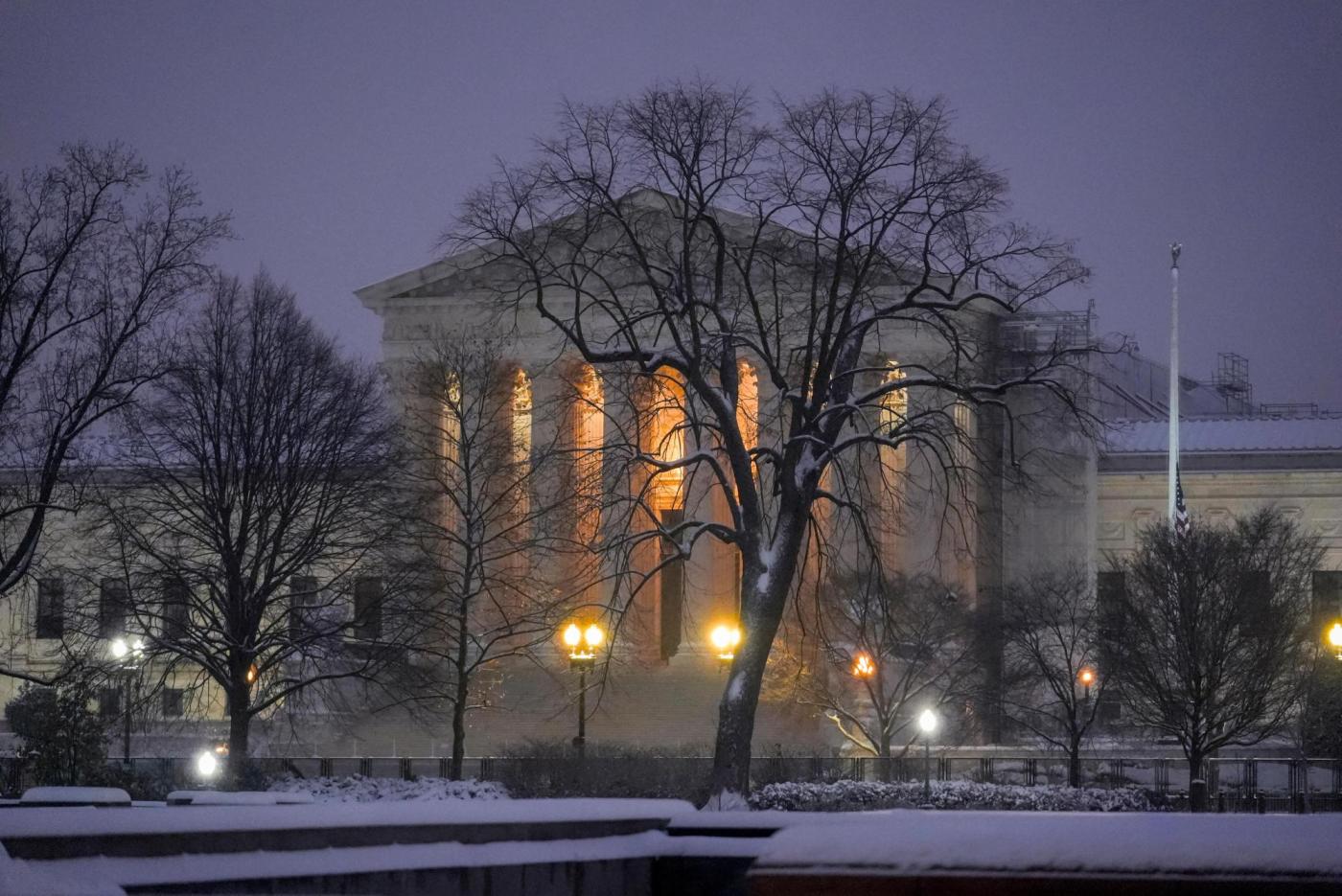
WASHINGTON (AP) — The Supreme Court is considering a Republican-led drive, backed by President Donald Trump’s administration, to overturn a quarter-century-old decision and erase limits on how much political parties can spend in coordination with candidates for Congress and president.
Related Articles
Federal judge throws out Trump order blocking development of wind energy
Justices skeptical of agency independence
Trump says survivors of scrutinized US strike were trying to right boat before 2nd missile was fired
Judge wants whistleblower to testify in contempt probe of Trump official over planes to El Salvador
Former Colorado clerk will remain in state prison after a federal judge rejects her bid for freedom
A day after the justices indicated they would overturn a 90-year-old decision limiting the president’s power to fire independent agency heads, the court on Tuesday is revisiting a 2001 decision that upheld a provision of federal election law that is more than 50 years old.
Democrats are calling on the court to uphold the law.
The limits stem from a desire to prevent large donors from skirting caps on individual contributions to a candidate by directing unlimited sums to the party, with the understanding that the money will be spent on behalf of the candidate.
The Federal Election Commission and the GOP argue that the court should cast a skeptical eye on the limits, in line with recent high court decisions. Led by Chief Justice John Roberts, a conservative majority has upended a variety of congressionally enacted limits on raising and spending money to influence elections. The court’s 2010 Citizens United decision opened the door to unlimited independent spending in federal elections.
After the Trump administration joined with Republicans to ask the court to strike down the campaign finance law, the justices appointed a lawyer to defend it.
Roman Martinez, an experienced Supreme Court advocate, is offering the justices a way out of the case without deciding anything. Instead, they should hold the case is moot now that the FEC agrees with Republicans that the law is unconstitutional and there is “no credible risk” the agency will try to enforce it, Martinez wrote.
The Republican committees for House and Senate candidates filed the lawsuit in Ohio in 2022, joined by two Ohio Republicans in Congress, then-Sen. JD Vance, now vice president, and then-Rep. Steve Chabot.
In 2025, the coordinated party spending for Senate races ranges from $127,200 in several states with small populations to nearly $4 million in California. For House races, the limits are $127,200 in states with only one representative and $63,600 everywhere else.

More Stories
Roadchef secures 75-year leases to unlock £300m motorway investment
Roadchef is set to invest more than £300 million across its network after securing 75-year lease extensions on five key...
UK warned it will rely on US gas as calls grow to boost North Sea output
Britain risks becoming heavily dependent on US gas imports within the next decade, prompting renewed calls for increased North Sea...
Oracle cuts thousands of jobs as Ellison doubles down on AI investment
Oracle has begun cutting thousands of jobs as it accelerates a costly push into artificial intelligence infrastructure, with analysts warning...
Marmite and Hellmann’s to join us giant in £50bn flavour deal
Unilever has agreed a £50 billion ($66 billion) deal to combine its food brands with McCormick & Company, placing household...
Inheritance tax overhaul sparks backlash as family firms warn of lasting damage
Family business owners across the UK have warned that sweeping changes to inheritance tax rules risk undermining long-term growth, forcing...
NI pension cap risks hitting middle earners hardest, analysis warns
Fresh analysis suggests the government’s proposed £2,000 cap on National Insurance relief for pension contributions could disproportionately affect middle-income workers,...