
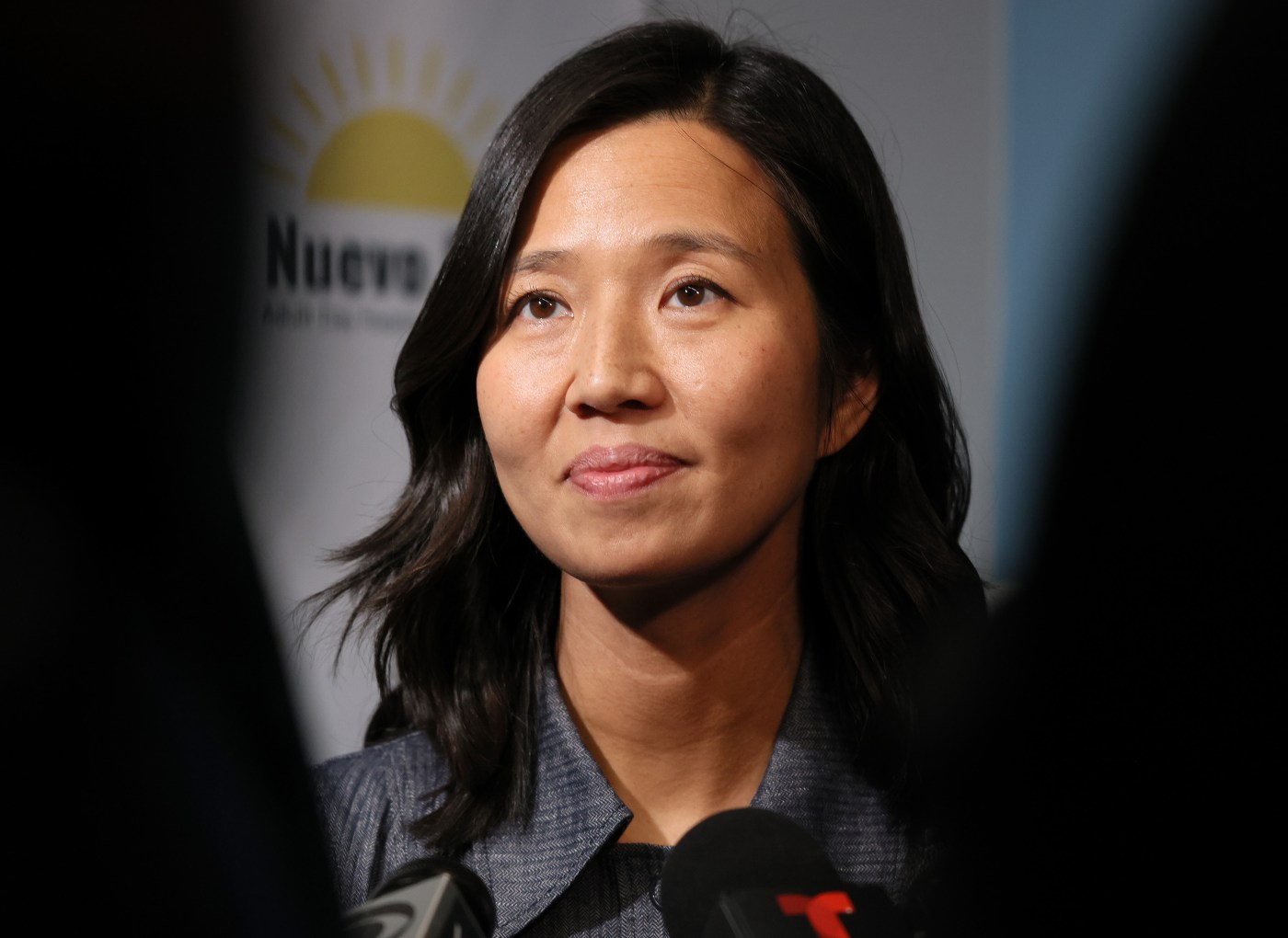
Editorial: Solving Boston’s tax burden is Wu’s great white whale

Next year’s predicted 13% tax increase on single-family homeowners in Boston is appalling and unacceptable.
It’s also the reality of our post-COVID times.
That figure was projected last week by the city and confirmed by the state Department of Revenue, Boston Mayor Michelle Wu’s office said.
That increase comes with a proviso, according to Wu: homeowners will see a double-digit property tax increase for a second straight year unless state lawmakers approve the stalled tax shift legislation the mayor’s been pushing for nearly two years.
The scenario isn’t exclusive to Boston: after the COVID shutdowns, cities across the country have seen a commercial collapse, with empty office buildings the new normal. Commercial property values drop, tax revenue falls, and cities pay the price.
According to Bloomberg, commercial building values in Boston are on track to fall another 6% in fiscal 2026. Meanwhile, the housing crisis and high demand vaults residential property values higher.
Wu once again is pushing legislation to increase commercial tax rates to ease the residential burden. It hit a wall in the Senate last year, with opponents citing the hit higher taxes would deliver to the business sector.
Wu is at the “damned if you do, damned if you don’t” period of her tenure.
Here’s where Gov. Maura Healey could offer an assist.
Remember when Massachusetts misspent about $2.5 billion in CARES Act funds (under former Gov. Charlie Baker)? We have to pay that back, and Healey negotiated a deal with the Biden administration to repay $2.1 billion over 10 years. Some of that payback will be covered by employers.
Just what they need. If Wu’s tax shift makes it this year, it’s even more reason for businesses to give the Bay State a wide berth.
New York Gov. Kathy Hochul also faced an enormous federal UI loan debt, yet in August announced that the state was paying it off through its FY26 budget.
Healey should do the same, using the state’s Rainy Day Fund, which stands at $8 billion. With commercial property values falling, tax revenues dropping and a residential sector under the gun to pick up the tax slack, we’re in the middle of a storm.
Should Wu’s tax-shift plan make it through the Legislature this time, the specter of a halted spike in UI rates for businesses could send the message that Massachusetts isn’t pushing the business community under the bus.
That’s vital right now. Last week, SynQor, a company that builds power converters for the military and other industries, alerted state labor and workforce officials that it will leave its Boxboro HQ and relocate to New Hampshire early next year.
They aren’t the first, and unless the state can ramp up enticements to keep companies here, they won’t be the last.
If Wu’s tax shift goes through it would solve the problem somewhat for residential taxpayers, for now. But then there’s next year, and the year after, and unless there’s an economic miracle in the wings, we’ll be struggling to bail out both businesses and residents from rising taxes amid slipping commercial revenues.
The Boston tax burden dilemma is a symptom. The state needs to find the cure.
Editorial cartoon by Gary Varvel (Creators Syndicate)


More Stories
Miles de enfermeras de NY prevén huelga si no llegan a un acuerdo con los hospitales
Por JENNIFER PELTZ NUEVA YORK (AP) — Miles de enfermeras en algunos de los hospitales más grandes de la ciudad...
Elina Svitolina vence a Wang Xinyu en Auckland y gana su 19no título de la WTA
WELLINGTON, Nueva Zelanda (AP) — Elina Svitolina se dirige al Abierto de Australia con su 19mo título de la Gira...
Incendios forestales en sur argentino ya consumen 12.000 hectáreas y acechan a poblaciones
MONTEVIDEO (AP) — El avance del fuego sobre los bosques en la Patagonia argentina alcanzó casi 12.000 hectáreas y 78...
Equipos de rescate ingresan a barrio devastado por combates en Siria
Por GHAITH ALSAYED ALEPO, Siria (AP) — Los residentes comenzaron a regresar el domingo a un barrio en disputa en...
Youth hockey reunion with Wild produces Ben Jones’ first goal
Minnesota Wild fourth-liner Ben Jones found himself in some unfamiliar territory late Saturday, as a crowd of media packed in...
AC Milan extiende racha invicta a 18 partidos con empate tardío ante la Fiorentina
MILÁN (AP) — Christopher Nkunku anotó el gol del empate a los 90 minutos y el AC Milan extendió su...