
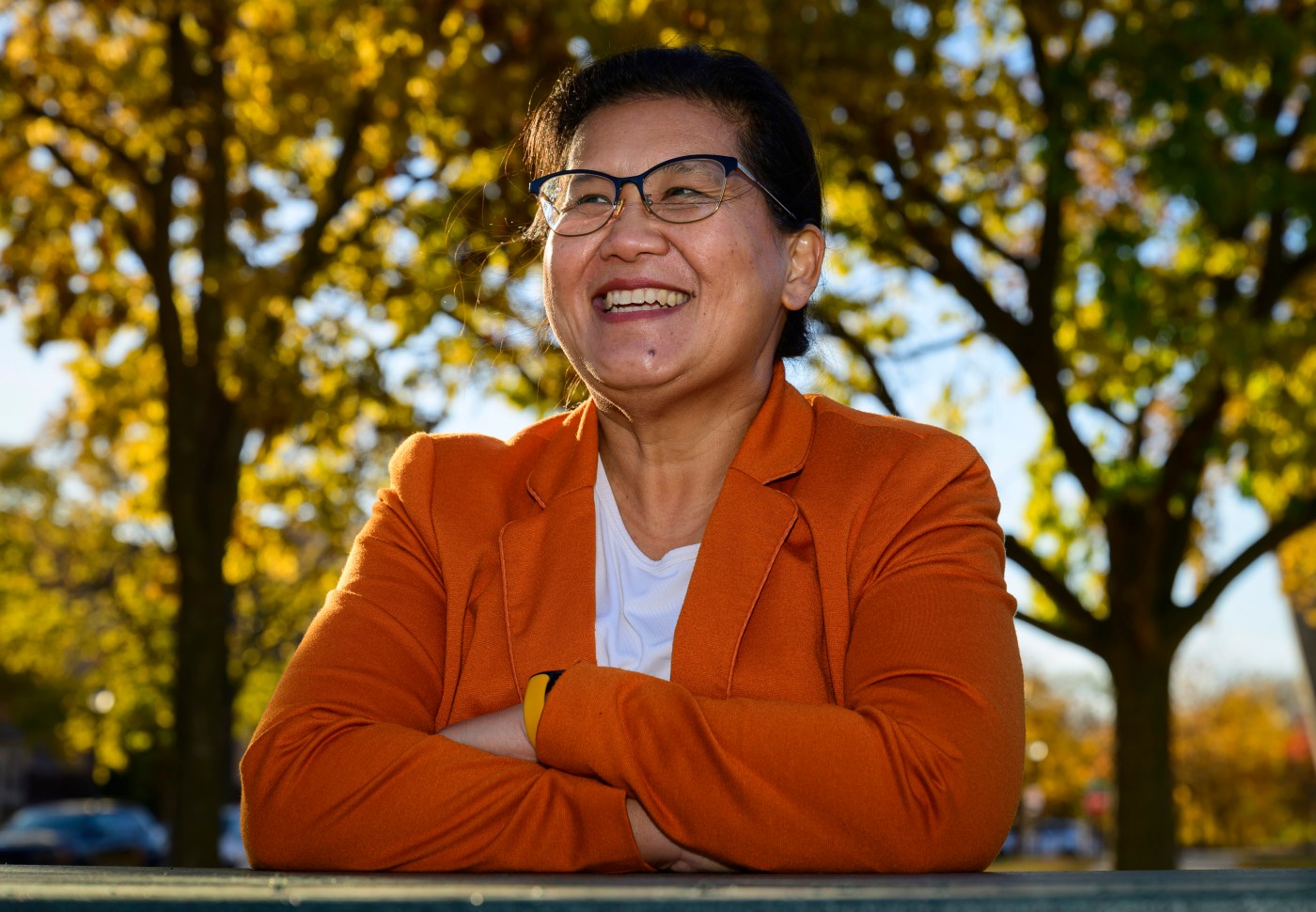
What should St. Paul Mayor-elect Kaohly Her focus on in 2026?

When former state representative Kaohly Her moves into the St. Paul mayor’s office next month, she’ll have an especially short amount of time to get comfortable in the corner office and pursue her own agenda. The newly elected mayor will serve three years, instead of four, as a result of the city’s switch to even-year elections in 2028.
Her, who worked for St. Paul Mayor Melvin Carter as a policy director eight years ago, unseated Carter in the November election on the promise of returning more phone calls, forging better relationships with the county and other city partners, re-evaluating major projects like the Summit Avenue bikeway, and putting a greater focus on the nuts and bolts of city services, from state lobbying to business permitting.
In addition to the many challenges surrounding downtown St. Paul, the backdrop of rising property taxes did the outgoing mayor no favors, especially when coupled with the diminishing appeal of neighborhood business corridors like Snelling and University avenues, which lost a 24-hour Cub Foods grocery and a CVS store.
During the campaign, the St. Paul Area Chamber’s political action committee declined to endorse any candidate, calling out a “sense of stagnation” around key questions, including tax issues and declining commercial property values.
Department heads, staff
Among Her’s first orders of business will be to pick department heads. Incoming mayors have wide latitude to retain or replace whichever directors and deputy directors they choose, as well as other Cabinet-level staff, and Her has kept her decisions to date close to the vest. Some directors have said they have no illusions that big changes are likely, and they’re already on the hunt for new opportunities outside City Hall.
While Carter chose to assemble citizen review panels to help advise him on hiring, Her’s communications director Matt Wagenius said the mayor-elect does not plan to copy that strategy. The makeup of Her’s transition team — drawn from a mix of campaign staff, former state Capitol workers and recent city and county employees — may still offer some clues as to her leanings.
Transition team co-leader Erica Schumacher is a former City Hall employee and director of strategic initiatives and community relations with the Ramsey County Attorney’s office. Hnu Vang, Her’s campaign manager, previously worked for former House Majority Leader Ryan Winkler, state Sen. Foung Hawj, former U.S. Rep. Dean Phillips and in the office of U.S. Rep. Angie Craig.
Transition adviser Nick Stumo-Langer, who had been the incoming mayor’s deputy campaign manager and operations director, previously served as a committee administrator for the Minnesota House DFL Caucus, a former campaign manager for state Rep. Brion Curran, policy associate for former Minneapolis City Council member Steve Fletcher and communications manager for the Institute for Local Self-Reliance.
Previous choices
It’s uncertain how far they’ll cast their net in looking for top staff. Rather than promote internal candidates, Carter often tended to look outside of City Hall, though often not too far outside, to tap rising leaders from the city’s nonprofits, labor unions, universities and external government entities.
That search drew Sean Kershaw, a nonprofit manager, as director of the city’s Department of Public Works; Jon Grebner, a former labor organizer with AFSCME Council 5, as the mayor’s political director; and Concordia University economist Bruce Corrie and later Nicolle Goodman, an economic development professional from Oklahoma City, to run the city’s Department of Planning and Economic Development. Goodman recently stepped down, leaving the position in the hands of interim director Melanie McMahon.
Deputy Mayor Jaime Tincher was previously chief of staff to Gov. Mark Dayton. City Attorney Lyndsey Olson had been general counsel with the Minnesota National Guard.
Not all of Carter’s picks were external. When he first took office, Carter chose to retain Parks and Recreation Director Mike Hahm, and later appointed longtime Parks and Rec staffer Andy Rodriguez to the role after Hahm stepped down. The mayor also appointed Russ Stark, who was city council president at the time, to the position of chief resilience officer, a kind of environmental policy director for the city. John McCarthy, who recently left City Hall, was promoted from within his department as finance director.
In 2022, Carter promoted St. Paul Police Cmdr. Axel Henry, then a 24-year veteran of the department, to the position of police chief following the retirement of Todd Axtell. Butch Inks, who joined the city in 1985, became acting director of the St. Paul Fire Department on Jan. 1, 2018, just as Carter was assuming office. The mayor appointed him fire chief in November 2019.
Determining who will lead the fire department now falls to Her, who had been endorsed in her campaign by St. Paul Professional Firefighters Local 21 and the Minnesota Professional Firefighters. Inks — who like Henry had taken a pay cut from the unionized position of commander to assume the role of chief — recently announced his decision to retire following shoulder surgery.
‘Reprioritization’ of major projects
City Council President Rebecca Noecker said she expects there will be a reevaluation and “reprioritization” of major projects, as well as greater outreach to state lawmakers and Metropolitan Council.
“What I’ve seen over the last few years is ‘it’s easier to do the work alone, so let’s just do that,’ and that’s not sustainable, especially at a time when we’re not getting the federal resources we’re used to,” Noecker said.
She hoped the administration will take a hard look at funding for Como Zoo and Conservancy, which has been an annual budget challenge, as well as payment-in-lieu-of taxes study for nonprofits, universities and other nontaxable properties.
“I’m hoping this administration moves with more urgency (in a few key areas) … rather than trying to do everything, and waiting for it to be perfect before it can be done, or before we could even talk about it,” she added.
Advice from voters
Once leadership is determined, what should Her focus on in her first year as mayor? The question, posted to social media, drew a wide range of responses recently.
Raks Pham, manager at Tuan Auto Repair in the Midway: “Drugs, taxes, light rail reform, plans to get more business to St. Paul, (the) homeless issue.”
Jack Nilles, English teacher: “Solving the copper theft issue and getting the street lights on again.”
Matt Doll, environmental advocate: “I would love to hear her clarify her stance on the Summit (Avenue) project. The city has done a lot of work to make the avenue safe for pedestrians and cyclists after the (proposed) reconstruction, and I hope to hear that this work will proceed as planned.”
Benjamin Park, former minister: “Fix Snelling and University.”
Malik Davis, firefighter and fitness studio owner: “(Incentivize) private investment to bring business or buy rental property, which will increase tax base. Offer pay incentives for police and firefighters to live in the city. … Open the unused armory on Maryland Avenue as a shelter. Continue the push to monitor light rail trains and platforms. Reduce taxes. Create a paid trades program that offers low-cost repairs to the elderly. … (Get) tougher on loitering and encampments in public areas.”
Mark Lentsch, Realtor: “Cut all city grass on boulevards. Paint the lines in the streets. Repair the potholes. Move the through-streets back to 30-mile-an-hour speed limits. Hire employees that actually live in St. Paul. Thin out unnecessary administration/staff. Require the city council to attend all their meetings. Enforce the State Fair parking district. Make sure all the lights lining the streets are repaired and working. Property tax credit for households that choose private schools.”
Rich Neumeister, open-government advocate: “Transparency and engagement.”
Shawn Rounds, archivist: “Bring property taxes down. Give resources to the Midway to clean up the streets (literally, so much garbage) and revitalize the area without more pandering to stadium interests. Also would like to see her lead a re-evaluation of the Summit Avenue bike lane project as she indicated should happen. It’s so controversial, I think a fully transparent assessment process is needed.”
Rick Linsk, former assistant Minnesota attorney general, data journalist and Pioneer Press reporter: “I would say focus on the obvious and consensus items: Streets/infrastructure. Public safety. Budget and tax discipline. Downtown revival. City communications both internal and external. That’s plenty right there.”
Matthew Torgerson, licensed attorney and legal editor: “She needs to either outright cut programs and costs or reappropriate general fund money to the more pressing needs of the city. She needs to perform a triage to identify the city’s greatest needs. I think police staffing and police presence throughout the city is the greatest need.”
Kristin Baker: “Property taxes. Listen to ALL residents about the threat of the Trump regime and the violent response of the St. Paul Police Department as neighbors stood up peacefully against federal agents and their violent responses as they were waiting to get a warrant.”
“Nick T” aka @talltreesgrove.bsky.social via Blue Sky: “Police lost a lot of good will in past few weeks. Right that ship ASAP or other issues … will be unable to improve.”
Christian Peter, cycling advocate: “Integrating implementation of the citywide bike plan into all levels of Public Works, even all skimming, mill and overlay, and resurfacing work to cut costs instead of having to go back and fix non-implementation. West Seventh Bus Rapid Transit implementation ASAP. Better sidewalk plowing implementation across downtown and emergency corridors. Zoning reforms to speed multi-dwelling unit housing.”
Related Articles
Here are the 2026 Winter Carnival buttons, designed by pointillist illustrator Randall Peterson
Broke for the holidays? 10 ideas to turn thrifting into gifting in St. Paul
Joe Soucheray: Walz can’t — or won’t — explain the fraud under his watch
They met at a St. Paul hospital. After emerging from comas. They’re getting married.
St. Paul issued 3,253 tickets, 952 tows during recent snow emergency
Dillon Donnelly, a former member of the city’s Business Review Council: “Affordability: how can we help the working class? Housing: quickest wins to kick-start new development. Downtown: (Grand Casino) Arena, housing funding — what’s the plan? Safety: downtown, light rail, etc. Government efficiencies: (evaluating) permitting (and) low return-on-investment programs.”
“Irish,” aka @WhileTurning via X: “Fentanyl, and is there any action on a grocery store opening in the old Lunds location downtown?”
More Stories
Middle East war triggering global energy ‘shock’ – IMF
Disruptions to oil and gas supplies will leave lasting “scars” on the world economy, managing director Kristalina Georgieva has said...
What is fueling unrest across the EU?
The bloc is facing an energy crisis due to the Strait of Hormuz disruption, with soaring diesel prices triggering protests...
OECD urges reeves to overhaul ‘inefficient’ UK tax system
Rachel Reeves has been told by one of the world’s most influential economic bodies that Britain’s tax system is holding...
Easter lifts footfall but retailers brace for April cost squeeze
Britain’s high streets enjoyed a welcome lift last month as an early Easter drew shoppers back through the doors, but...
Google takes on Opentable with AI that books your dinner in seconds
Google has fired the opening shot in a battle for Britain’s restaurant booking market, rolling out an artificial intelligence tool...
Retail backers of SEIT face wiping out half their money as green trust raises the white flag
Thousands of small investors who piled into one of London’s best-known green investment vehicles are staring down the barrel of...