
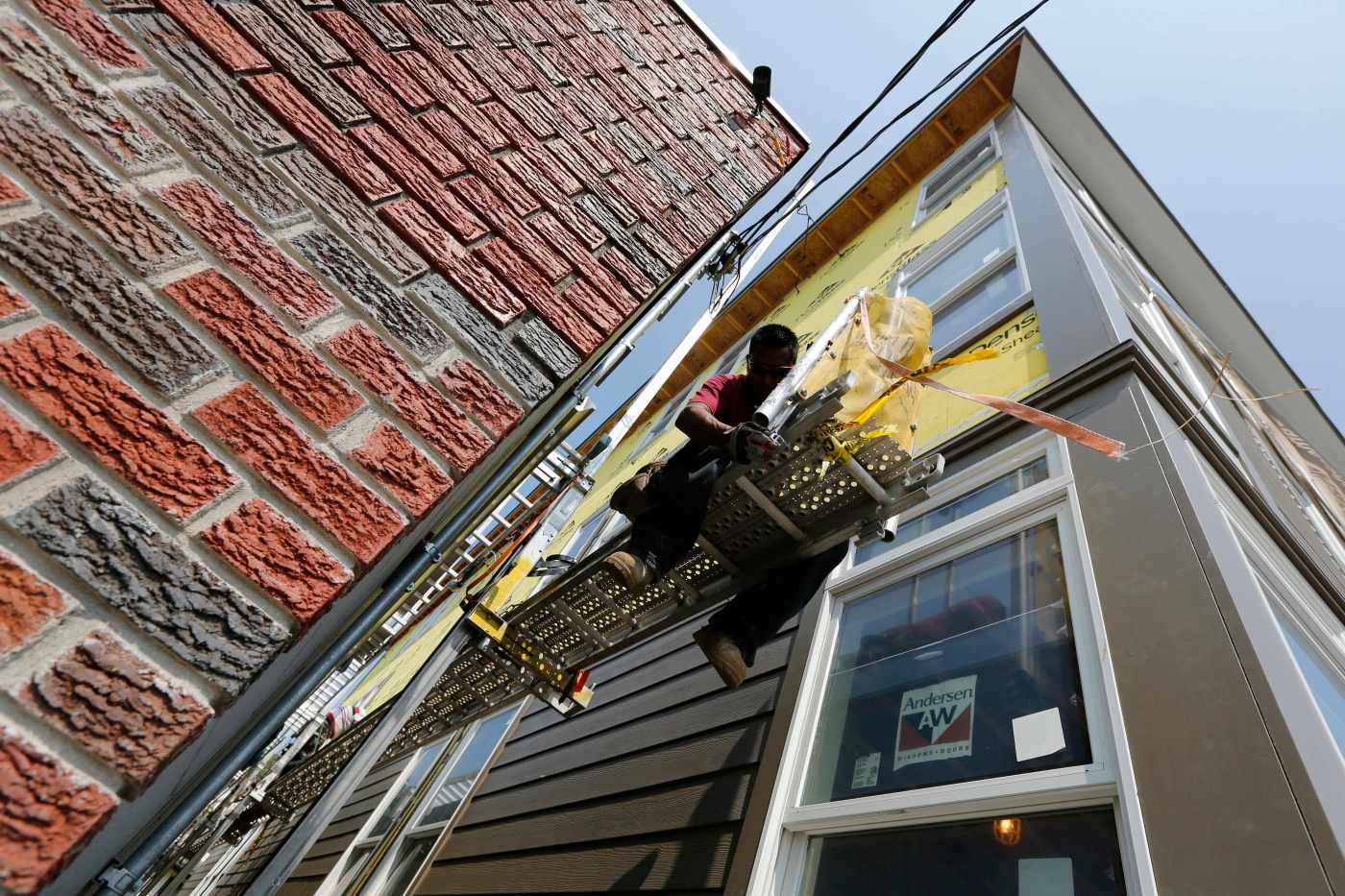
Study: Red tape hampering accessory apartment construction in Massachusetts

A new study has found that despite the statewide legalization of accessory dwelling units (ADUs) in 2024, production remains critically low as Massachusetts remains in the top five U.S. states for outmigration.
Small homes located on the same property as larger, primary dwellings, ADUs provide another opportunity for housing as Massachusetts continues to experience a housing shortage. Homeowners can use backyard cottages or convert garages, basements and attics into ADUs, that is, if government red tape doesn’t get in the way of any production.
The study, conducted by the Pioneer Institute, blames local zoning and permitting practices that discourage development. While the state estimates that it needs 222,000 new housing developments over the next decade, the Institute found that only 550 ADUs were permitted in the entire first half of 2025.
“Without actionable policy changes, young people will continue to leave Massachusetts in droves and many older adults will be trapped in large homes that no longer suit their needs,” said Andrew Mikula, Senior Housing Fellow at the Pioneer institute. “The state needs to keep iterating on its recent reforms to expand opportunities for homeowners to build ADUs.”
“There might be some legislative fatigue on the part of zoning in Massachusetts between ADU legalization and before that the MBTA Communities Act. But, I think that ADUs are a minimally destructive, incremental way of building new housing and solving our housing challenges that keeps the results, the solutions, close to where the demand is generated from. Its people who are identifying the needs among their own family members or friends or community members and responding. We need more of that to get to a place where we can solve this problem.”
Mikula adds that California by contrast saw high ADU production because of zoning reforms enacted in 2016, most notably of which allowed property owners to convert existing structures to ADUs by right.
Other reforms in California allowed ADUs in new construction, allowed multiple ADUs per property, and enacted a required, set timeline for municipal agencies to review permit applications. The Pioneer Institute says that a quarter of the new homes permitted in California are ADUs, with over 30,000 receiving a permit last year.
“I’d like to see us follow in the footsteps of California, Washington state and most recently Arizona and some others in making it even easier for homeowners to build ADUs in their backyard,” Mikula said. “Its much more preemptive there (California) as opposed to it being kind of contextual here.”
Other housing advocates say three attributes will lead to more ADU production in Massachusetts: by-right permitting, minimizing off-street parking requirements, and allowing non-owner-occupied arrangements. Massachusetts currently prohibits “unreasonable requirements” for ADU development.
Buz Artiano, who owns the Carver-based custom ADU developer BuildX, says while he applauds the state’s new ADU regulations as “a massive step forward for homeowners who want to keep their extended families close by,” he is also calling on lawmakers to do more.
“Setbacks and septic rules kill a lot of potential projects, and permits are hard-won in some communities. Lawmakers could be doing a lot more to improve predictability and lower costs,” Artiano said.
The study also says that in order for all of Massachusetts to reach its housing goals, Boston must develop ADUs at a much faster pace.
“When your largest city is behind the curve, I think that leads to a vote of no confidence from the lenders, who are trying to find a way to finance this stuff,” Mikula said. “It’s almost like an accident of institutional history in that Boston has its own Zoning Enabling Act under state law“
Pioneer says on the West Coast, ADU development is heavily concentrated in cities, with Seattle accounting for 9.6% of Washington’s population but accounting for at least 40% of the ADU permits issued between 2011 and 2023. Between 2016 and 2022, the Institute says Los Angeles permitted 22 times more ADUs on a per capita basis than Boston has in the last six years.
The Pioneer Institute also recommends cities and towns do away with parking requirements, that the state allow ADUs to be sold separately from the principal dwelling on a property, that the state remove the special permit requirement for multiple ADUs on a lot, and that lenders require ADU training for appraisers so units can be cataloged and valued.


More Stories
From Scotland Yard Commander to Global Security Entrepreneur: Dr Ali Dizaei’s Leadership Story
There are career journeys that follow a straight line, predictable, uniform, and comfortable. And then there are journeys shaped by...
The Naughty AI President: A New Age of Governance
In the race to build better systems of governance, humanity has always chased an impossible ideal: the perfect ruler. Rational,...
Sends shares Q1 2026 business update and product progress
Sends reported Q1 2026 updates sharing news on digital cards, app redesign, ClearBank integration, and fintech industry recognition. Sends, a...
Government doubles down on gaming with £30m funding package as sector eyes global growth
The government has fired the starting gun on a £30 million funding offensive aimed at Britain’s video games sector, urging...
Rising energy costs from Middle East conflict set to leave UK households £480 worse off this year
Rising energy costs triggered by the escalating Middle East conflict are on course to strip nearly £500 from the finances...
UK firms risk being left behind as AI adoption gap widens, warns PwC
British businesses are in danger of being left stranded in the middle of the pack on artificial intelligence, with a...