
Collins: Treatment first best strategy for Mass and Cass

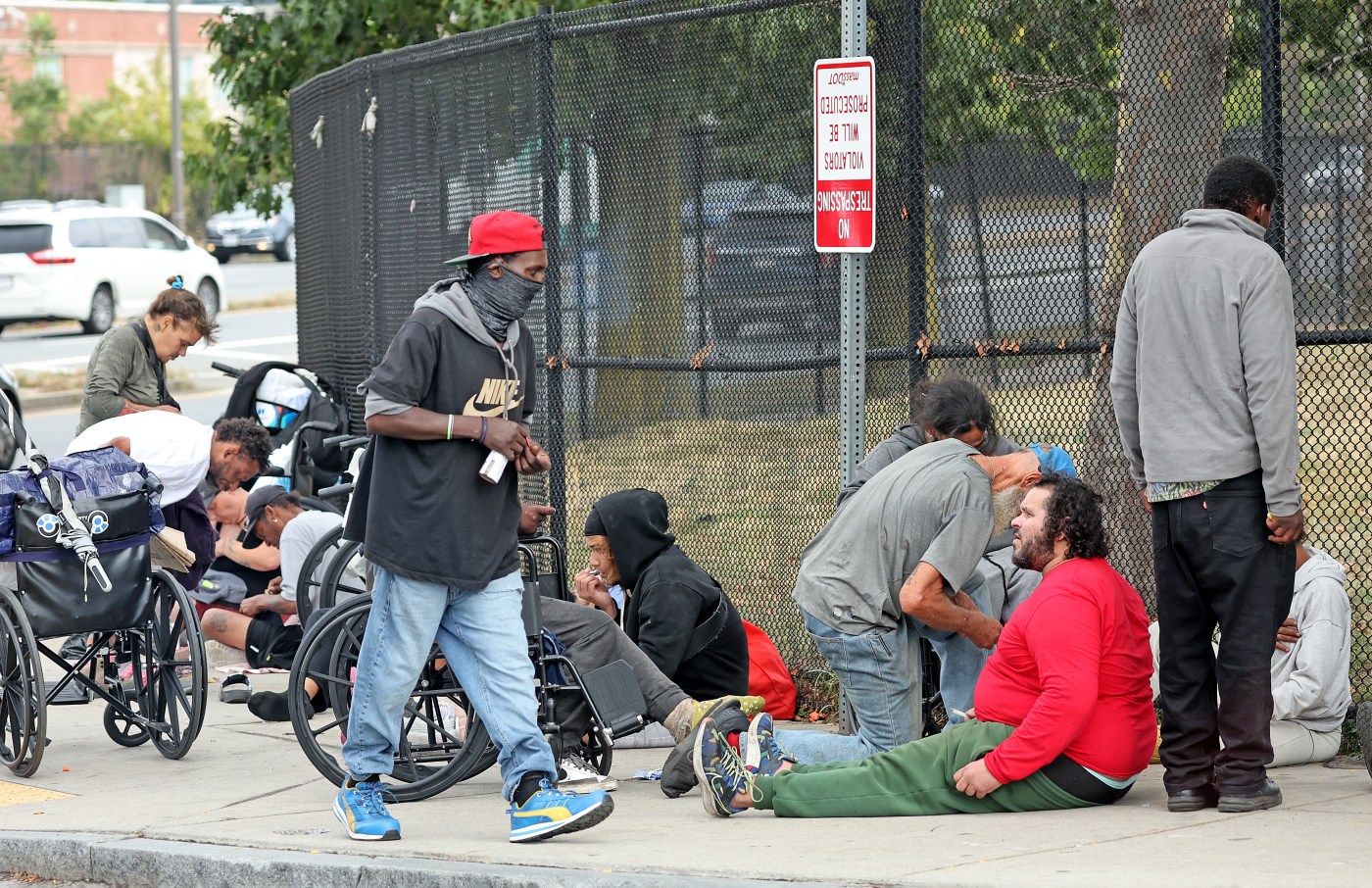
Representing the First Suffolk District, the most diverse in Massachusetts, means my office hears it all. From Chinatown to Dorchester, from the South End to South Boston, we’re exposed to the full spectrum of issues affecting our city. But no matter the neighborhood, one concern rises above the rest. Quality of life complaints tied to the ongoing drug and human trafficking crisis come in every single day. At the center of it all is Mass and Cass.
This one intersection has become the epicenter of a public health and public safety emergency. The impact doesn’t stop there. It ripples into the South End, South Boston, and the Downtown area. Constituents reach out constantly about open-air drug use, violence, and hazardous conditions. At neighborhood meetings, the subject is a near-constant presence — an evergreen topic that reflects how deeply this crisis affects daily life across the district. They are not lacking in compassion. But they are tired. And they are right to ask why the system keeps failing.
Two recent events have shone a bright light on just how far this crisis has spread. In one, two Boston Globe journalists trying to report on Mass and Cass were harassed and threatened. In the other, a young child in South Boston stepped on a discarded needle. He and his family are now left dealing with the aftermath, a terrifying experience no parent should ever have to endure. What once felt contained to Mass and Cass is now reaching farther into our neighborhoods.
While it’s frustrating to see the issue only gain attention when these kinds of stories make headlines, we should use this moment to push for something better, a new approach to treatment and a smarter, more compassionate system of care.
Our current system of involuntary commitment for substance use disorders is broken. Under Section 35 of Massachusetts law, a family member, doctor, police officer, or court official can petition a judge to mandate treatment for someone whose substance use puts themselves or others at risk. It was intended to be a tool to save lives — a last resort for those in crisis. But in practice, it often cycles people back onto the street without a plan. Boston sees about 2,500 overdose deaths each year. Section 35 petitions have dropped nearly 40% since 2017. That decline is not a sign of progress. It reflects a loss of confidence among families and care providers in a system that no longer delivers results.
That is why I filed An Act Relative to Life-Saving Treatment (S.1042). This bill offers a clear, compassionate and comprehensive fix to how involuntary commitment is handled in Massachusetts.
It strengthens the process in three essential ways. First, it allows individuals facing involuntary commitment to attend their court hearings remotely. This removes a major logistical and emotional barrier during moments of serious medical or psychiatric crisis. Second, it requires that anyone who survives an overdose and is admitted to a hospital must be evaluated by a licensed social worker before discharge. This gives us a chance to intervene when it matters most. Third, it ensures that early discharges from court-ordered treatment must be approved by the judge who issued the commitment. That oversight helps people stay in care long enough to make recovery possible.
This is how we combine compassion with accountability. We stop treating substance use disorder like a short-term event and start addressing it like the chronic condition it is.
We are also backing these reforms with real investment. The FY26 state budget includes a $1.8 million increase in diversion training, administered by the Department of Mental Health, to help local police departments respond more effectively. This includes crisis intervention training, education on de-escalation, and co-response strategies that send clinicians with officers on emergency calls. These programs reduce unnecessary arrests, ease pressure on emergency rooms, and connect people to treatment instead of jail.
We are also advancing a broader plan to rebuild long-term treatment infrastructure, including a floating hospital proposal inspired by an MIT study that calls for a treatment facility in Boston Harbor. This could be fully equipped to address both acute and chronic health needs. It would offer primary and specialty care, mental and behavioral health services, dental care, and temporary housing with wraparound support, all in a safe and secure setting that includes food services, recreational spaces, and onsite clinical staffing.
This idea isn’t without precedent. In 1894, Boston launched the original Floating Hospital, a pioneering initiative that brought medical care to poor children aboard a ship in the harbor. That program helped reduce infection rates and extended compassionate, community-focused care to some of the city’s most vulnerable residents. The concept worked then. With modern capacity and coordination, it can work now.
We need an option that can be online quickly and sustain service until a long-term facility on Long Island can be built, or until a site like the Shattuck Hospital can be reimagined to provide the kind of comprehensive medical coverage this crisis demands. A floating facility would give us the space, flexibility, and controlled environment to reach people who need care but cannot safely remain on the streets.
None of this is theoretical. These proposals have strong support from both neighborhood organizations and frontline service providers who have lived with the consequences for years. Groups like the Andrew Square Civic Association (ASCA), the West Broadway Neighborhood Association (WBNA), and the South End Forum have all endorsed this legislation. So have trusted nonprofits such as the Gavin Foundation and the South Boston Collaborative Center, who know what real recovery requires. They see what’s broken, and they believe this bill moves us toward something that actually works.
We have the legislation. We have the support. Now we need the will.
Let’s stop waiting for headlines to force our hand. Let’s act now, pass this bill, and prove that we can meet this crisis with the urgency and humanity it demands.
Nick Collins is the senator for the First Suffolk District in Boston

More Stories
Anchr raises $5.8M to bring AI-native automation to America’s food supply chain
US startup Anchr has secured $5.8 million in seed funding to develop what it describes as the first end-to-end AI-native...
New billionaire class emerges in Russia
Eight of the nine Russians to join the list of the world’s richest made their money in food production Russia...
Dragons’ Den success story Piddle Patch wins landmark trademark infringement case
The eco-friendly pet brand Piddle Patch, which rose to national prominence following an appearance on Dragons’ Den, has won a...
Volkswagen to slash 50,000 jobs in Germany
The auto giant’s profits fell by almost half in 2025 The EU’s largest automaker, Volkswagen (VW), has announced that it...
Anthropic sues US government after being labelled a ‘supply chain risk’ in AI dispute
Artificial intelligence company Anthropic has filed an unprecedented lawsuit against the United States government after being formally labelled a “supply...
UK job vacancies fall at slower pace as service sector picks up
The decline in UK hiring may be beginning to stabilise after new data showed a slowdown in falling job vacancies...