
Analysis: What’s next for Red Sox, Lucas Giolito after option declined?

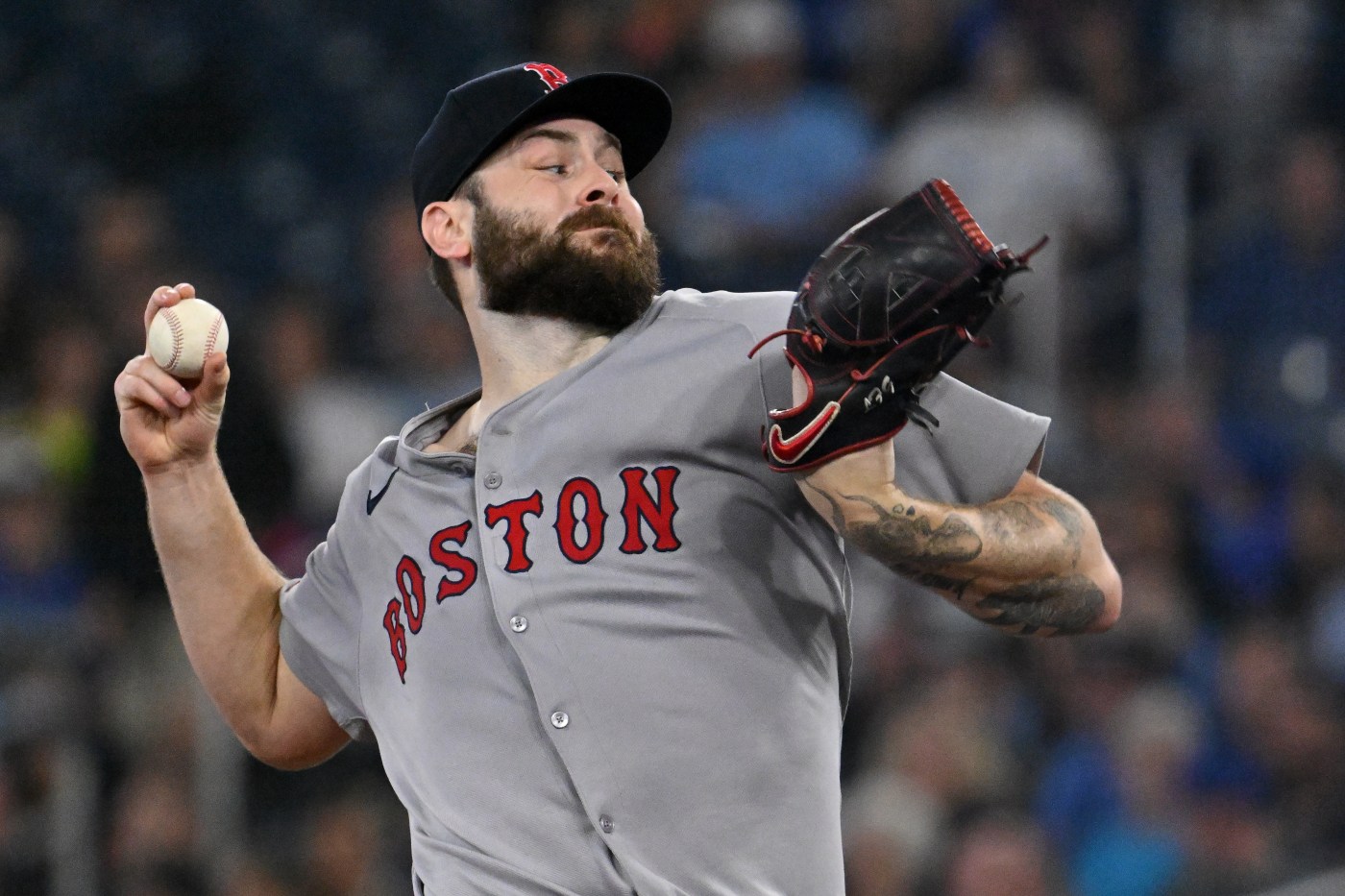
Lucas Giolito is officially a free agent. The Red Sox right-hander hit the open market after his mutual option was declined, allowing the 31-year-old another crack at landing a long-term deal that could carry him into his mid-30s.
But that doesn’t mean he couldn’t still come back.
Related Articles
Red Sox right-hander becomes free agent after club declines mutual option
Source: Red Sox shortstop opting in to final two years of deal
Red Sox agree to new one-year deal with Jarren Duran
Red Sox stars among finalists for Cy Young Award, Rookie of the Year
Report: Red Sox third baseman officially opts out, will become free agent
Giolito’s future is one of the most fascinating questions facing the Red Sox this offseason. The veteran was an indispensable part of Boston’s rotation this past season and the club wouldn’t have made the playoffs without him, but he also missed his entire first season with the Red Sox due to injury and broke down again just prior to the postseason this year.
Will the Red Sox try to keep him on board? Should they? Here’s everything you need to know about Giolito’s situation.
How did Giolito become a free agent?
When Giolito originally signed with the Red Sox, he agreed to a two-year, $38.5 million deal that included an opt out after the first year and a $14 million club option for 2026. That club option could also turn into a $19 million mutual option if Giolito reached 140 innings in 2025, which he did.
What is a mutual option? It’s an option where both the player and team have to agree to pick it up for it to take effect. Since that would require both sides to agree on a players value, mutual options are rarely picked up, so as soon as Giolito reached 140 innings his becoming a free agent was all but assured.
Will Sox extend Giolito qualifying offer
Under MLB’s current labor agreement, clubs have the right to extend certain free agents what’s called a qualifying offer, which is a one-year deal worth the mean value of MLB’s 125 highest-paid players. This year that equates to $22.025 million.
If the player accepts, then that will be their contract for the year. If they decline they can either sign another deal with their original club or they can sign with another team. The catch is that if a player who declines a qualifying offer signs elsewhere, their new team must forfeit a draft pick (sometimes two, plus international bonus pool money) and their previous team is granted one as compensation.
The value of that compensatory pick varies depending on a number of circumstances, but for the Red Sox this year it would come after the fourth round.
Would Giolito accept qualifying offer?
Probably not, but it’s not impossible. Giolito probably won’t get more than $22 million per year in free agency, so if he decided to bet on himself he could take the higher salary for a year, try to build up his value and capitalize next offseason.
But given his checkered health history over the past two years, it’s more likely Giolito will try to ensure himself as much long-term security as possible.
If Giolito is fully healthy as reports currently indicate, he should be able to land a multi-year deal, which would be a priority for any pitcher in his 30s. At least two years and potentially even three should be realistic, and that would also ensure far more guaranteed money than just $22 million.
Could Sox and Giolito work out long-term deal?
Absolutely, but whether or not it happens could depend a lot on how Craig Breslow feels about the overall state of the rotation.
On one hand, Giolito is a proven veteran with a track record of success in Boston. He is also a well-respected clubhouse leader who has been a great influence on the club’s younger pitchers.
On the other hand, re-signing Giolito will likely cost Boston close to $20 million per year, and with a deep bench of young starters and the expected return of left-hander Patrick Sandoval from Tommy John surgery, Breslow could view that investment as a little rich for a pitcher who would raise the rotation’s floor, but not necessarily its ceiling.
That will be doubly true if the Red Sox also bring in a No. 2 starter to slot in behind Garrett Crochet, or if they decide the money would be better spent on Bregman and a power bat.
An argument could be made that the best-case scenario for Boston would be extending Giolito a qualifying offer and then collecting the compensatory pick after he declines and signs elsewhere. But given how close the Red Sox might be to true championship contention, you could also argue that if ownership is willing to push the envelope and carry a $300 million payroll, then having Giolito back would absolutely be worthwhile.


More Stories
Sen. Mark Kelly sues the Pentagon
WASHINGTON — Democratic Sen. Mark Kelly sued the Pentagon on Monday over attempts to punish him for his warnings about...
What to know about the warrants most immigration agents use to make arrests
By SAFIYAH RIDDLE and VALERIE GONZALEZ As the Trump administration intensifies immigration enforcement nationwide, a wave of high-profile arrests —...
What to know about the warrants most immigration agents use to make arrests
By SAFIYAH RIDDLE and VALERIE GONZALEZ As the Trump administration intensifies immigration enforcement nationwide, a wave of high-profile arrests —...
Bo Ruggiero steps down mid-season as Cohasset boys basketball coach
It’s the end of an era for Massachusetts high school basketball. Cohasset boys basketball coach Bo Ruggiero confirmed to the...
Judge: Marital bliss and claims of monogamy are no defense against rape conspiracy charges
By MICHAEL R. SISAK and LARRY NEUMEISTER NEW YORK (AP) — Getting married and allegedly embracing a monogamous lifestyle cannot...
Judge: Marital bliss and claims of monogamy are no defense against rape conspiracy charges
By MICHAEL R. SISAK and LARRY NEUMEISTER NEW YORK (AP) — Getting married and allegedly embracing a monogamous lifestyle cannot...