

Wu official indicates Boston is moving away from harm reduction strategy amid Mass and Cass surge

A top Wu administration official indicated the city may be moving away from its harm reduction strategy as residents and politicians from Boston neighborhoods hurt by the Mass and Cass drug market spillover push for a long-term recovery solution.
Kellie Young said the city’s coordinated response team, which she heads, will have “strong recommendations for the mayor” on public safety, recovery and judicial initiatives by January, as the city considers a potential “pivot” in its strategy around tackling the open drug use, dealing and related crime at and around the intersection of Massachusetts Avenue and Melnea Cass Boulevard.
Young said the city has been working hard with its state and city partners and community stakeholders to identify gaps in its strategy to end public drug use, in order to move forward with new initiatives, build on what’s working and pivot from what isn’t.
“Because the progress we’re making and the more successful we are, the more we’re going to have to pivot to go to the next phase, whatever that looks like,” Young said. “We’re doing everything we can to stay ahead of the curve, so we don’t go backwards.”
Young’s comments came as part of a debate on harm reduction — where the city, in part, hands out needles to drug users to promote safer intravenous drug use — at a downtown public safety summit hosted by the Downtown Boston Neighborhood Association Thursday night at the Emerson Cutler Majestic Theatre.
The city’s harm reduction strategy has been a point of contention during the first term of the Wu administration. Critics have argued that it incentivizes drug use and has exacerbated the city’s open-air drug market, while city officials have defended it as a key way to fend off communicable diseases like HIV and AIDS that come from intravenous drug use.
Rishi Shukla, president of the Downtown Boston Neighborhood Association, asked Young whether there would be less harm reduction intervention by the city as it diverts more addicts into treatment, whether voluntarily or by Section 35.
“We feel that treatment is the best option,” Young said. “But we’ve learned that if we don’t treat addiction first, it’s unlikely that a person will be able to maintain housing or their medication for their other mental illness or whatever is going on.”
Young said that, since Sept. 15, the city has moved 200 people off the streets and directly into inpatient substance use treatment or back to their place of origin.
She said that sometimes medication-assisted treatment like methadone, a form of harm reduction, is appropriate when dealing with long-term intravenous drug users battling the side effects of addiction — like the inhabitants of Mass and Cass.
“I think that it’s also important to hold individuals that are suffering with addiction accountable, and we recognize that detainment can be a critical moment when you can segue someone into a pathway to recovery,” Young said. “We’re trying to keep our neighborhoods and our city streets in mind and they are equally as important as to the sick and suffering.”
Shukla told the Herald Friday that Young’s response to his question “seems to suggest that the city is inclined to reevaluate what they’re doing with harm reduction.”
“That’s the impression that I got, and my hope is that we can have a more coordinated, harmonized approach between public health and coordinated response,” Shukla said. “Over time, if we’re having fewer people on the streets, then I think logic tells us that there should be fewer deals being distributed as well, and hopefully the trend lines continue downward if that’s the case.”
Ojikutu revealed that the city hands out more than 80,000 needles per month to drug users at a September City Council meeting, drawing gasps from the hundreds of residents in attendance.
At a time when residents in the South End and other neighborhoods impacted by Mass and Cass spillover have sounded the alarm over discarded needles that pose a health and safety hazard to young children and pets, Ojikutu said at Thursday’s summit that 311 data indicates that the city is seeing improvements on that front.
Related Articles
Boston city councilor pushes for emergency hearing on Mass and Cass spillover needle spikes
Furious South End residents see moving as only way out from Mass and Cass spillover
South End surge: Arrests spiked by 163% this summer amid Mass and Cass spillover: Boston Police
Editorial: Boston is a very safe city — for shoplifters
Boston businesses are being battered by shoplifting to feed Mass and Cass drug market
Ojikutu said there’s been a 65% decrease in syringe-related 311 calls downtown over the past six to seven months, and numbers have also declined citywide, although she didn’t provide specifics.
“We believe that one needle on the ground is too many,” Ojikutu said. “We want there to be no needles out there that could cause harm, that could make people afraid, to not want to use our parks and public spaces.”
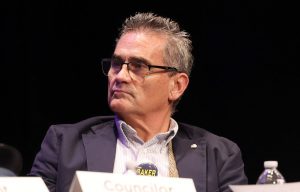
Councilor John FitzGerald, who represents part of the South End, said the city needs to work toward changing a culture that’s welcoming to addicts and dealers.
“In Mass and Cass, it’s creating that environment and the culture to say, if you are coming here, you are going to get clean,” FitzGerald said. “A lot of people that hang down there are not those that are unhoused. They know that they can stay there. They know that they can use, and they know that they can get their drugs there.”
Nancy Lane/Boston Herald
A woman uses a needle in the Mass and Cass area earlier this year.


More Stories
US court rules against Pentagon in killer AI dispute
The Department of War had ordered contractors to drop Anthropic after it refused to allow military use of its technology...
Which Interior Flooring is Best?
Where do you start when choosing new flooring? When shopping for new flooring a good place to start is to...
Petrol set to top £1.50 a litre as Iran war drives fuel price surge
UK drivers are bracing for a sharp rise in fuel costs, with petrol prices expected to exceed £1.50 per litre...
Dyson hit by £440m sales drop as Trump tariffs bite
Dyson has reported a £440 million drop in annual sales after being hit by US trade tariffs, although the group...
Octopus Investments to cut 20% of staff as AI reshapes asset management
Octopus Investments is set to cut around a fifth of its workforce as it accelerates the adoption of artificial intelligence,...
Next to invest £300m in UK logistics as new warehouse set to deliver £2.5bn boost
Next has unveiled a major expansion of its UK logistics network, committing more than £300 million to new warehouse infrastructure...