
Inside one Minnesota county’s push for murder charges in overdose deaths

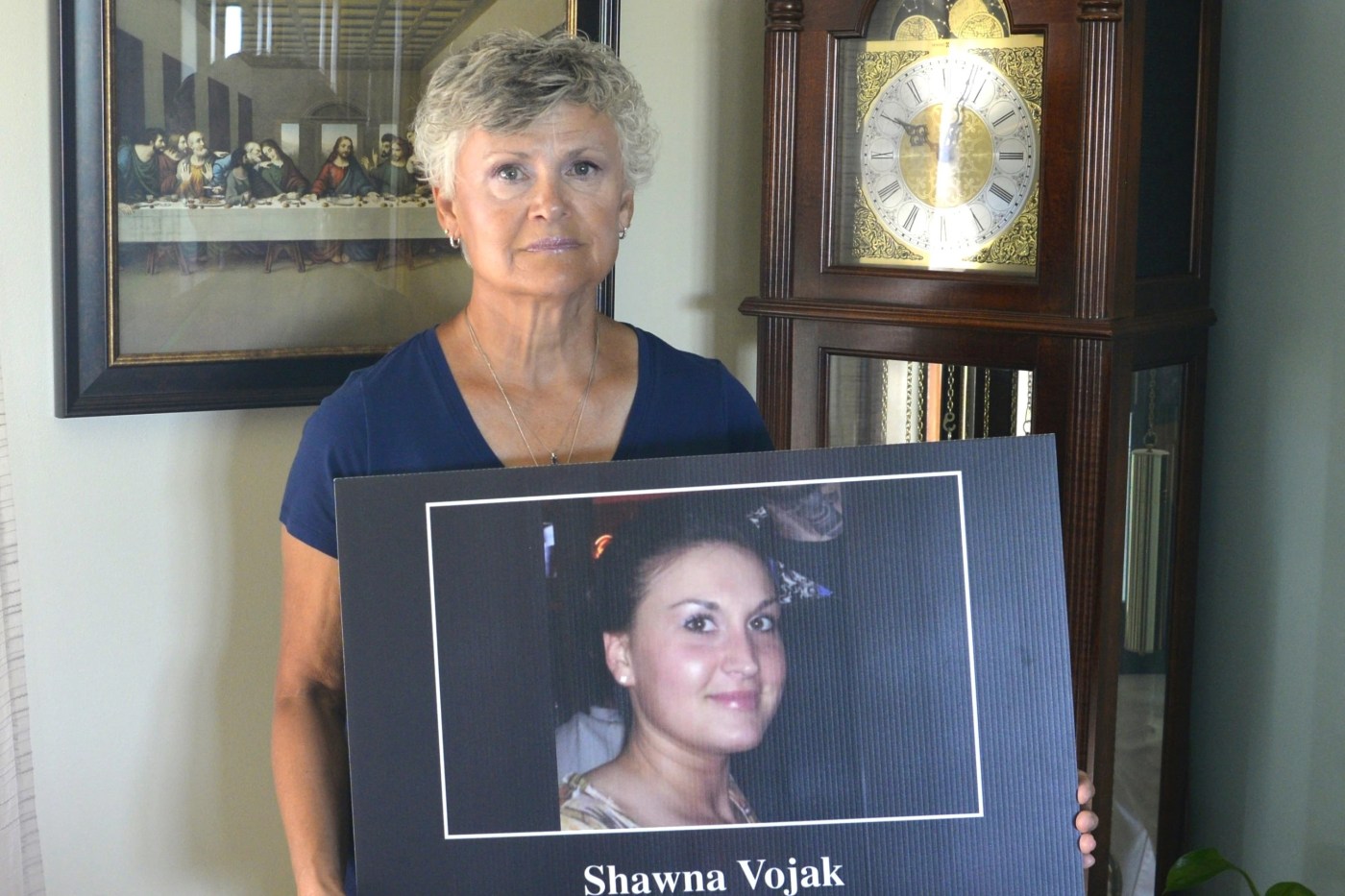
ST. CLOUD, Minn. — Shawna Vojak was the kind of daughter who regularly called her mom to check in.
Related Articles
Pilot arrested on child sex abuse material charges after landing at San Francisco airport
Authorities seek to file terrorism and assault charges against suspect in Walmart knife attack
Allianz Life confirms data breach affecting majority of 1.4M US customers
Man with mental health issues found naked in Minnesota Capitol, raising new security concerns
Man serving life for killing Maplewood toddler sentenced for strangling cellmate with a string
“She’d say, ‘Hi, Mom, how are you doing?’ and then we’d just talk,” Julie Baumgard told St. Cloud LIVE. “And now she’s not here to do that.”
Vojak, 37, overdosed on fentanyl in her St. Cloud apartment on June 20, 2020. A Midwest Medical Examiner autopsy report found she had an “extremely high level of fentanyl in her blood” and determined the cause of death was an accidental fentanyl overdose.
Vojak had been working toward her recovery from substance abuse, putting her life back together, when she purchased what she thought was Percocet to help with her pain, Baumgard said. Her daughter struggled with chronic spinal stenosis and migraines for years, she added.
Vojak’s son found her body on his 20th birthday and called the police.
“She’s missed beyond words that I can even say … it’s not the same,” Baumgard told St. Cloud LIVE in a phone interview. She speaks confidently, but her voice still catches.
“Our family’s not the same.”
Ashley Anne-Marie Kapol, 29, of St. Cloud, was convicted in 2024 of third-degree murder for selling Vojak Perc 30 pills that contained fentanyl. Kapol was sentenced to nearly eight years in prison at the Minnesota Correctional Facility — Shakopee.
Kapol’s conviction was the result of an increased effort from the St. Cloud Police Department and the Stearns County Attorney’s Office to thoroughly investigate overdose deaths and hold dealers accountable.
Since 2018, there have been 88 fatal overdoses in St. Cloud, according to data provided by the St. Cloud Police Department. The data does not indicate which drugs were involved in the overdoses.
However, St. Cloud Police Chief Jeffrey Oxton said local authorities began to notice significant amounts of fentanyl trickling into the community around 2021.
The influx of fentanyl and increased overdose deaths led the police department to focus intensely on improving investigations. These techniques support third-degree murder charges to hold dealers accountable, Stearns County Attorney Janelle Kendall told St. Cloud LIVE.
“Oxton said they wanted to do more for people than just take them away in body bags,” Kendall said.
There have been 129 fatal overdoses in Stearns County from 2018 to 2023, according to the Minnesota Department of Health.
“The reason it’s so important that we have the ability and the units and the resources to go after drug dealers is because these people aren’t dying if they don’t have the drugs,” Oxton said. “And the people selling the drugs know that it’s killing people. They do.”
Connecting the dots
The investigation into Vojak’s 2020 death hit a roadblock when the St. Cloud Police Department was unable to unlock her cellphone, according to the criminal complaint against Kapol.
Baumgard, 65, remembered calling the department every three months to check on the investigation — and to keep her daughter on officers’ minds.
The case opened up in 2023 when the police department obtained new software, Cellebrite, to unlock password-protected phones. That helped investigators piece together what happened by reviewing text messages between Vojak and Kapol, who discussed the drug sale, according to the criminal complaint.
Since 2023, Cellebrite has been used in several other local investigations.
The goal of the investigations is to learn what happened leading up to the overdose, according to Chad Perius, who heads the criminal division at the county attorney’s office.
Understanding what happened before an overdose death can be challenging, Perius said.
“Obviously, we can’t talk to the person who overdosed,” Perius said, “but we can talk to the people around them.”
Third-degree murder charges
Law enforcement has adapted its investigation efforts. This has led to an increase in third-degree murder charges in Stearns County, according to Kendall.
“The higher numbers of third-degree murder charges are a relatively new phenomenon,” Kendall said. “We’ve seen more of them as more fentanyl has come into our communities.”
These charges can be hard to prove in court. A thorough investigation — with solid evidence connecting the dealer to the victim — is essential, she added.
Since 2019, 10 people have been charged with third-degree murder in connection with fatal drug overdoses in Stearns County, according to Kendall’s office. Nine of the 10 victims were found dead due to fentanyl toxicity, according to the Midwest Medical Examiners’ Office.
Eight of those 10 defendants were convicted of third-degree murder, while two cases are ongoing in the court system.
A third-degree murder charge is defined as selling a drug that causes the death of someone, or causing death while having a “depraved mind,” according to state statute.
A third-degree murder charge carries a sentence of up to 25 years in prison or a fine of up to $40,000.
And while Kapol received that nearly eight-year sentence, Baumgard wished the sentence had been longer.
“She has time to address her substance abuse and work on recovery,” Baumgard said. “She’s still here. My daughter is dead.”
However, Baumgard appreciated that Kapol received consequences for her part in Vojak’s death.
“Someone should be held accountable — they’re poisoning people,” she said. “My daughter thought she was buying Percocet. She wasn’t looking for fentanyl. Selling pills like that is like poisoning people.”
Perius hasn’t seen any data that suggests that a third-degree murder charge deters people from selling drugs. However, he said the charges protect the public.
”What it does is create a more serious charge that can potentially keep people in prison or jail for long periods of time so they can’t go back to selling drugs in the community,” Perius said.
Oxton told St. Cloud LIVE that overdoses peaked with 21 in 2023. In 2024, there were 14 overdoses. The department does not track whether they are intentional or unintentional.
Through the first four months of 2025, the St. Cloud Police Department reported seven drug overdoses, while two were pending further investigation, Oxton told St. Cloud LIVE.
“If we replicate that out, this will be the high year this year,” Oxton told St. Cloud LIVE in May. “It has slowed down in the last month and a half, so I don’t think we’re going to keep that pace, but that’s kind of scary when you see a pace like that started.”
By mid-2025, the department confirmed 10 overdose deaths.
Working for change
Shawna Vojak had sought treatment for her substance use disorder and had been sober for two-and-a-half years, but her family believes the stresses of the COVID-19 pandemic and lockdowns may have contributed to her relapse.
Before the overdose, Vojak was known to organize impromptu family gatherings and take her nieces and nephews on adventures, Julie Baumgard said.
For Baumgard, her daughter’s dealer being convicted of third-degree murder is not the end of the story.
“It gives you a sense … I don’t really want to say a sense of closure, but it gives you some kind of relief,” she said. “Personally, I needed to know what exactly happened, good or bad …. I do now.”
However, she said there is still more work to do. Since Vojak’s death, Baumgard has become involved in advocacy groups that work to change how substance use disorder and overdose deaths are discussed.
Baumgard, who lives in Danube in Renville County, has traveled to Minneapolis, Wisconsin, Iowa and Washington, D.C., to support other families who have lost loved ones and to demand action.
“I felt really supported by the Stearns County Attorney’s Office, and I have to say that we were very fortunate for that,” she said. “Because I can’t tell you about the thousands and thousands of families across the nation that have nothing. They have no idea what happened. Law enforcement are saying terrible things to families. You can imagine the stigma they deal with.”
She said she shares Vojak’s story to raise awareness about the dangers of fentanyl and to combat the stigma associated with substance abuse. Baumgard works with nonprofits to put together public safety announcements. Billboards with Vojak’s story can be found in Hastings and Mankato, Baumgard said.
“This could happen to anyone — all it takes is one pill, one time,” Baumgard said. “People forget that substance use disorder is a disease and that those who are struggling with it are real people who have family and friends who love them.”
Reporters Lauren Breunig and Trent Abrego will continue coverage about drugs in St. Cloud LIVE. If you have story ideas, questions or feedback, contact lauren@stcloudlive.com or trent@stcloudlive.com.
Related Articles
Amid PFAS fallout, a Maine doctor navigates medical risks with her patients
Judge blocks Trump administration’s efforts to defund Planned Parenthood
Column: Tips to cut down on screen time and smartphone use for kids
Louisiana upholds its HIV exposure law as other states change or repeal theirs
Georgia shows rough road ahead for states as Medicaid work requirements loom


More Stories
From Scotland Yard Commander to Global Security Entrepreneur: Dr Ali Dizaei’s Leadership Story
There are career journeys that follow a straight line, predictable, uniform, and comfortable. And then there are journeys shaped by...
The Naughty AI President: A New Age of Governance
In the race to build better systems of governance, humanity has always chased an impossible ideal: the perfect ruler. Rational,...
Sends shares Q1 2026 business update and product progress
Sends reported Q1 2026 updates sharing news on digital cards, app redesign, ClearBank integration, and fintech industry recognition. Sends, a...
Government doubles down on gaming with £30m funding package as sector eyes global growth
The government has fired the starting gun on a £30 million funding offensive aimed at Britain’s video games sector, urging...
Rising energy costs from Middle East conflict set to leave UK households £480 worse off this year
Rising energy costs triggered by the escalating Middle East conflict are on course to strip nearly £500 from the finances...
UK firms risk being left behind as AI adoption gap widens, warns PwC
British businesses are in danger of being left stranded in the middle of the pack on artificial intelligence, with a...