
Boston pushing for more Everett stadium mitigation, heightening tensions with Krafts

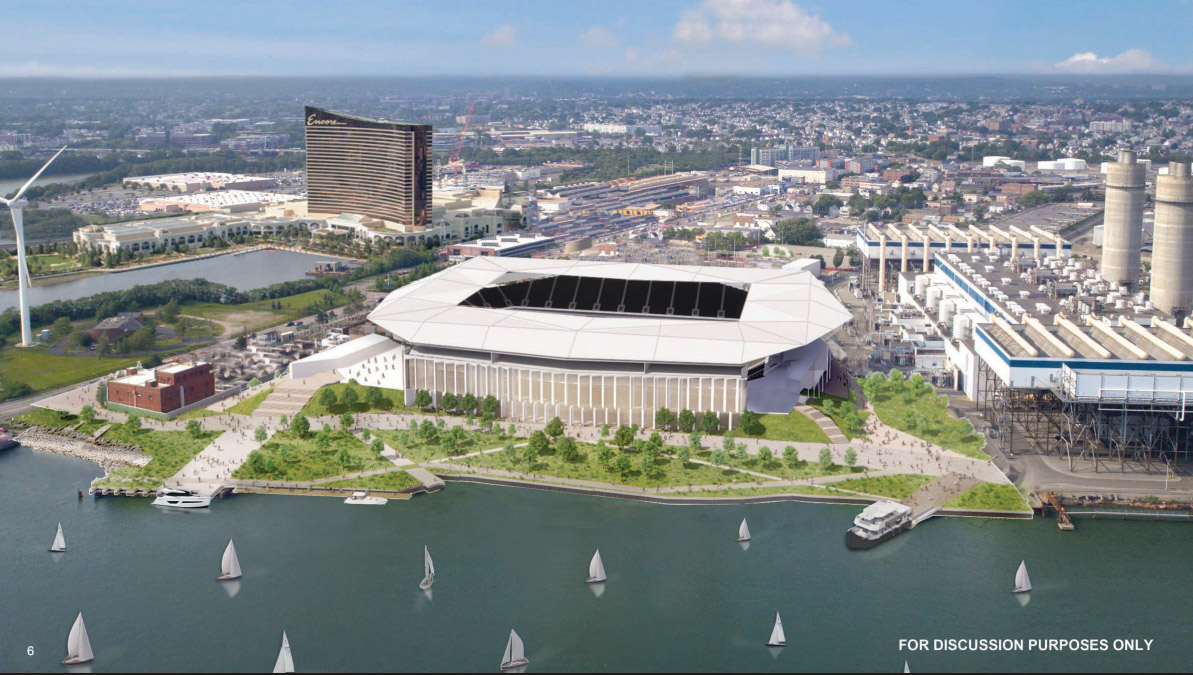
Negotiations remain testy between the City of Boston and Kraft Group over the Krafts’ plans to build a soccer stadium in Everett, with the Wu administration pushing for further mitigation to offset potential negative impacts on the Hub.
Kairos Shen, the city’s planning chief, shared his frustrations what he sees as “limited progress” in establishing a mitigation plan, despite months of negotiations, in a letter he sent Monday to Brian Bilello, president of the New England Revolution and the city’s designated point of contact for the Kraft Group.
“Since our discussions began in February of 2025, we have made limited progress in learning about the project and establishing mitigation priorities,” Shen wrote.
Shen noted that the two sides are entering the mediation phase, which was triggered by a lack of consensus that was reached by the May 1 deadline, and that seven meetings, including a site visit, have been held since talks began.
“While these meetings have been cordial, the information you have shared remains conceptual with none of the technical detail and analysis needed as a baseline to properly assess the impact of your proposal or negotiate a fair agreement to the City of Boston,” Shen wrote. “While we continue working to finalize a mediation agreement, we reiterate that the responsibility to address community mitigation is not optional, nor is it to be taken lightly.”
Spokesperson Anisha Chakrabarti said the Kraft Group was “surprised to receive this correspondence from Boston this morning, as it is inconsistent with the tone and tenor of the seven productive meetings we have had with the city.”
City officials in Boston have raised concerns about traffic and parking impacts a new stadium in Everett, which would house the New England Revolution, would have on the nearby Charlestown neighborhood.
State legislation that became law last November cleared the way for a new Everett stadium and park, by freeing up 43 acres of land along the Mystic River for the Kraft Group’s privately-funded project.
Shen said the city has requested that mitigation be focused on transportation; climate resilience, open space, and noise; job creation and supplier diversity; and overall community benefits.
He also mentioned that the Kraft Group has not revised its initial $750,000 mitigation offer — which he has described as “unacceptable” — saying that it amounts to just 1.1% of the $68 million mitigation agreement the City of Boston reached over the adjacent Wynn Resorts casino project nine years ago.
Shen’s letter included an attachment outlining four pages worth of mitigation measures the City of Boston is seeking, including MBTA connectivity, off-site parking options, and an analysis of economic impacts a new 25,000-seat stadium in Everett could have on competing concert venues in Boston like TD Garden and Fenway Park.
“We strongly urge the Kraft Group to consider a starting point for negotiations that is more consistent with previous efforts to mitigate large-scale development on the Mystic River waterfront, more respectful of the city’s rights under the law and actually responsive to neighborhood concerns,” Shen wrote.
The Kraft Group, through its spokesperson Chakrabarti, hit back, saying in a statement that it has “negotiated in good faith” through a process that began with formal meetings last February, “and has supplied Boston with every piece of information that the city has requested, including technical information.”
“As a product of what we considered to have been cordial conversations with the city, and as the city is well aware, we have initiated a comprehensive study to address transportation and other related issues raised by the City of Boston and look forward to sharing it once the study is complete,” Chakrabarti said. “During our many meetings and conversations, representatives from Boston have not expressed these concerns with our process or with our efforts.
“We are deeply disappointed that politics and grandstanding seem to have taken precedence over thoughtful analysis and collaboration. This simply impedes progress and economic development for the City of Everett, the City of Boston, and the Commonwealth,” she added.
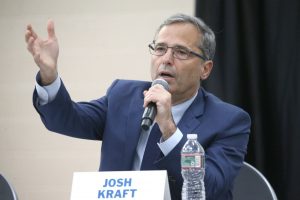
The tension between the two sides comes at a time when the Wu administration and Krafts are also at loggerheads politically. Josh Kraft, son of the billionaire New England Patriots, Revolution and Kraft Group owner Robert Kraft, is Wu’s top challenger in the mayoral race.
While Kraft has said he would recuse himself from his family’s Everett stadium deal if he were to be elected mayor, the connection has provided fodder for the mayor and her campaign during the race.
“Josh Kraft and his family continue to treat fair negotiations with the City of Boston over their for-profit soccer stadium as a joke,” Wu campaign spokesperson Julia Leja said in a statement. “For more than six months, they have failed to provide basic project information to the city, while sticking to a lowball mitigation offer that is totally unacceptable to Boston residents.
“As a pre-approved owner-in-waiting of the New England Revolution and as a candidate for mayor, Josh owes the public answers about his glaring conflicts of interest and the reasons for the team ownership’s strong-arm tactics. Our city deserves a mayor who always puts Boston’s interests first, not one hiding behind their own conflicts.”
Related Articles
Boston installs new bike washing machine
Boston Mayor Michelle Wu holds 30-point lead over Josh Kraft, new poll finds
Councilor: Boston’s Mass and Cass drug crisis is worsening the city’s rat infestation
Pols & Politics: Massachusetts Gov. Maura Healey sees surging popularity in new poll
Disgraced ex-Boston City Councilor Tania Fernandes Anderson sentencing pushed to September
The Kraft campaign, through spokesperson Eileen O’Connor, responded by saying that Kraft has nothing to do with his family’s negotiations with the city, and that he is “not part of any succession plan for the New England Revolution.”
“If Josh is elected the next mayor of Boston, he will adhere to the state ethics guidelines and recuse himself from any business before the city that involves his family, and would delegate a member of his team to manage this — unlike what appears to be the sharing of official information from City Hall to the campaign for political gain,” O’Connor said in a statement.
“But really, all of this bluster is designed to provide a distraction from the other stadium that Mayor Wu doesn’t want people to talk about — White Stadium — and her ‘full steam ahead’ decision to plow hundreds of millions of taxpayer dollars into a project that primarily benefits a private entity, not BPS kids.”
More Stories
Activistas dicen que 3.766 personas murieron en protestas en Irán
Por ELENA BECATOROS DUBÁI, Emiratos Árabes Unidos (AP) — Una agencia activista con sede en Estados Unidos dijo el domingo...
Pentagon tells 1,500 troops to prepare for possible deployment to Minnesota
WASHINGTON — The Defense Department has told 1,500 active-duty troops to prepare for a possible deployment to Minnesota, where President...
Policía de Guatemala libera rehenes en prisión mientras ataques matan a tres agentes
Por MOISÉS CASTILLO ESCUINTLA, Guatemala (AP) — Cientos de policías antidisturbios ingresaron a una prisión de máxima seguridad en Guatemala...
Business people: Laura Watterson to lead human relations at Andersen Corp.
MANUFACTURING Laura Watterson Andersen Corp., a Bayport-based maker of windows and doors for the residential market, announced it has named...
Five veterans missing, but Wild seek no excuses in road win
The message from Wild coach John Hynes before a tough road game in Buffalo early Saturday was a simple one:...
Patriots defensive starter active vs. Texans after missing final practice
FOXBORO — The Patriots’ defense will be at full power in Sunday’s divisional-round playoff game against the Texans. Outside linebacker...