
Boston Mayor Michelle Wu holds 30-point lead over Josh Kraft, new poll finds

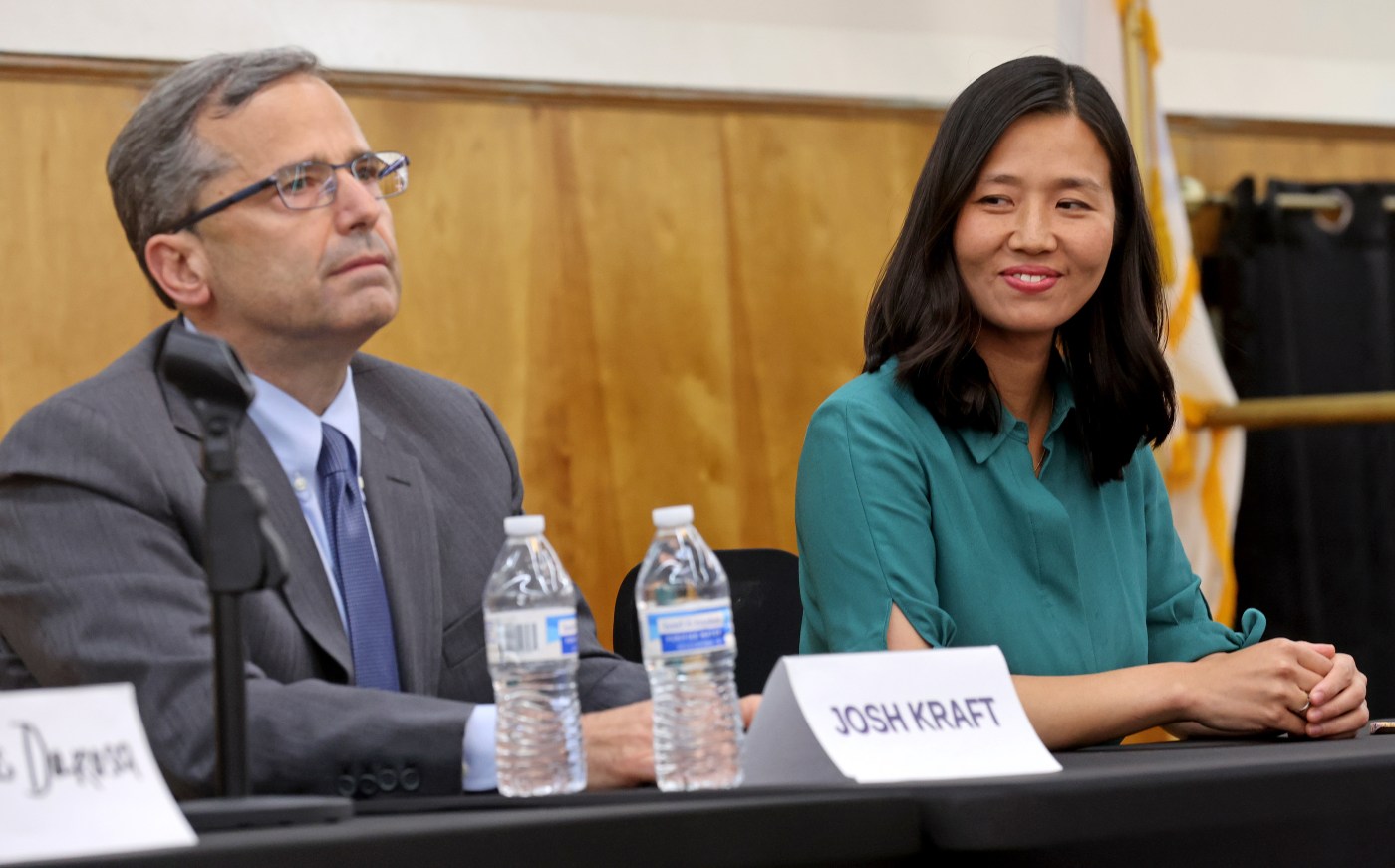
A new poll of likely voters suggests that Boston Mayor Michelle Wu will smoke her principal challenger Josh Kraft in this fall’s election.
Wu holds a 30-point lead over Kraft with a little over a month to go before the Sept. 9 preliminary election, according to a Suffolk University/Boston Globe poll that was released on Monday.
The popular progressive first-term mayor is the preferred choice among 60% of respondents, with her top challenger, and fellow Democrat, Kraft, receiving 30%.
The two other candidates who have qualified to appear on the preliminary ballot, community activist Domingos DaRosa and former School Committee member Robert Cappucci, are far behind at just 3% and 1%, respectively, the poll found.
“Mayor Wu is in a strong position for reelection as we look toward the September preliminary,” David Paleologos, director of the Suffolk University Political Research Center, said in a statement.
Wu holds a strong favorability rating of 66% favorable versus 28% unfavorable among the 500 likely voters polled between July 13-16, with 65% of respondents approving of the job she is doing as mayor and 33% disapproving, the poll found.
Kraft, a son of the billionaire New England Patriots owner Robert Kraft and longtime philanthropist, was dealt another blow by that likely pool of voters — 61% of whom said Wu has had some challenges during her first term as mayor, but Kraft is not the answer.
While Wu holds a commanding lead, Paleologos said, “This poll also gives us some important insights into where her main challenger, Kraft, is edging her among certain sections of the electorate.”
Wu won by strong margins in nearly every demographic in the city, including union households and respondents with students in the Boston Public Schools.
But Kraft beat Wu, 52-38%, among households who identified as having a member who works in public safety and 64-28% among self-described conservatives, who make up a small part of the expected September preliminary turnout.
According to the poll, likely Boston voters are most concerned about housing (26%), the economy and jobs (17%), local response to the Trump administration’s initiatives (13%) and education (13%), heading into the preliminary, which will narrow the field down to two candidates for the November election.
Related Articles
Councilor: Boston’s Mass and Cass drug crisis is worsening the city’s rat infestation
Pols & Politics: Massachusetts Gov. Maura Healey sees surging popularity in new poll
Disgraced ex-Boston City Councilor Tania Fernandes Anderson sentencing pushed to September
Boston Mayor Wu touts office to housing conversion success, with 100-plus units under construction
Ed Markey endorses Boston Mayor Michelle Wu for reelection
Just 5% of likely voters listed crime — which Kraft has hammered Wu on — as the most important issue that will impact their vote in the mayoral race.
Half, or 50%, of poll respondents said bike lanes in Boston, another issue Kraft has lambasted Wu for, have made it slower and less convenient to get around.
But on ways to improve housing affordability, voters are more supportive of Wu’s strategy of using city funds to help finance stalled projects (28%), than Kraft’s, which is to roll back new affordable housing and green energy requirements that developers say increase the cost of construction (15%).

More Stories
Efton Chism didn’t just impress Patriots coaches as a receiver
FOXBORO — It was evident how beloved rookie wide receiver Efton Chism is in the Patriots’ locker room with how...
Vikings picks: ‘Experts’ expect Vikings to end season high note
Pioneer Press staffers who cover the Vikings take a stab at predicting the outcome of Sunday’s season finale against the...
Rhode Island firefighters rescue a yellow Lab from an icy pond on New Year’s Day
WESTERLY, R.I. (AP) — A yellow Labrador out for a walk with his owner in Rhode Island had to be...
Rhode Island firefighters rescue a yellow Lab from an icy pond on New Year’s Day
WESTERLY, R.I. (AP) — A yellow Labrador out for a walk with his owner in Rhode Island had to be...
Judge dismisses Louisville police reform proposal with the Department of Justice
By DYLAN LOVAN LOUISVILLE, Ky. (AP) — A federal judge in Kentucky has dismissed Louisville’s proposed settlement with the U.S....
Judge dismisses Louisville police reform proposal with the Department of Justice
By DYLAN LOVAN LOUISVILLE, Ky. (AP) — A federal judge in Kentucky has dismissed Louisville’s proposed settlement with the U.S....