
Massachusetts Democrats say attorneys need to ‘get back to work’ amid pay dispute

Top Beacon Hill Democrats focused on the judiciary accused attorneys on a more than month-long work stoppage of not talking to lawmakers over the hourly rate they’re paid to take on the criminal cases of people who are unable to afford representation.
As judges were starting to release defendants this week because they did not have access to counsel, the chairs of the Legislature’s Judiciary Committee said attorneys moved too quickly to stop work before directly negotiating with the legislators who control the state’s purse strings.
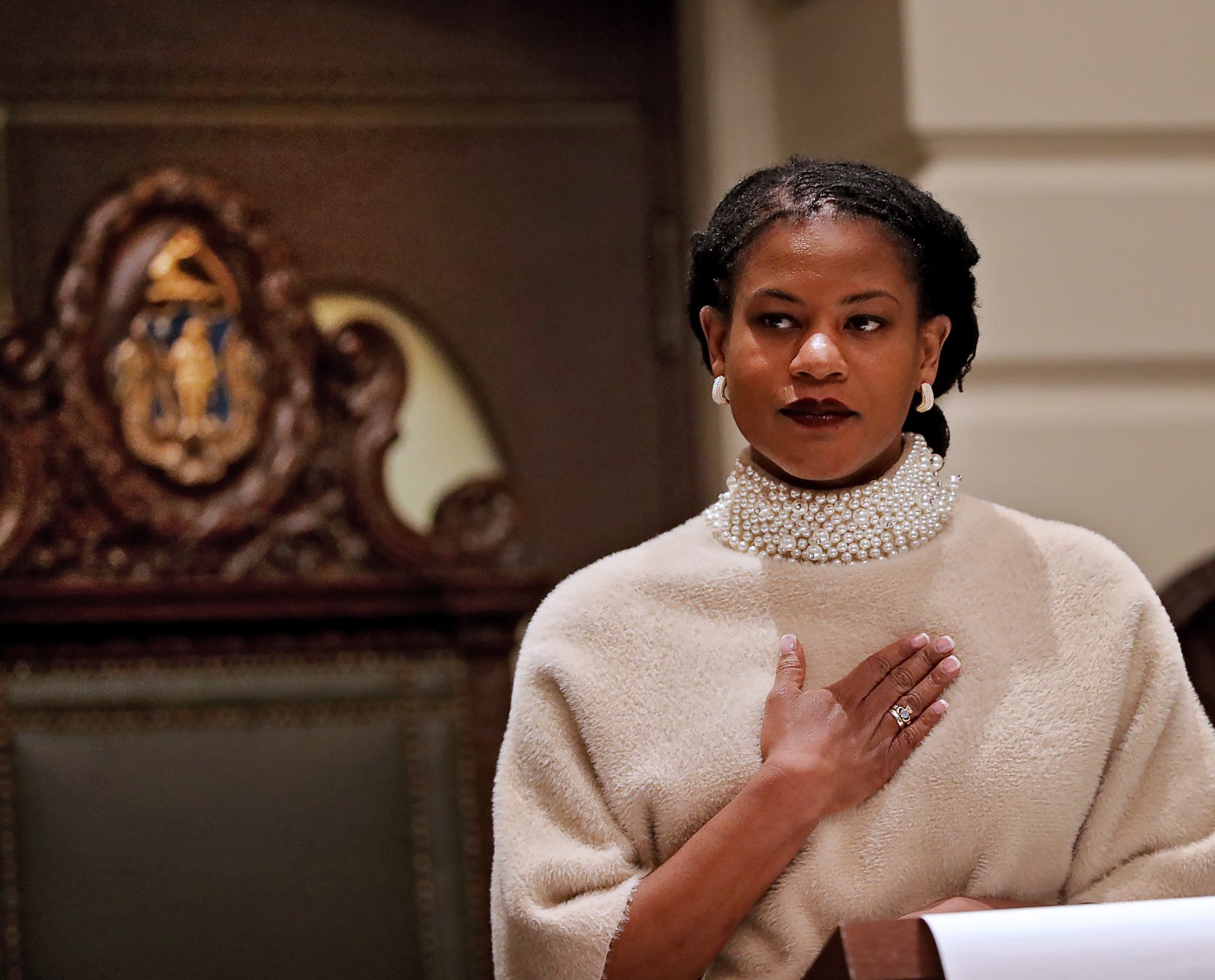
Sen. Lydia Edwards, a Boston Democrat and co-chair of the Judiciary Committee, said the state would have to approve tens of millions of dollars in new spending to hand private attorneys the increase they are looking for at a time when the state is facing fiscal uncertainty.
“There are a lot of ripple effects to not having a defense attorney, not just public safety, but also hurting people who didn’t do anything wrong,” Edwards told the Herald Wednesday. “They have gotten our attention. What I would love to see is them get back to work in good faith, and a commitment from us in good faith to work on an increase in their wages.”
Judges started to release defendants this week, including those accused of serious crimes, after attorneys stopped working in May. That came after the state’s highest court turned to an emergency protocol that allows for the release of indigent defendants or the dismissal of their cases if they do not have access to a lawyer.
Rep. Michael Day, a Stoneham Democrat who also co-chairs the Judiciary Committee, said the right to a fair trial is “a cornerstone of our government, and access to competent counsel is an essential component of this right.”
“As a lawyer and lawmaker, I am distressed that these attorneys have chosen to make access to the right to counsel more difficult and are attempting to use indigent residents as leverage rather than engaging directly with us over how much money they make an hour,” Day said in a statement to the Herald.
Private attorneys who take on criminal cases for indigent defendants have argued that hourly rates for their work in Massachusetts are among the lowest in the region. The 2,800 lawyers known as bar advocates represent roughly 80% of people who cannot afford an attorney.
Shira Diner, a board member and immediate past president of the Massachusetts Association of Criminal Defense Lawyers, said she recognizes there are fiscal challenges, but, in some ways, “having lawyers in courts to represent people charged with crimes is pretty important.”
“This is not like a luxury item to add on that would be nice for some people. This is what we need to make sure the system, our criminal legal system, actually functions,” Diner told the Herald. “The situation is urgent because it’s not going to end until the rates go up, and it’s just something the state is going to have to figure out a way to make the numbers work to increase the payment.”
But state lawmakers knocked the lawyers for engaging in a “pre-emptive work stoppage” amid a dragged-out dispute over their pay.
Senate budget chief Michael Rodrigues said attorneys need “to get back to work and come to the table in good faith to discuss this issue directly with us.”
Rodrigues, a Westport Democrat and key architect of state spending, said the pay dispute was “brought to our attention mere weeks ago.”
“(It highlighted) a need for productive conversations about both the rate of pay and the utilization of an equitable and sustainable system. The advocates withholding representation from indigent defendants, who are Constitutionally guaranteed the right to an attorney and legal due process, are grinding the wheels of justice to a halt in an effort to force an increase in their own pay,” he said in a statement.
Diner said debates over raises for bar advocates have “been brewing for years.” The Committee for Public Counsel Services, the state agency that oversees public defenders and administers pay to bar advocates, regularly asks for rate hikes.
“We’ve been talking about this for years,” Diner said. “Every year, (CPCS goes) to the Legislature, and every year they ask for increases in both their operating costs, which is one line item, but also increases in the bar advocate pay rates to go up. And so CPCS has been advocating for rate increases for years.”
In testimony to lawmakers in March, CPCS Chief Counsel Anthony Benedetti said the organization wanted “a modest increase in hourly rates for private attorneys.”
“The Legislature provided meaningful increases to the hourly rates in FY22 and FY23, and for that, we are extremely grateful. However, despite these increases, already depressed rates have not kept pace with inflation, disincentivizing attorneys to join panels and attorneys who are on panels to take more cases,” Benedetti said, according to remarks provided to the Herald.
Beacon Hill Democrats had an opportunity to increase hourly rates for some attorneys as part of the fiscal year 2026 budget Gov. Maura Healey signed last week.
Sen. Liz Miranda, a Boston Democrat, proposed an amendment to the Senate’s original budget that would have spiked pay for bar advocates by $35 an hour. She withdrew the language as the Senate was debating its spending plan days before the work stoppage began in May.
The Senate instead backed a proposal from Edwards that boosted rates for attorneys working homicide cases from $120 an hour to $130 an hour; lawyers taking cases in Superior Court from $85 to $90 an hour; and those handling mental health cases from $65 to $75 an hour.
But a compromise budget hashed out by Rodrigues and his House counterpart dropped the rate changes, and even reduced the cash available for private counsel compensation from $215 million in the last fiscal year to $213 million for the next 12 months.
Lawmakers also funded the CPCS at $89 million, the same amount the organization received in fiscal year 2025.
In a letter to lawmakers, the Massachusetts Association of Criminal Defense Lawyers blasted legislators for not including a rate increase in the final fiscal year 2026 budget.
“The chronic underfunding of indigent defense not only undermines the right to counsel guaranteed by the Sixth Amendment but also perpetuates systemic inequities in our justice system. This year’s budget was a critical opportunity to invest in fairness, justice, and the essential infrastructure of public defense,” the association wrote.
Edwards said defendants are caught in the middle of the pay dispute.
“I feel like no one is prioritizing them,” she said. “That is a real, deep anger. I have gotten calls from police at this point. I get calls from my colleagues. We need to be centering this. And this constitutional right to have someone stand with you when you are accused of crimes isn’t conditioned on whether lawyers are paid a lot.”

More Stories
Mexico sends second aid package to Cuba as US tightens energy blockade
MEXICO CITY (AP) — Mexico has sent a second humanitarian aid package for Cuba as the island faces a tightened...
Orbán afirma que Ucrania planea sabotear sitios energéticos en Hungría
Por JUSTIN SPIKE BUDAPEST, Hungría (AP) — El primer ministro húngaro, Viktor Orbán, ordenó el miércoles reforzar la seguridad en...
Reseña de cine: “Man on the Run” narra el largo y sinuoso camino de Paul McCartney tras los Beatles
Por JAKE COYLE Si “The Beatles: Get Back” de Peter Jackson fue el documento supremo de los últimos momentos de...
When in Rome: Budapest pizzeria offers time-travel twist with ancient Rome-inspired pie
By JUSTIN SPIKE BUDAPEST, Hungary (AP) — In Hungary’s capital, a city best known for its goulash, a pizzeria is...
When in Rome: Budapest pizzeria offers time-travel twist with ancient Rome-inspired pie
By JUSTIN SPIKE BUDAPEST, Hungary (AP) — In Hungary’s capital, a city best known for its goulash, a pizzeria is...
‘No lines and big, wide-open runs’: This woodsy California ski town is like Mammoth without the crowds
By Christopher Reynolds, Los Angeles Times You are a beginning or intermediate skier, allergic to long lift lines, more interested...