
Boston city councilor says neighboring towns should pick up Hub’s Mass and Cass drug market tab

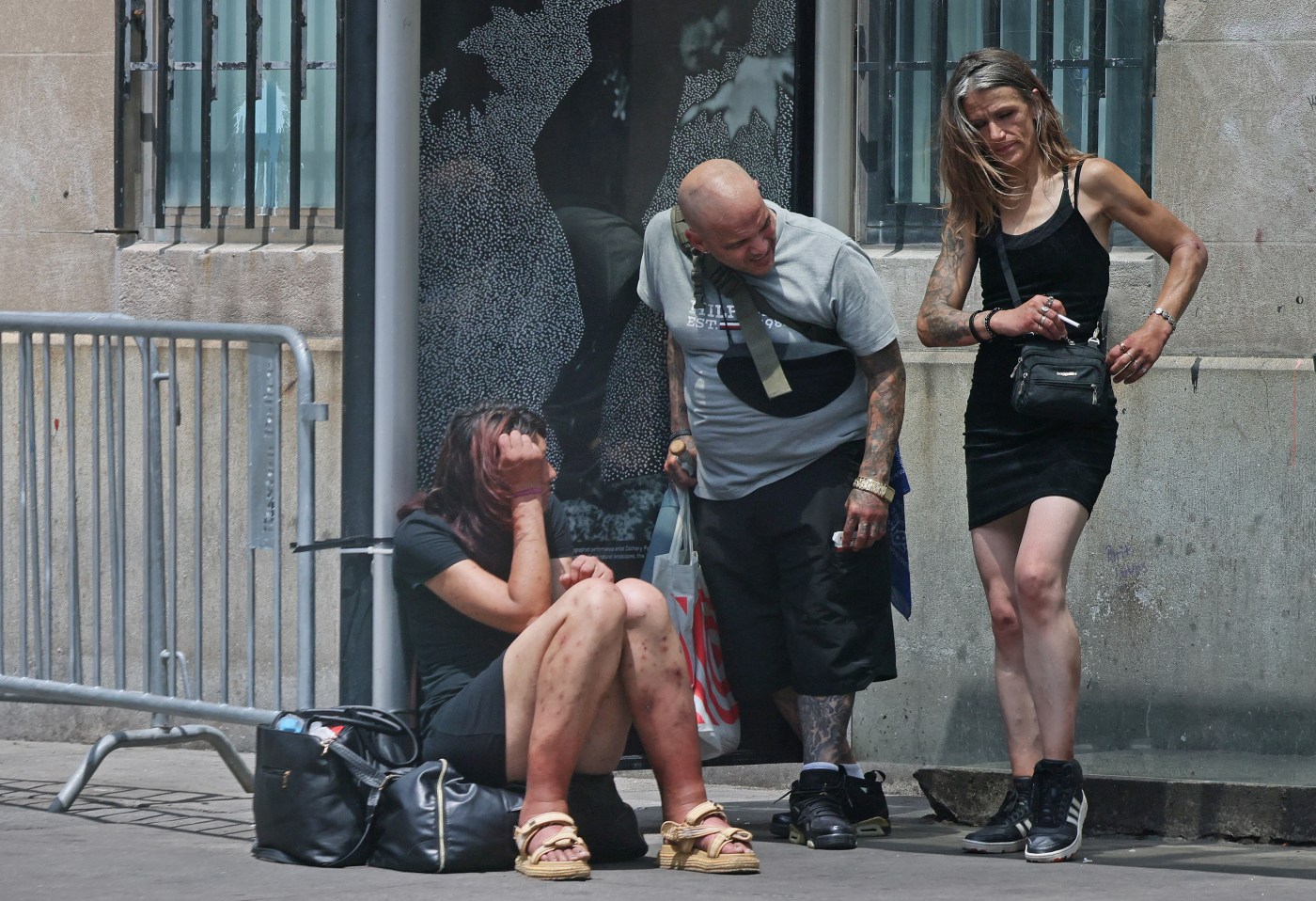
A Boston city councilor is floating a regional approach to tackling the open-air drug market festering at and around Mass and Cass through the creation of a new addiction fund that would need buy-in from the city and neighboring communities.
Councilor John FitzGerald plans to introduce a hearing order at Wednesday’s meeting “regarding the creation of a regional substance use disorder and mental health fund” that would shift today’s “city-alone model” to a regional cost-sharing approach better reflective of a population of Mass and Cass inhabitants that often come to the area from outside Boston to use and sell drugs.
“This isn’t just a Boston crisis — it’s a regional one,” FitzGerald said. “Many of the individuals at Mass and Cass aren’t from Boston, yet it’s Boston taxpayers who are bearing the full financial burden.”
That dynamic is “not fair,” Fitzgerald said, and it’s “not sustainable.” Nor is it working, said the councilor, who represents most of Dorchester and a portion of the South End, where neighbors say open-air drug use and dealing, filth and related violence from Mass and Cass spillover has spiraled “out of control.”
FitzGerald said he envisions a regional fund with contributions from neighboring communities, to ensure that Greater Boston cities and towns that benefit from Boston’s addiction and housing services also help to pick up the tab.
He said his fund is meant to encourage those other communities to be a “good neighbor,” particularly in light of the Trump administration’s threats to cut federal funding from Boston and other sanctuary cities.
“I feel a lot of the surrounding towns and municipalities feel that they can just shuffle their issues onto the city and have our costs deal with it,” FitzGerald told the Herald. “But the reality is we’re going to be looking at a thinner budget in the future, and cuts are going to have to be made, and we’re going to have to have some priorities.
“I feel that the issue of Mass and Cass is the antithesis of what a functioning society should look like, and so it needs to be a priority. A regional problem therefore should require a regional solution,” he said.
His proposal, he said, mirrors existing models of regional collaboration, such as MBTA assessments and emergency planning zones.
Details about which communities will be asked to participate and how much they would collectively contribute to the potential fund are still being hammered out, FitzGerald said.
Also being brainstormed is what the funds would be used for, he said, while rattling off some suggestions around taking a more regional approach to providing services to the homeless and drug-addicted, intervening with mandatory treatment services, and beefing up police enforcement with bike patrols.
The money, FitzGerald said, could also help to fund “Recover Boston,” an interim addiction recovery campus that he supports and has been pitched by the Newmarket Business Improvement District since August 2023 as a stopgap until the city can rebuild the Long Island Bridge out to a permanent 35-acre recovery campus.
Boston Mayor Michelle Wu said last week that the Mass and Cass crisis can be traced back to the 2014 closure of the bridge and associated campus, though her administration has come under fire of late for what her public health commissioner, Bisola Ojikutu, admitted was its “failed” plan to address the area’s open-air drug market.
The mayor’s plan began with clearing out tent encampments at Mass and Cass in late 2023, but has been criticized for pushing the drug use and related crime into surrounding neighborhoods.
Sue Sullivan, Newmarket’s executive director, told the Herald last week that her organization and community partners are revamping their push for Recover Boston, by actively looking for a mix of private, city and state funding sources, along with a campus location. She estimated annual operating costs to be roughly $8 million.
FitzGerald’s regional fund proposal comes on the heels of a South End community meeting, where state Rep. John Moran called for greater partnership between the city and state, despite the “bad blood” he said remains with the governor’s office due to state officials being kicked off Mass and Cass calls when Wu took office.
Moran didn’t elaborate on what he was referring to in terms of the lingering tension, and FitzGerald, who was on the same meeting call, declined to speculate, when asked by the Herald.
The last time there was a regional approach to addressing Mass and Cass was back in 2019, when then-Mayor Marty Walsh formed a 24-member task force made up of city and state officials to oversee the city’s efforts to clean up the drug- and crime-ridden area.
The task force was later criticized for its perceived ineffectiveness, and disbanded sometime after Walsh’s departure, either in Acting Mayor Kim Janey or Mayor Michelle Wu’s administration, the Herald has reported.
Wu said on GBH’s Boston Public Radio Tuesday that city data show crowding is actually down at the actual intersection known as Mass and Cass this summer, compared to last and the past few summers.
But she acknowledged that spillover conditions in surrounding neighborhoods, particularly the South End, are “unacceptable,” and that her administration is “doing everything we can to continue to get at this challenge.”
Her office later indicated it was open to FitzGerald’s plan.
Related Articles
Tania Fernandes Anderson’s embattled tenure on Boston City Council is now over
Boston City Hall payroll glitch leaves employees with delayed paychecks: ‘Major embarrassment’
Boston City Hall sexual misconduct probe clears top Wu cabinet official of wrongdoing
Boston’s White Stadium renovation sparks neighborhood clash
Boston City Hall official on unpaid leave, remains employed months after felony assault arrest
“The city will continue to advocate for and welcome all state partnership and resources to address a regional challenge concentrated in Boston,” Wu spokesperson Emma Pettit said in a statement. “The state’s investment of temporary resources in previous years was critical to the real progress in ending encampments in Boston, building clear pathways to recovery and stable housing, and coordinating public safety and public health responses.
“More is needed, and we continue to work alongside residents and advocates to urge partnership for a regional public health recovery campus and decentralized treatment sites that will meet the scale of the challenge.”
Josh Kraft, Wu’s principal mayoral opponent, said he supports the councilor’s “push to increase state funding and ask neighboring cities and towns to contribute,” while also reiterating his support for Recover Boston, which he has described as a central aspect of his plan to address Mass and Cass.
“The Wu administration dismissed this idea when it was proposed despite the proven safety of this structured setting,” Kraft said in a statement. “We need more collaboration with the state and other communities, and I believe what Councilor FitzGerald has proposed is a step in the right direction.”

More Stories
Villarreal supera al Alavés y se consolida en el tercer puesto de La Liga
Por JOSEPH WILSON BARCELONA (AP) — Alberto Moleiro sumó un gol y una asistencia para ayudar al Villarreal a vencer...
Fin de la moratoria de la soya en Brasil pone en riesgo a la selva amazónica
Por GABRIELA SÁ PESSOA SAO PAULO (AP) — Durante casi 20 años, los mayores productores de soya de Brasil garantizaron...
Security guard killed Christmas Day at Wyoming, Minn., hospital was brave and selfless, friends say
Andrea Merrell was tough and brave, put the safety of others first and had a lifelong commitment to helping and...
As Gophers fans boo refs, coach Niko Medved takes high road
Many Gophers fans had no problem sharing their opinion of the officiating late in Friday’s 70-69 overtime loss to Southern...
Entrenador de Marruecos desestima acusaciones de parcialidad arbitral en la Copa de África
Por CIARÁN FAHEY RABAT, Marruecos (AP) — El entrenador de Marruecos, Walid Regragui, rechazó enojado las sugerencias de que su...
En medio de crecientes protestas, Irán corta el acceso a internet a la población
Por JON GAMBRELL DUBÁI, Emiratos Árabes Unidos (AP) — Poco después de las 8 de la noche del jueves, la...