
Legal view: Massachusetts justice was already a joke. The Karen Read fiasco is now its legacy

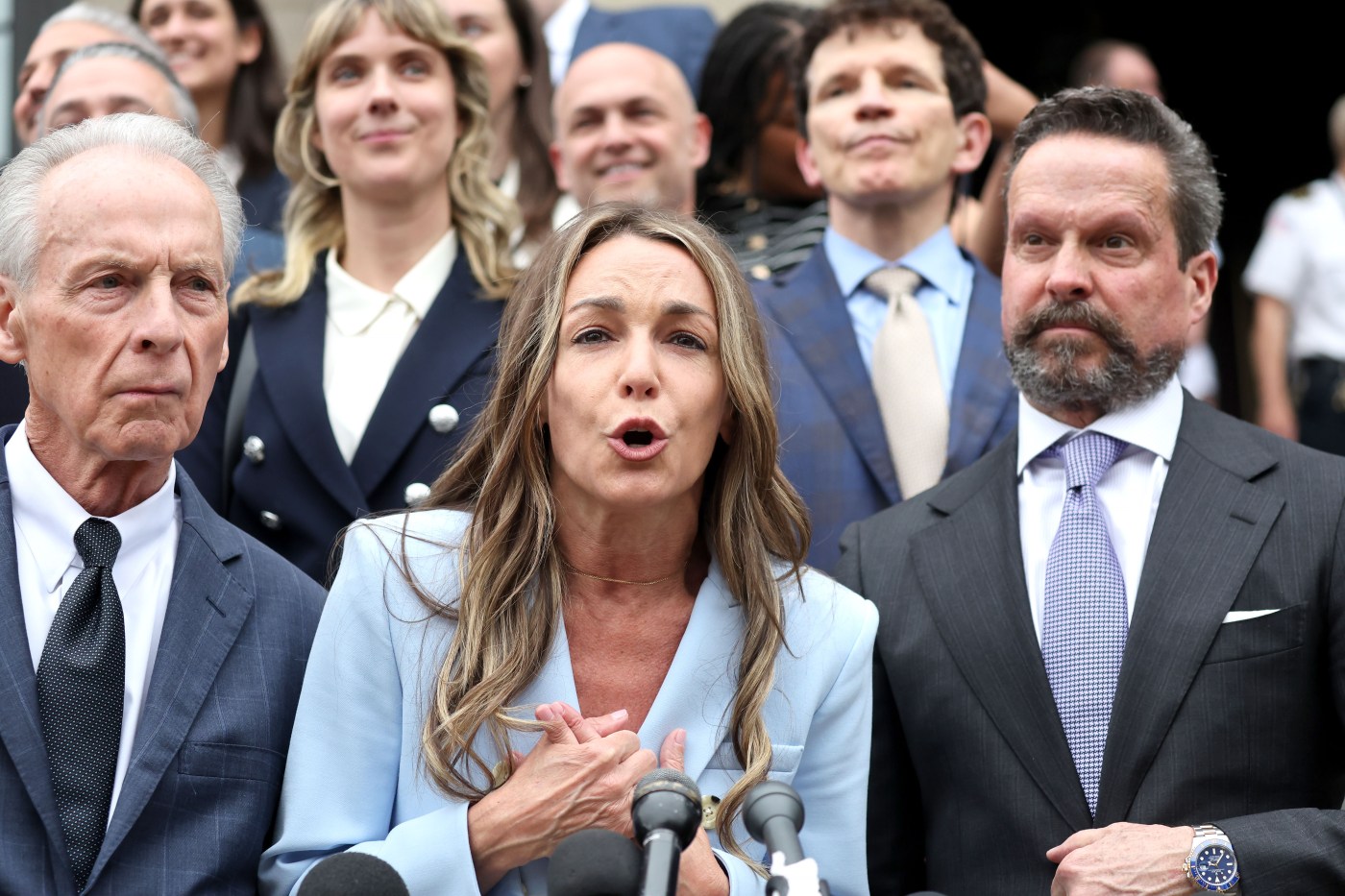
On June 18th, the Karen Read saga finally lurched to its inevitable end, when a Norfolk County jury, assigned the unenviable task of spending spring and early summer watching corruption theater in Dedham court, acquitted Ms. Read of all the serious charges against her.
For Read, the Mansfield woman charged with running over and killing her boyfriend and Boston Police Officer John O’Keefe in January 2022, this was her second trial. Another jury last July reached nearly the same conclusion, only for courts to say it didn’t count.
In the first trial, the jury wasn’t informed it could report out a partial verdict. Having decided unanimously to acquit Read on the two serious charges, but stuck on the third, the jury was declared hung, resulting in a mistrial on all charges, giving prosecutors a mulligan — double jeopardy be damned.
By 2025, Read’s case had ballooned from a closely watched criminal trial into a nationwide spectacle. Pink-clad Read supporters camped outside court daily, national outlets piled on, and HBO and ABC cranked out documentaries. Around New England, women sporting pink hats that read “Proctor” — a rebuke of Massachusetts State Trooper Michael Proctor, the disgraced investigator whose obscene texts helped torpedo the prosecution — became a familiar sight.
On the day of the verdict, leaving a store in Dedham near the courthouse, I was struck by the volume of news helicopters overhead. I was watching trial coverage on my phone, showing a steady courtroom shot of the ceiling fan — presumably to shield the jurors. It reminded me of the opening sequence of “Apocalypse Now,” where “The End” by The Doors plays over choppers in Vietnam, blended with Martin Sheen staring glass-eyed at a spinning ceiling fan.
It all felt jarringly out of place. We see things like this in L.A. and D.C. –– not Norfolk County.
CNN and Fox News, who rarely cover anything in Boston, both aired the verdict live. Fox’s coverage awkwardly tried to apply its national rah-rah pro-police rubric onto local facts that didn’t support it.
Somewhere along the line, the Boston legal establishment lost control of the Karen Read case. First came journalist Aidan “Turtleboy” Kearney: his intrepid reporting and vast online following frenzied the public so much the Norfolk DA jailed him over it. The Atlantic then profiled him and the Read case.
The FBI investigated the investigators, its findings rejecting the state’s theory of O’Keefe’s death. National reporters and true crime junkies dug in, while local officials — already lacquered in scandal — looked so crooked a frame job seemed not just possible but probable.
Legally, this was an unresolvable case with insurmountable doubt from glaring police errors, oversights, and bias — or worse.
Lead investigator and reasonable doubt factory Michael Proctor did more than anyone to blow the case, with his own texts read in court where he called Read a “whackjob c***” and said “hopefully she kills herself.” Proctor later told ABC News in an interview that –– amazingly –– he wouldn’t change “anything” about the way he handled the investigation.
Related Articles
Herald readers nail Karen Read outcome, sort of
Disgraced prosecutor Rachael Rollins surprises Turtleboy with praise for coverage
Canton tries to move on, heal after Karen Read acquitted of killing John O’Keefe
Karen Read jury foreman appeals to FBI to reopen the murder investigation
Massachusetts State Police union fighting accusations after Karen Read verdict
Perhaps things would be different if it were not the case that absolutely everybody who touches power in Massachusetts keeps going down for corruption. From State Troopers accepting bribes of snowblowers and driveway paving jobs, to the US Attorney resigning in disgrace for a breathtaking litany of habitual misconduct, to city councilors taking handoffs of embezzled cash in city hall bathrooms –– the Read saga wasn’t just unsurprising, it affirmed what locals already believed about how things work here.
Read’s case blew things open. Sunlight, as the saying goes, is the best disinfectant. The case highlighted how independent voices can circumvent the gatekeeping position of corporate media and rally the public. It shifted local power structures, normalized questioning what we are told by authorities, and undermined the standing of the state’s criminal prosecution bar.
The Read case also presented something else: a distinctly populist, class-based cultural moment without local precedent. The public, even one accustomed to corruption, decided enough was enough, and protested a prosecution symbolic of all that’s wrong with this place and officials who have been in office for 50 years –– in a region where “primary” is a dirty word.
For that, I’m proud of my state.
Tom Blakely is a federal judicial law clerk who served in the United States Department of Justice, practiced at an international law firm and writes about numerous legal topics. Tom serves on the board of Boston College Law School where he hosted the Just Law Podcast. Tom is an avid sports fan, enjoys the outdoors and splits his time between Cape Cod and Washington, D.C..

More Stories
Gophers hold off late rally and upset No. 19 Iowa
Niko Medved remains undefeated in home games against ranked Big Ten foes as the Gophers men’s basketball coach. While it’s...
High School roundup/scores: Walpole’s Bella Bingham celebrates grand night
Bella Bingham surpassed 1,000 career points as Walpole girls basketball earned a 65-38 Bay State Conference win over Wellesley. In...
‘A championship team’: Timberwolves dominant again in win over Miami
The Timberwolves might be finding their rhythm. Not only did Tuesday’s 122-94 win over Miami mark Minnesota’s third straight victory,...
Malden Catholic cruises to victory over Xaverian
MALDEN — With high expectations comes added pressure. Despite having a target on its back this winter, Malden Catholic’s boys...
Police Blotter: Suspects in movie theatre carjacking arrested
Braintree Police arrested two juveniles allegedly involved in a movie theatre carjacking Friday. The police didn’t identify the suspects, who...
CDC changes to childhood vaccine recommendations concern Minnesota health officials
On Monday, federal health officials rolled back recommendations for some childhood vaccines, including those that protect against influenza, COVID-19 and...