
Beacon Hill Democrats are ‘hopeful’ negotiators can produce on-time FY26 budget

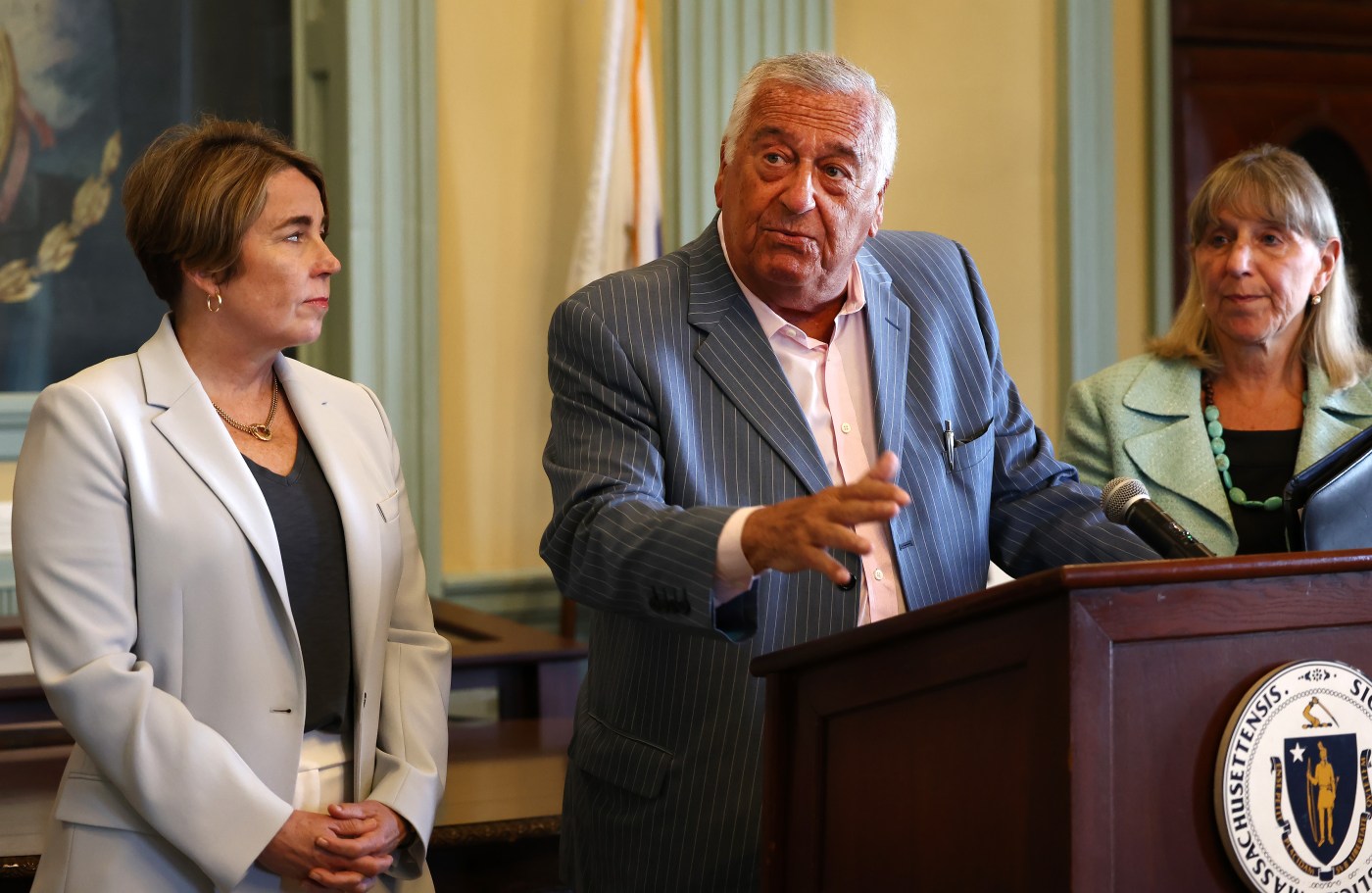
The top two Democrats in the Massachusetts Legislature expressed optimism Monday about delivering an on-time fiscal year 2026 state budget after failing to meet their annual deadline for the only bill they are constitutionally required to produce for 14 straight years.
Both House Speaker Ron Mariano of Quincy and Senate President Karen Spilka of Ashland said they were hopeful lawmakers tasked with resolving differences between competing proposals could deliver a compromise to Gov. Maura Healey before the July 1 start of the new fiscal year.
Spilka said negotiators “are very close.”
“They’re working really hard,” she told reporters at the State House. “We’re working well together. The committees are working well. I have to say, we’re working well, and we want to build on that.”
Mariano said he is “hopeful that there’s a chance we may have a budget to the governor by the end of this month.”
The House passed a $61.5 billion spending plan in April, and the Senate followed with its own $61.4 billion version in May. The two versions will see a group of six lawmakers debate the use of one-time dollars, funding for the MBTA, local control over alcohol licenses, and the elimination of rental brokers’ fees.
After meeting for the first time to kick off budget deliberations last month, Senate budget chief Michael Rodrigues said the two versions of the budget “have a lot of similarities.”
“My budget reflects the priorities of my Senate members, the House’s budget reflects the priorities of the House members, but there’s no tension. We’ve done this six times before, countless other (supplemental) and bond bills. I mean, we’ve been down this road a lot, so I wanted to highlight the fact that there are more similarities in this budget than many people realize or appreciate or take note of,” the Westport Democrat said.
Massachusetts has not started a new fiscal year with a budget in place since 2010, when Beacon Hill lawmakers were able to ship a $27 billion plan on June 24 to then-Gov. Deval Patrick. The proposal was signed days later on June 30.
The state is also one of a handful in the country that consistently starts its fiscal year without a spending plan in place, a situation that has required Democrats to pass interim budget bills to cover state spending until a full plan is approved by the governor.
Experts who have previously spoken to the Herald have said there is little immediate impact if a budget is late.
But if a spending plan is not on time, new programs cannot start, expansions to existing ones are put on hold, and cities and towns that rely on state aid are left in limbo while lawmakers work toward a final deal behind closed doors.
House budget chief Aaron Michlewitz said last month that the state budget is the “one bill that every year has to get done,” even if there are tensions between the two branches.
“We’ve always acknowledged that and understand that,” the North End Democrat said. “We’ve had disagreements, we’ve had back and forth on issues, and sometimes it takes longer than we want it to. But … I’ll take our record of getting six budgets done up against anything, and I will say, we’re going to get a seventh budget done as well.”

More Stories
Archbishop Williams, Brookline win at BABC Holiday Showcase
BRAINTREE – The BABC Holiday Showcase is always a spectacle. It draws the top basketball talent in the country to...
High school roundup/scores: Two hat tricks lift Medfield to 10-4 win over Grafton
In nonleague boys hockey action, Jason Drake and Michael Cortis each netted hat tricks as Medfield cruised over Grafton 10-4....
Massachusetts animal rights advocates alarmed after local PD kills ‘disoriented’ raccoon
Massachusetts animal rights advocates are sounding the alarm after a local police department in Worcester County euthanized a raccoon described...
Boston Fleet lose to Ottawa Charge after lengthy shootout, 3-2
OTTAWA, Ontario (AP) — Brianne Jenner scored in the eighth round of the shootout as the Ottawa Charge defeated the...
Patel says FBI headquarters to ‘permanently close’ with move
FBI Director Kash Patel said the agency’s historic-but-aging headquarters in Washington would be “shut down permanently” as he shifts personnel...
Google is letting users swap out embarrassing Gmail addresses without losing their data
Google has finally answered users’ cries, allowing Gmail users to swap out embarrassing teenage email addresses. Gmail account holders can...