
Editorial: When do taxpayers say ‘enough’ to White Stadium tab?

The projected costs for a new, improved White Stadium keep piling up, but that doesn’t mean the numbers add up.
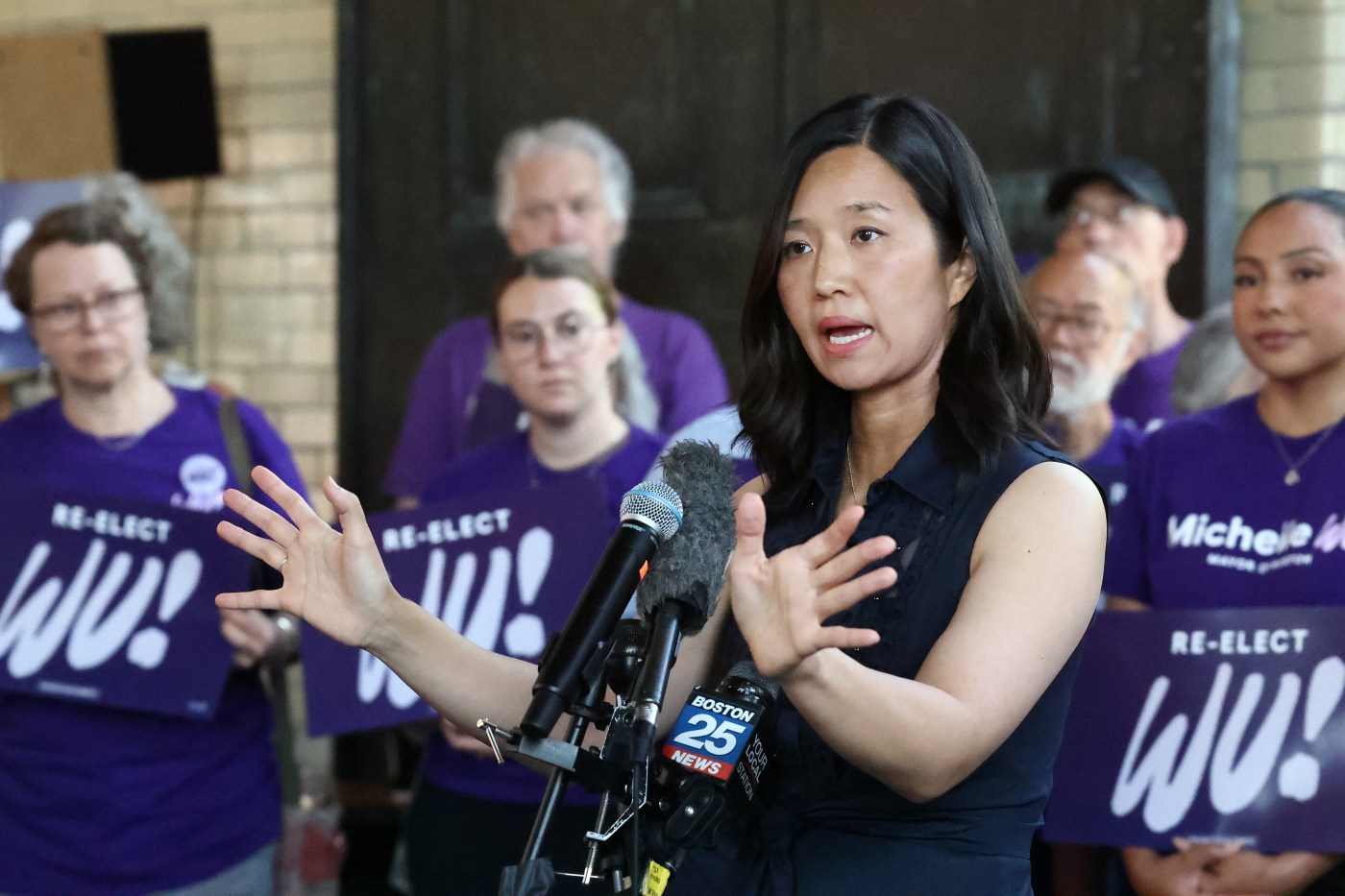
Mayor Michelle Wu said she expects the city’s costs for its half of the professional women’s soccer stadium renovation project to exceed its previous $91 million estimate. But she disputed her opponent Josh Kraft’s revelation that taxpayers would be on the hook for $172 million, even thought the figure came from an internal city document. That figure, said Wu, represents a “worst-case scenario.”
The “best scenarios” for this project so far have been pretty bad. The city budget for the public-private rehab of White Stadium started at $10.5 million two years ago. For–profit partner Boston Unity Soccer Partners would pony up $30 million. That $10.5 million soared to $50 million, matched by Boston Unity. Now we’re at $91 million.
While Wu has clapped back at Kraft for making assertions that lead residents to believe that they shouldn’t trust information on costs that are coming from “official city channels.”
“The residents of Boston deserve better in terms of real facts, real information and being able to have that context,” Wu said.
This comes from the woman who wanted a property tax shift to commercial and business sectors after projecting a 14% to 30% quarterly tax spike for homeowners. The actual rate increase: 10.4%.
The mayor also pushed back last year at report projections from the Boston Policy Institute that Boston’s eroding commercial tax base could leave the city with a $1 billion budget shortfall in five years as “false information,” while insisting that its financial outlook is strong. The same watchdogs who issued that report have a new one: that shortfall could hit $1.7 billion.
Wu doesn’t like to be the bearer of bad news, nor the hearer of bad news either, apparently. But even if the “worst-case scenario” price tag for White Stadium doesn’t come to fruition, taxpayers are looking at an ever-growing bill.
“That will be the next point, where the budget is finalized based on what the market actually is, what the costs are,” Wu said. “The price of steel has gone up significantly since we started this process because of tariffs. Other construction costs have escalated with the uncertainty in the economy.”
At one point does the city tap the breaks on the project because of inevitable cost overruns, or are taxpayers seen as an endless source of money?
According to a study commissioned by the Emerald Necklace Conservancy, a high-school only stadium rehab would cost roughly $29 million. That’s a third of the current taxpayer tab.
The Boston branch of the NAACP, a leading national civil rights group, is on board, and called for an “immediate halt” to pro soccer plans for the stadium, while expressing support for the alternative proposal.
Boston Public Schools desperately need a revamped White Stadium for its student athletes. Taxpayers don’t need to help Boston Unity score a franchise win.
The ball is still in play.
Editorial cartoon by Joe Heller (Joe Heller)

More Stories
Divorce doesn’t have to mean disappearance
Q: I think continuing to interact with an ex after a breakup is unnatural. My parents divorced when I was...
Today in History: January 18, White Chicago police officer sentenced in Laquan McDonald’s shooting
Today is Sunday, Jan. 18, the 18th day of 2026. There are 347 days left in the year. Today in...
La elección presidencial en Portugal podría dar otro impulso a los populistas en Europa
Por BARRY HATTON LISBOA (AP) — Un récord de 11 candidatos competían en las elecciones presidenciales de Portugal el domingo,...
How to keep your ‘better sleep’ resolution
January is a month for wellness. And that includes sleep. Lately the world has woken up to the importance of...
McCaughey: The time is now to crack down on fraud
Why pay taxes when so much of your hard-earned money goes to fraudsters instead of doing good? Government bureaucrats and...
Interviewing? Hone the art of the thank-you email
Dear Reader: After a job interview, what should your thank-you email state? Let’s get back to basics. If you’re interviewing,...