
Boston exam school admissions put under the microscope, again

After five years of tweaking and re-tweaking controversial policies seeking to create fair and equitable exam school admissions, the Boston School Committee has restarted a comprehensive search for what they hope will be a more long-term solution.
“We have tried to improve the policy with each minor change over the past several years,” Superintendent Mary Skipper told the School Committee. “Yet some of the core feedback we hear publicly on the different versions of this policy have not been fully addressed — they pit schools against each other and neighborhoods against each other.”
Skipper said she’s “beginning the process of re-examining what, if any, changes should be recommended.” And that won’t end until the fall, she added.
Skipper continued. “Our district goal remains the same: to create an equitable, transparent policy that ensures all students have the opportunity to apply for a seat at one of the city’s three exam schools.”
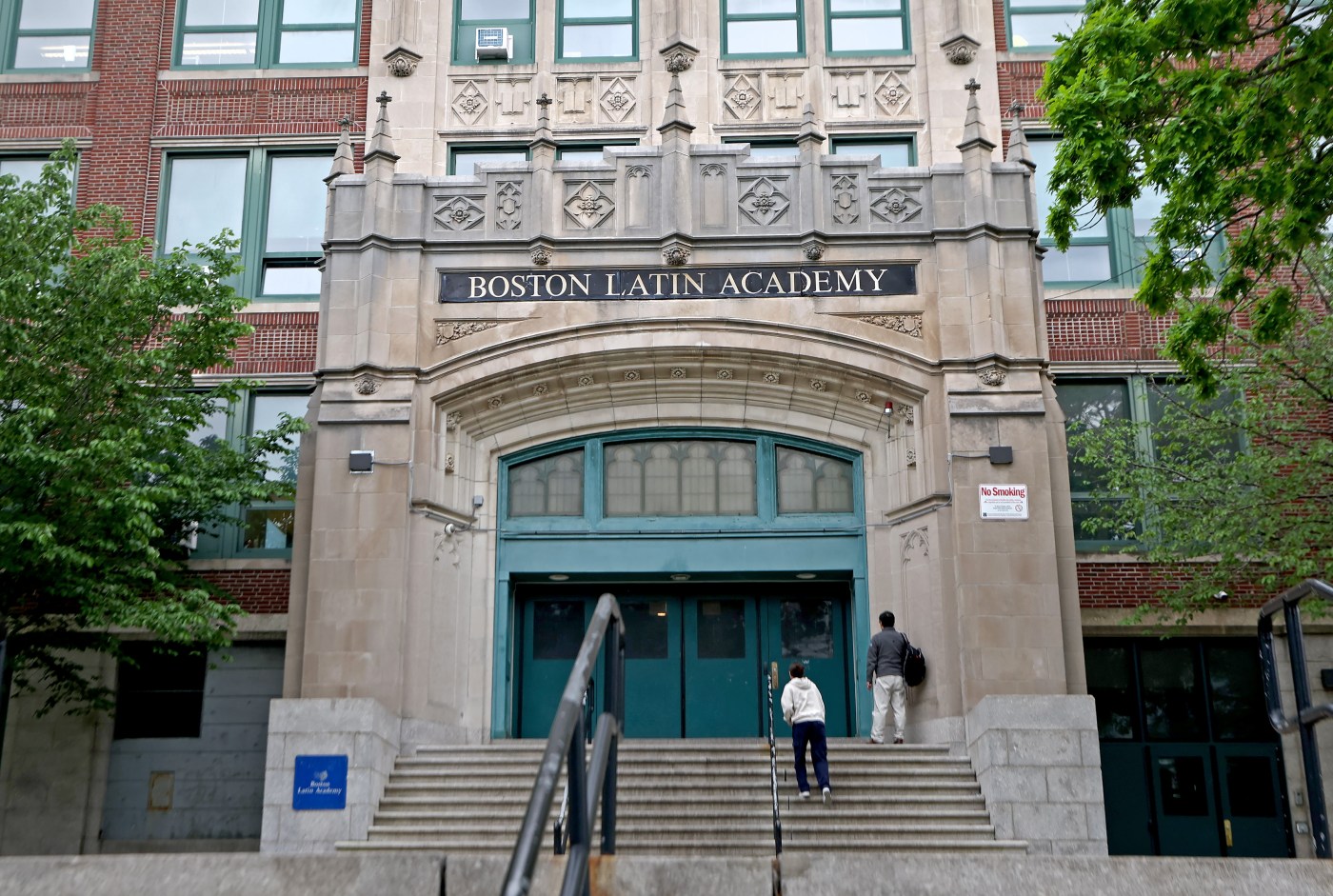
The School Committee heard three possible adjustments Tuesday night to the exam school admissions policies and simulations of their effects based on previous years’ data. The policies apply to the city’s three elite exam schools, Boston Latin School, Boston Latin Academy and the O’Bryant School.
Boston Public Schools began to adjust the exam schools’ admissions policies in 2021 based on recommendations from a task force, with the goal of expanding socio-economic, racial and geographic diversity.
The new policy used the students’ grades and test scores, but incorporated new socio-economic tiers based on where students lived.
Exam school seats are distributed evenly across tiers, and students are awarded extra points based on factors including attending a school with an over 40% economically disadvantaged population, living in public housing, homelessness, and being in DCF care.
The current admissions system uses the same broad structure and dropped the number of socioeconomic tiers to four, “simplifying” the policy.
The proposals considered Tuesday would significantly alter the policy. Under one, the Committee could consider removing the school-based extra points and removing or altering the housing-based points.
“While the school-based bonus points were intended to account for disparities among schools, the bonus points have not had a large impact on the makeup of the exam schools’ student body,” BPS officials noted.
A second proposal would consider adding a “citywide round,” allowing for students with the highest composite scores to compete for seats outside of tiers. Twenty percent of the overall seats or 20% of each school’s seats, would be distributed within this round.
The last proposal would alter the four socioeconomic tiers. Instead of distributing the number of seats based on the number of children within each tier, the seats with be distributed based on the number of applicants in each tier.
The BPS officials warned the third proposal could create “operational challenges” by changing the number of seats per tier every year and make the student pool less geographically representative of the city.
The BPS simulations under each tier examine the effect on the distribution of seats based on student demographics using previous years’ data.
Criticism over the years has focused broadly on how individual students are shut out of seats, such as poorer students who happen to live in an area designated to a more economically advantaged tier.
Initial parent reaction was mixed during public comment Tuesday night, with some noting the “comprehensive” analysis of the data included and others calling for more input.
Related Articles
Justice Department challenges Kentucky regulation allowing in-state tuition for undocumented students
Lawmakers plan $1.3B surtax budget debate
Judge extends order suspending Trump’s block on Harvard’s incoming foreign students
Tulane scientist resigns citing university censorship of pollution and racial disparity research
Supreme Court win for girl with epilepsy expected to make disability lawsuits against schools easier
“The process must include meaningful opportunities for public engagement,” said Dorchester parent Deirdre Manning. “Two or three minute sound bites are not an effective way for parent voices to be heard and their input included, and all stakeholders need access to data.”
The policy adjustments should continue to go through a “robust community conversation” the summer and fall, Skipper said, before she gives a final recommendation on a policy “that will stay in place without further change for multiple years.”


More Stories
Easter and Eid collision sends British lamb prices to a record high
Supermarket shoppers face paying more than £16 per kilo for a leg as overlapping religious festivals, shrinking flocks and buoyant...
Vince calls on Miliband to halt North Sea oil exports as Iran war rattles supply
One of the Labour Party’s most prominent financial backers has called on Ed Miliband to slam the brakes on North...
Reform UK becomes first British political party to launch its own podcast
Reform UK is venturing into podcasting with a weekly show that will offer listeners behind-the-scenes access to Nigel Farage and...
Labour’s tax uncertainty is pushing Britain’s wealthiest towards the exit
The majority of Britain’s ultra-wealthy individuals are actively weighing up whether to leave the country, driven not so much by...
Barclays bets on the high street once more with new branches and the return of the bank manager
Barclays is charting a decisive U-turn on the high street, with plans to open new branches across the country and...
Amazon bets on Whole Foods to salvage its troubled UK grocery ambitions
Amazon is dusting itself off for another tilt at Britain’s fiercely competitive grocery sector, this time by converting its abandoned...