
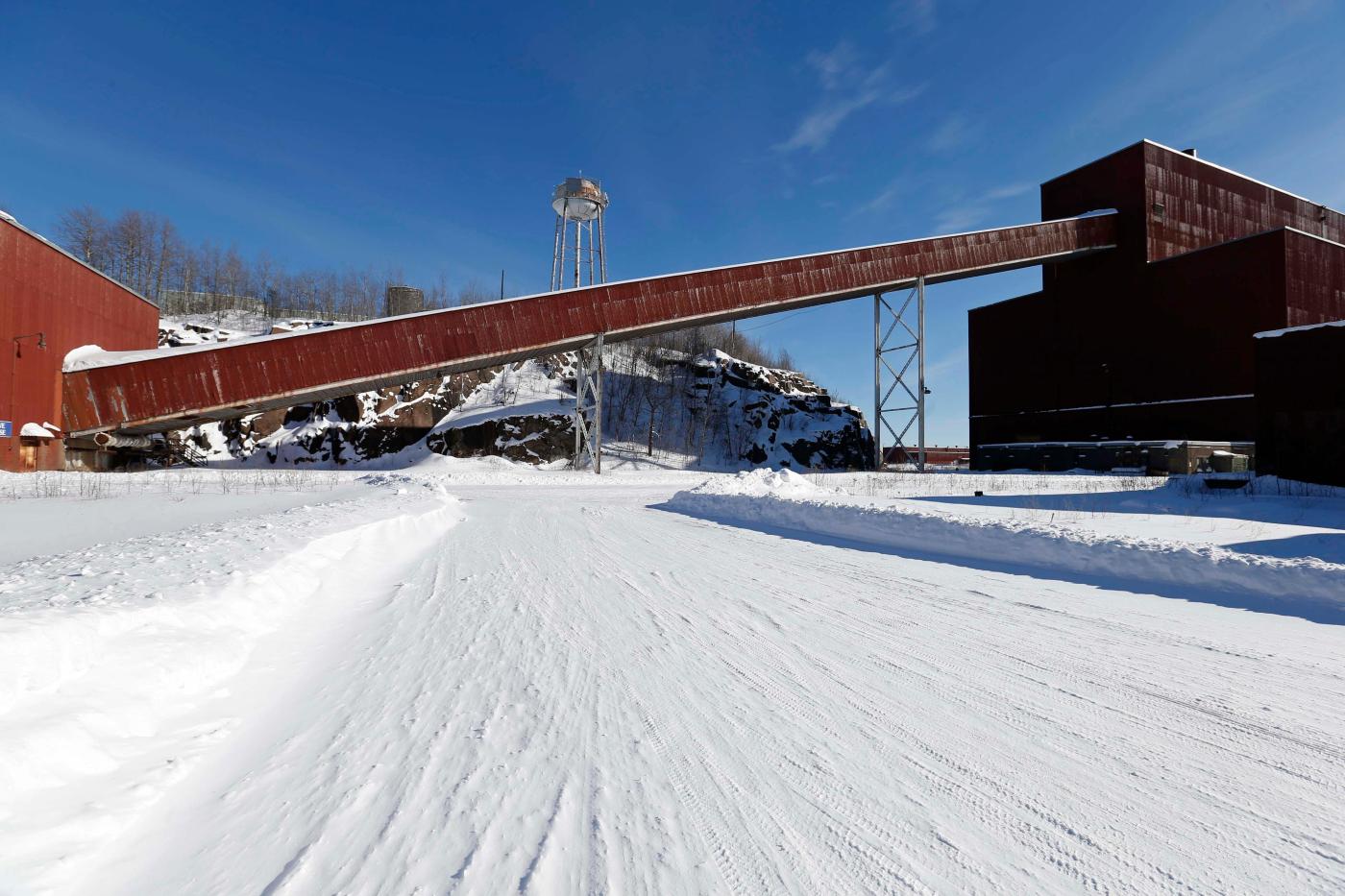
House Republicans drop copper-nickel mining from sprawling budget bill

U.S. House Republicans have removed a provision in the federal budget bill that would have reversed a pause on mining on federal land within the same watershed as the Boundary Waters Canoe Area Wilderness and reinstated leases to a copper-nickel mining company wishing to mine in that area.
An amendment by the House Rules Committee on Tuesday strikes portions of President Donald Trump’s “big, beautiful bill” that would run afoul of Senate rules that Republicans are relying on to pass the upper chamber with a simple majority instead of 60 votes.
The amendment removes Section 80131 of the spending bill, which sought to end a Biden-era 20-year moratorium on mining on 225,000 acres of federal land within the watershed and return two mineral leases to Twin Metals, which is owned by Chilean mining conglomerate Antofagasta and is hoping to build a large underground copper-nickel mine and dry-stacked tailings storage facility near Ely and Birch Lake, within the Rainy River Watershed and 5 miles from the BWCAW.
U.S. Sen. Tina Smith, D-Minn., who introduced a bill earlier this year seeking to make the mineral withdrawal near the BWCAW permanent, celebrated the removal of the language.
“Today marks a victory in our fight to protect the Boundary Waters. Buried deep in President Trump and Republicans’ Big Beautiful Bill was a provision that gave a foreign mining company full permission to build a copper-nickel sulfide mine right on the doorstep of the Boundary Waters. I vowed to do everything in my power to protect this precious place,” Smith said in a statement Tuesday evening. “Today, I am relieved to announce that we were successful in forcing Republicans to drop this language attacking the Boundary Waters from the bill.”
U.S. Rep. Pete Stauber, R-Hermantown, an ardent supporter of mining and Twin Metals, did not immediately respond to the News Tribune’s request for comment.
Twin Metals declined to comment.
Mining Minnesota, a copper-nickel mining industry group, said the move further delays establishing a domestic mineral supply chain.
“Our nation’s energy future depends upon the steps we take today to create a resilient supply chain from the ground up,” Julie Lucas, executive director of Mining Minnesota, said in a statement. “While the decision to remove language that confirmed the importance of Minnesota’s mineral potential was due to a niche, procedural provision unique to the U.S. Senate, unfortunately, it delays those first steps needed to ensure Americans can build and power tomorrow with responsibly mined minerals. Leaders from both sides of the aisle recognize the need to increase our domestic production of minerals and we welcome conversations about Minnesota’s role in meeting those mineral security goals.”
Meanwhile, groups like Friends of the Boundary Waters and Campaign to Save the Boundary Waters celebrated the removal of the language.
“The Boundary Waters is a natural treasure, ecological wonder and vital economic driver. Thanks to the tireless efforts of public lands defenders in Congress, today brings good news for the millions who cherish this iconic place,” Ingrid Lyons, executive director of Save the Boundary Waters, said in a statement Tuesday evening. “America’s most visited wilderness has narrowly escaped inclusion in the Big Beautiful Bill, which would have almost guaranteed irreversible pollution from toxic copper mining in this fragile ecosystem.”
Related Articles
Angry with electrical utility, Iron Range official cuts wire, knocking out power to 3 towns
Trump says US Steel will keep HQ in Pittsburgh in a sign he’ll approve bid by Japan-based Nippon
House Republicans, Trump administration press Minnesota mining projects
Smith introduces bill to ban copper-nickel mining in BWCA’s watershed
On Minnesota’s Iron Range, Trump’s tariffs could be boom or bust


More Stories
Jamal Murray anota 33 y Nuggets vencen 118-109 a Mavs mientras Cooper Flagg sale lesionado
DALLAS (AP) — Jamal Murray anotó 33 puntos y los Nuggets de Denver se mantuvieron firmes para lograr una victoria...
Demócratas proponen leyes estatales para limitar al ICE tras el tiroteo de Renee Good en Minneapolis
Por SCOTT BAUER MADISON, Wisconsin, EE.UU. (AP) — Los demócratas de todo Estados Unidos están proponiendo cambios en las leyes...
Comienza la votación en las elecciones presidenciales en Uganda en medio de cortes de internet y demoras
KAMPALA, Uganda (AP) — Comienza la votación en las elecciones presidenciales en Uganda en medio de cortes de internet y...
La magnitud y violencia de las protestas en Irán recuerdan al caos de la Revolución Islámica de 1979
Por JON GAMBRELL DUBÁI, Emiratos Árabes Unidos (AP) — En cuestión de días, las protestas que desafían a la teocracia...
Tenista amateur gana punto a Sinner y obtiene premio cuantioso en antesala del Abierto de Australia
MELBOURNE (AP) — Un jugador amateur local poco conocido ganó un punto a Jannik Sinner y se convirtió en millonario...
La bandeja de Vucevic impulsa a los Bulls a vencer 128-126 a Sensabaugh y al Jazz
CHICAGO (AP) — Nikola Vucevic realizó una bandeja decisiva con cuatro segundos restantes, y los Bulls de Chicago se sobrepusieron...