
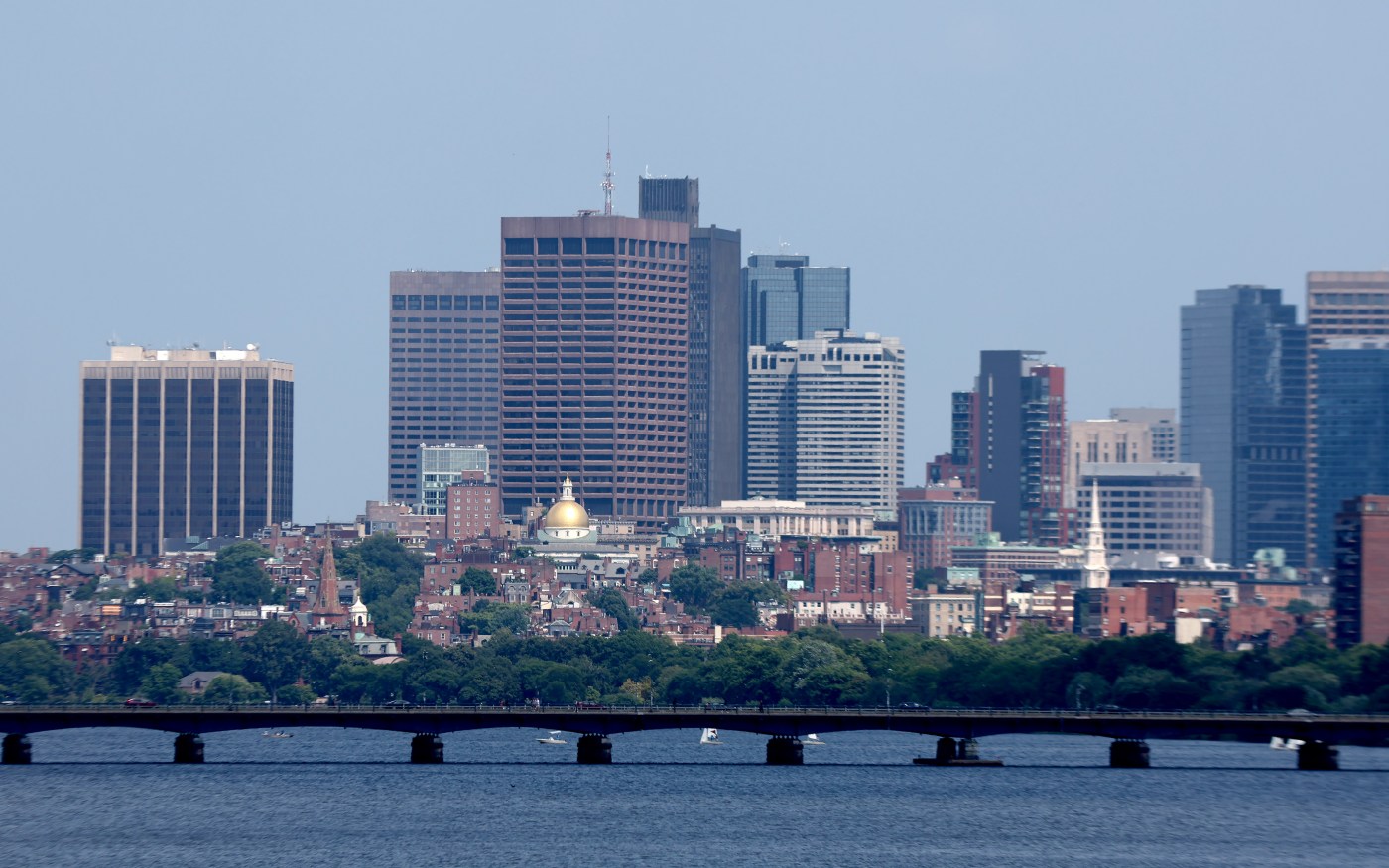
Editorial: Mayoral candidates must weigh in on Boston’s biz problem

A question for Mayor Michelle Wu and the candidates running to unseat her: How would you bring businesses back to the empty commercial buildings in Boston?
It’s a two-parter: How would you convince the owners of those commercial buildings that Boston is a good place in which to remain? As the Herald reported, they’re not happy with the Hub.
Commercial property owners in Boston claim they’re getting hit with a “hidden penalty” after filing abatements with the city.
Boston property owners file abatements to seek tax relief when they feel their residential or commercial properties have been assessed higher than the fair market value. But commercial property owners of late have seen the city instead add assessed value to their buildings, after filing an appeal with the state’s appellate tax board, according to an analysis by Daniel Swift, a principal at the global tax consulting firm Ryan.
This so-called “hidden tax” penalty has added anywhere from a few hundred or thousands of dollars to up to close to $400,000 of additional property taxes for different commercial parcels.
It adds up. Office property tax assessments for fiscal year 2025 totaled roughly $33 billion, generating approximately $865 million in property tax revenue for the city, per figures provided to the Herald. Applying a 37% over-assessment average across the entire office property class suggests an overvaluation of roughly $9 billion and an associated over-taxation of more than $200 million, per Swift’s analysis.
It wouldn’t be the first time commercial property owners got thrown under the bus. Mayor Wu has tried, via home rule petition, to shift more of Boston’s property tax burden onto commercial properties.
Not a good way to support the city’s business environment, especially with so many office buildings in search of tenants. If you knew you’d be dinged with tax hikes by moving your business to Boston, why would you?
And we need more businesses, stat. The Boston Policy Institute recently published a report that shows office values are falling at a steadier clip than it projected last year, at 35-45% versus 20-30% over the next five years.
That decline could push the city’s budgetary shortfall to $1.7 billion over the next five years.
The Wu administration disputed Swift’s analysis. But it’s the property owners who allege this is happening, and that doesn’t do anything to foster the perception of a city that nurtures its business community.
So Mayor Wu, Josh Kraft, Domingos DaRosa, and Robert Cappucci, how would you address commercial property taxation in the city? Is an audit needed? What ideas do you have for attracting companies to fill those vacant buildings? What would you do about housing costs so that people can afford to live and work here?
The pandemic revolutionized the workplace, and not always in a good way. Many people have been allowed to work from home or maintain a hybrid setup, and others have been ordered back into the office.
Boston and its leaders are still feeling the fallout, especially in tax revenue. It’s a tough situation, but commercial properties can’t be the go-to taxation scapegoat. We need solutions, and the next mayoral forum would be a good place to hear some.
Editorial cartoon by Steve Kelley (Creators Syndicate)
More Stories
Partido exFARC se juega su futuro: por primera vez busca miles de votos para seguir en el Congreso
Por ASTRID SUÁREZ BOGOTÁ (AP) — Carlos Carreño Marín camina por las calles de Bogotá en busca de votos para...
Congreso de EEUU en inusual disyuntiva: tendría que aprobar una guerra que ya comenzó
Por LISA MASCARO WASHINGTON (AP) — El Congreso de Estados Unidos está a punto de iniciar un debate sobre la...
Civiles libaneses huyen a refugiarse tras la escalada mortal Israel-Hezbollah
Por FADI TAWIL y BASSEM MROUE BEIRUT, Líbano (AP) — Civiles libaneses huyeron el lunes del sur del país y...
Estrellas del tenis siguen varadas en Dubái por guerra en Oriente Medio
LONDRES (AP) — Daniil Medvedev, el excampeón del Abierto de Estados Unidos, es una de las personas que el circuito...
Families take shelter in schools as Lebanon’s government calls Hezbollah’s strike on Israel illegal
By FADI TAWIL and BASSEM MROUE BEIRUT (AP) — Lebanese civilians fled from the country’s south and Beirut’s southern suburbs...
Families take shelter in schools as Lebanon’s government calls Hezbollah’s strike on Israel illegal
By FADI TAWIL and BASSEM MROUE BEIRUT (AP) — Lebanese civilians fled from the country’s south and Beirut’s southern suburbs...