
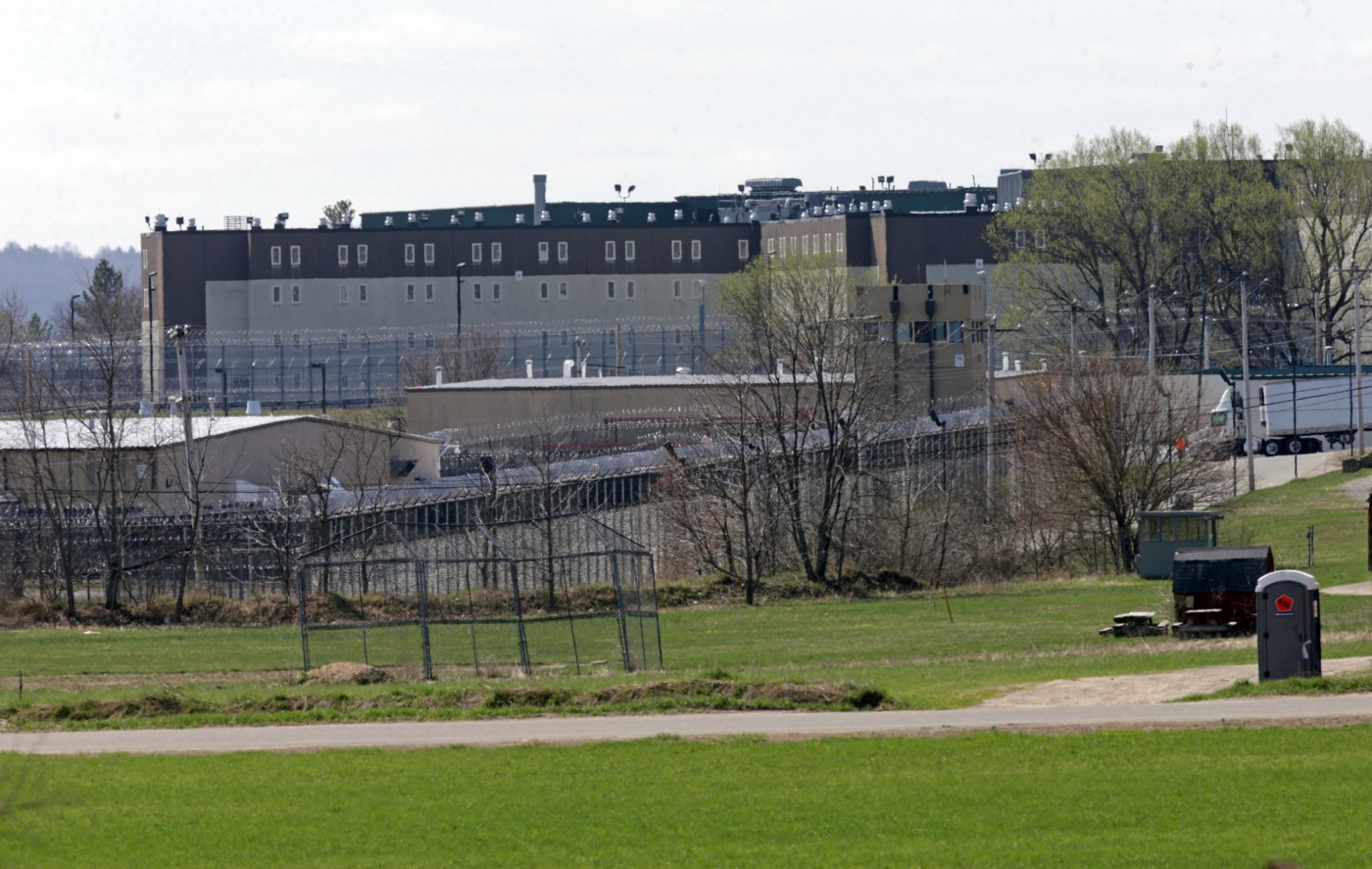
Massachusetts lowers age to become corrections officer; union slams DOC for $6M settlement

The state Department of Correction is lowering the minimum age requirement to become an officer from 21 to 19 in hopes of expanding recruitment while the workforce continues to confront dangerous conditions.
Officials announced the age adjustment as the officers’ union slammed the department for reaching a financial settlement of over $6 million with prisoners who violently assaulted staffers at Souza-Baranowski, the state’s maximum-security prison in Shirley.
Officers hired younger than 21 will not be assigned to posts or duties that require a firearm, per eligibility requirements. Any individual hired for the position, however, must maintain eligibility to obtain a license to carry a firearm, officials highlighted in a release.
Recruits must also be high school graduates, have an equivalent certificate, or have served at least three years in the Armed Forces. Applicants will undergo a “comprehensive screening process,” and enter a 12-week academy upon acceptance.
Those enrolled in the initiative will be exposed to correctional facility operations and receive mentorship from “experienced professionals.”
“Reducing the minimum age to become a Correction Officer will allow us to recruit more dedicated, highly skilled workers to these important roles,” Gov. Maura Healey said in a statement on Thursday. “This change will help us build the next generation of corrections professionals to deliver on our goals of protecting public safety and supporting rehabilitation.”
DOC Commissioner Shawn Jenkins highlighted in a statement that the department is working “collaboratively” with the Massachusetts Correction Officers Federated Union and that it appreciates the union’s “support” in trying to increase the workforce.
The union blasted the department for reaching a settlement that it argues “does nothing to address the safety concerns of our members” at Souza-Baranowski.
Officials announced the settlement on Wednesday, with the department reaching an agreement with plaintiffs in a class action lawsuit filed by Prisoners’ Legal Services relative to a “brutal attack” at the maximum-security prison on Jan. 10, 2020.
In the altercation, roughly 20 prisoners “perpetrated a violent assault on correction officers, resulting in serious injuries to four officers.” That prompted the facility to be locked down for most of the following month as “tactical responses were carried out … to restore order to the facility.”
Prisoners’ Legal Services argued in the suit, filed in 2022, that the DOC used SWAT officers, police dogs and tasers against inmates not involved in the assault. Of the 20 prisoners who participated in the attack, 16 faced criminal charges and were transferred to other correction centers.
The $6 million will be distributed among the 150 plaintiffs in varying amounts, according to the DOC, which will also implement policy changes at Souza-Baranowski as part of the settlement.
Those updates, pending court approval, will include an anonymous tipline for employees to report staff misconduct; requiring staff with sustained complaints of excessive force to be removed from the Special Operations Response Unit; requiring Special Operations Response Unit members to wear highly visible nametags on their vests; among others.
“The resolution of this matter reflects the DOC’s steadfast commitment to promoting the safety and security of everyone who lives and works within our state correctional facilities,” Public Safety and Security Secretary Terrence Reidy said in a statement, in reaction.
The DOC Commissioner highlighted how the department “did not wait for settlement discussions to act,” including the implementation of a body-worn camera program, amendments to use-of-force regulations, and updated policies on K-9 deployment and disciplinary investigations.
The Massachusetts Correction Officers Federated Union Executive Board, however, says those changes aren’t being felt, and Souza-Baranowski remains a dangerous workplace.
A disproportionate number of officers being injured and exposed to toxic substances while on duty had been reported at the maximum-security prison in the first seven months of last year, according to DOC stats that the Herald received through a public records request.
Of the 156 injured correction officers across Massachusetts facilities through the end of July, more than 55% of the officers — 87 guards — were hurt at Souza-Baranowski.
Of the 53 total drug exposures, nearly 80% — 42 officers — were exposed to toxic substances at the facility in northern central Massachusetts.
This comes as Massachusetts continues to spend more on putting and keeping inmates behind bars than any other state, according to a recent study that found the Bay State pumping out $307,468 per prisoner.
The staggering dollar amount is contrary to Massachusetts boasting the lowest incarceration rate in the nation.
“As we have done in the past, today we call on the DOC leadership team to work with us to improve safety protocols inside our state prisons for our officers, the inmates, and the DOC,” the Massachusetts Correction Officers Federated Union Executive Board said in a statement on Thursday. “Our union has ideas, and we have been trying to present them to DOC leadership.”
“Our officers risk their lives every day doing their jobs,” it added, “and this settlement does nothing to address the safety concerns of our members.”


More Stories
Government’s £100m pledge for innovators dismissed as a drop in the ocean after £25bn National Insurance raid
The government has announced a £100million package of measures aimed at unlocking private investment for Britain’s entrepreneurs, start-ups and scale-ups,...
Don’t fear AI job losses – invest in training, urges Google’s UK boss
Kate Alessi, Google’s managing director for the UK and Ireland, has pushed back firmly against warnings that artificial intelligence will...
Higher defence spending could unlock £30bn annual boost for UK economy
Increased defence investment stands to deliver a significant windfall for the British economy, with new analysis suggesting that the government’s...
Oil price surges past $111 as Strait of Hormuz deadline looms
The price of oil climbed above $111 a barrel on Tuesday as mounting anxiety over stalled diplomatic efforts in the...
Manufacturers bracing for £1 billion business rates bombshell as April cost crisis deepens
Britain’s manufacturing sector is staring down the barrel of a near-£1 billion increase in annual business rates, piling further pressure...
Bristol’s new arena sets sights on hosting the Brit Awards
Bristol is about to join the big league of British live entertainment, with the city’s forthcoming Aviva Arena setting its...