
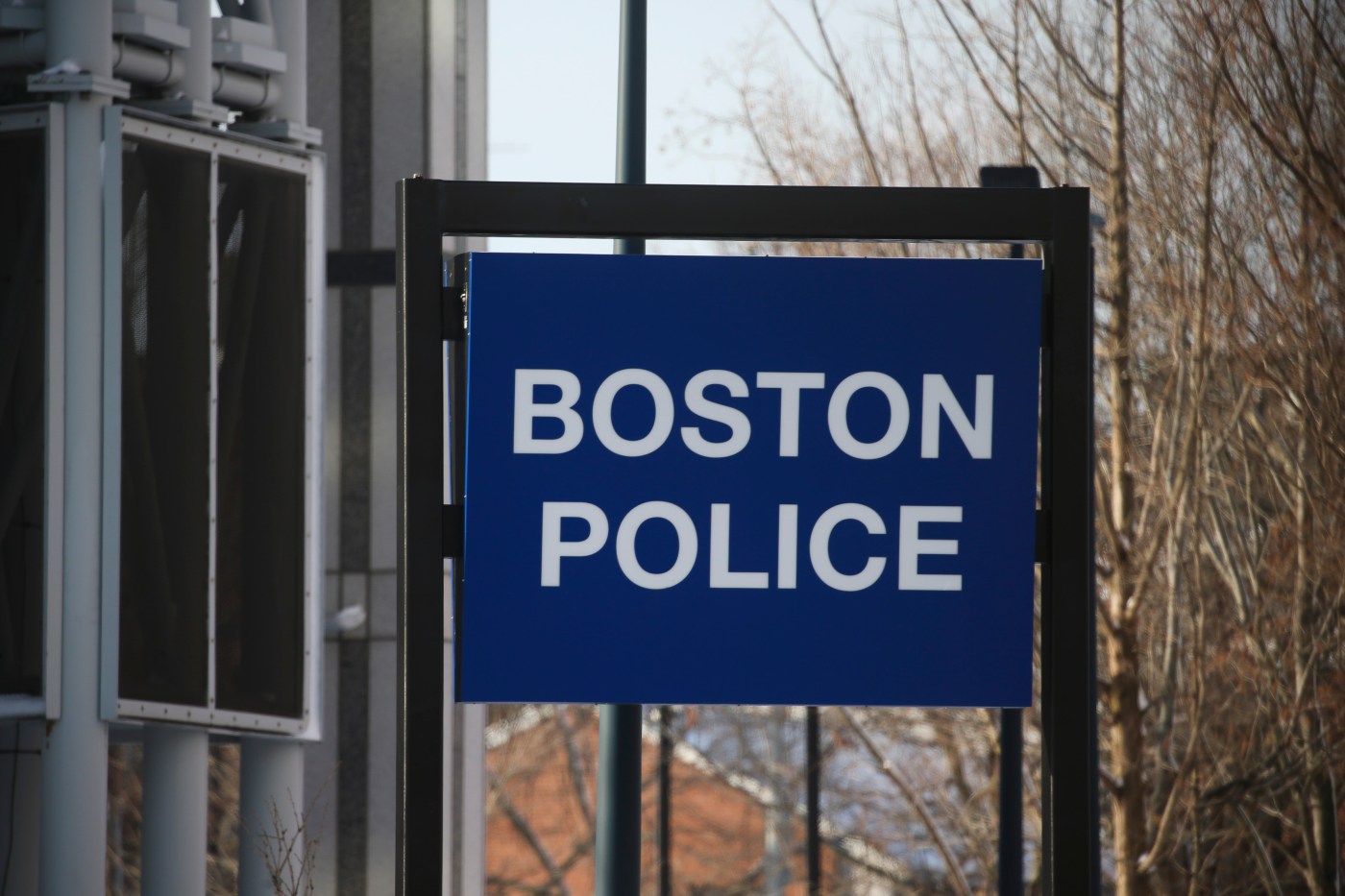
Boston Police strip-searching man in public was ‘unreasonable,’ Massachusetts appeals court rules

A man who was strip searched in public, as people walking down a Boston street could see a cop pull his waistbands aside to view his privates, has scored a win in Massachusetts appeals court.
Lyriq Rivera, who was charged with trafficking in fentanyl and cocaine after the patfrisk in Dorchester, had filed a motion to suppress evidence from the public daytime search along a sidewalk. During his trial in Suffolk Superior Court, the judge ruled that the police searching his genital area in public was reasonable.
But the Massachusetts appeals court on Monday ruled that Rivera was “subject to an unreasonable public strip search” and reversed the lower court’s decision.
“We vacate that much of the order denying the motion to suppress the physical evidence recovered during the strip search and remand the matter to the Superior Court for further proceedings consistent with this opinion,” the appeals court wrote in its ruling.
Boston police officers back on Jan. 15, 2021 were reportedly in a marked cruiser on Norfolk Street when they saw a gray Infiniti sedan with “extremely” dark tinted windows. The cops learned that the sedan’s inspection sticker had expired and that the registration was canceled, so they stopped the vehicle.
Rivera, who was the driver, provided officers with his learner’s permit. But the only passenger in the vehicle was unlicensed, which violates the rule that a learner-driver be accompanied by a licensed driver.
A cop ordered Rivera out of the vehicle for a patfrisk by the driver’s side door.
“When the officer frisked the defendant’s groin area, he felt a foreign object that he did not believe to be part of the defendant’s body and that was larger than a golf ball and hard,” the court ruling reads. “The officer did not suspect the foreign object was a weapon. Rather, based on his training and experience, he suspected that the object was narcotics.”
When the officer asked Rivera about the object, he claimed it was only his genitals. Another cop arrived on scene and joined the groin patfrisk. A steady stream of traffic drove by during the daytime frisking along the sidewalk.
The cop then brought Rivera behind the sedan and as the search continued, Rivera reportedly said he was “anxious.”
The officer then pulled aside the waistbands of Rivera’s two pairs of pants and one pair of underwear, inspecting his privates. Eventually, the cop placed his hand inside Rivera’s underwear and retrieved a plastic bag containing suspected drugs.
“The recording shows that while the defendant was largely obscured from the view of oncoming traffic by the cruiser, the front of his body was fully visible to passersby on the sidewalk as well as anyone looking out a window from the nearby residential buildings and a family daycare,” the court ruling reads.
“Indeed, two people walked by during the patfrisk, and later, a woman passed by and looked toward the officer as he pulled the defendant’s waistbands aside to view his genitals,” the ruling states.
Related Articles
Boston Police credit use of ShotSpotter with saving a shooting victim on Monday, but City Council remains skeptical
Man shot near Jackson Square T stop in Jamaica Plain
Boston Police officer struck by construction vehicle in North End
Big Brother is watching you: Boston Police surveillance detailed in new report
Roxbury man who allegedly hurt Boston cops with car before officer shot him was ordered held without bail
Strip searches are considered unreasonable if there’s a chance that a member of the public could have witnessed it, according to Massachusetts Supreme Judicial Court precedent.
“Here, the search occurred on a busy public street adjacent to a sidewalk and no exigency existed,” the appeals court wrote. “While officers attempted to block the defendant on one side with a cruiser, the front of his body was exposed to multiple residential buildings and a preschool. Indeed, the body-worn camera footage shows a pedestrian walk past the scene during the strip search, a car’s width away.”
Also, the cop did not believe the object he felt was a weapon.
“There was no indication that the defendant could not be safely transported to a station or that he could not have been safely detained and searched out of the eye of the public,” the appeals court added. “Given the strong preference for strip searches to be conducted in private… and the lack of a sufficient demonstration of exigency, the public strip search was unreasonable.”
More Stories
Polonia supera derrota de Świątek ante Bencic y vence a Suiza en final de la United Cup
SIDNEY (AP) — Polonia conquistó la United Cup y se recuperó de dos finales consecutivas como subcampeón después de que...
Trump advierte a Cuba, dice que ya no le llegará más petróleo venezolano
Por SEUNG MIN KIM WEST PALM BEACH, Florida, EE.UU. (AP) — El presidente Donald Trump lanzó el domingo otra advertencia...
Hamás afirma que disolverá su gobierno en Gaza cuando nuevo organismo palestino asuma el control
Por SAMY MAGDY y JULIA FRANKEL EL CAIRO (AP) — Hamás anunció el domingo que disolverá su gobierno actual en...
Bocelli encabezará la ceremonia de apertura de los Juegos Olímpicos de Invierno en Milán-Cortina
Por COLLEEN BARRY MILÁN (AP) — El tenor Andrea Bocelli será uno de los artistas principales en la ceremonia de...
Google se asocia con Walmart y otros minoristas para compras con chatbot Gemini AI
Por ANNE D’INNOCENZIO NUEVA YORK (AP) — Google anunció el domingo que está ampliando las funciones de compra en su...
Arsenal golea 4-1 a Portsmouth en la Copa FA con triplete de Gabriel Martinelli
Por JAMES ROBSON MANCHESTER, Inglaterra (AP) — Gabriel Martinelli anotó una tripleta y el Arsenal avanzó a la cuarta ronoda...