
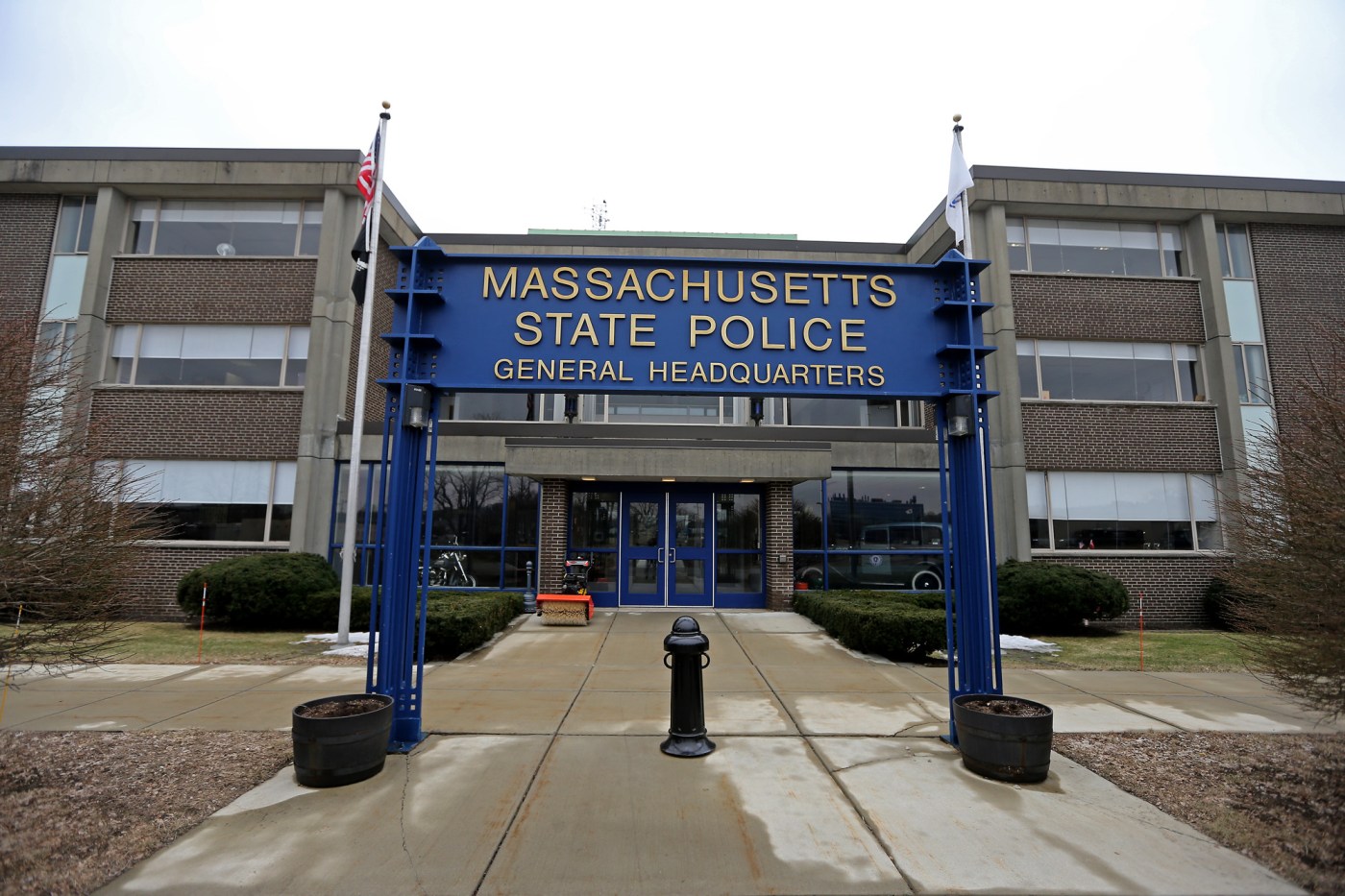
How the Massachusetts State Police said its dealing with illegal covert recordings in investigations

The Massachusetts State Police said it adopted new training and policies on covert audio recordings after illegal recordings were uncovered in 2022, leading to new trials for a slew of Worcester County drug convictions.
“In all investigations and subsequent criminal prosecutions, the Massachusetts State Police remains deeply committed to ensuring both prosecutors and criminal defendants are provided evidence,” agency spokesman Timothy McGuirk told the Herald in emailed comments.
“We will continue to collaborate with prosecutors and the defense bar to ensure they receive all the evidence critical to the fair adjudication of their cases,” he continued.
In addition to the issuance of two new directives and a memo from the agency superintendent, the MSP said it launched an audit of 6,400 recordings and more than 47,000 text messages to identify every recording that should be passed on to prosecuting agencies. It also set up a designee at each prosecutor’s office to hand over the relevant records to every case it had identified: 181 that have already been prosecuted and 88 pending cases.
The use of undisclosed and covert audio recordings were the subject of a lengthy order issued last week by Fitchburg District Court First Justice Christopher P. LoConto. He found the practice’s use in at least seven drug-related cases investigated from January to the spring of 2022 to be “egregious” and approved motions by each defendant for a new trial.
During each case, MSP investigators made audio and video recordings, LoConto found, in violation of the state Wiretap Statute and failed to disclose the recordings to prosecutors.
“The court finds the MSP had actual knowledge that the recordings were made and being made, and they were aware of their obligations to turn said recordings over to the Worcester DA’s Office,” LoConto wrote in his ruling, adding that the investigators failed to disclose the recordings until a very late date despite that knowledge.
LoConto wrote that these actions represented “failure on the part of the MSP on many levels.”
A spokeswoman for the Worcester DA said the office was still “reviewing the decision” after repeated Herald requests for comment on the ruling and its possible extended effects.
A spokeswoman for the Executive Office of Public Safety and Security directed the Herald to the MSP for comment.
MSP changes
The MSP, through a spokesman, said that it “took immediate action” in its policies regarding the retention of covert recordings during investigations when the issue was brought to its attention.
That would have been following March 17, 2023, when a primary undercover investigator in the cases of concern first disclosed to a prosecutor that covert recordings existed in one of the cases and that a lot of similar cases also had such recordings.
On April 6, 2023, the acting superintendent of the MSP, Col. John Mawn, issued a memo reminding troopers of the department’s policy on recordings: “Department members who generate records, percipient witness statements and/or evidence that relate to a criminal prosecution shall and must notify the appropriate agency prosecuting the case.”
Mawn added in the memo that covert recordings are “prohibited without supervisory approval” and that “Any anticipated authorized recordings shall be clearly indicated within the specific investigative report.”
The agency then made two updates to its internal policies regarding covert recordings: in June and then December of 2023.
Video and audio made in undercover investigations may still be made without approval if used for “officer safety,” but those are to be live transmissions to monitoring officers and not recordings.
Further, the MSP said it launched three internal affairs investigations related to this issue.
The technology
Both LoConto’s ruling and the subsequent MSP statement to the Herald indicate that the agency employs recording technology produced by a company called Callyo. The service has a number of products, two of which were mentioned in the Fitchburg ruling: “Body Bug,” which provides audio-only transmission and recording; and 10-21, which is the same but also includes video and a user cannot disable its recording function.
The latter app has since been replaced by one called “Active,” which provides the same functionality but allows the user to disable recording.
“During an interaction with suspects, the technology makes a traditional wire obsolete by transmitting a livestream of audio via cellphone. If the interaction turns violent or requires immediate support, surveillance officers nearby can respond in a moment’s notice,” the MSP wrote in a statement.
Troopers who testified for LoConto’s review of the issues repeatedly said they used the recordings for “officer safety,” though the judge found that they in actuality used the recordings in an illegal, evidentiary way.
“The Legislature and the Courts have always recognized the necessary, permissive role of live transmissions in keeping undercover officers safe. However, any recordings of these encounters always constitute evidence which must be turned over as part of discovery,” the MSP statement contuinued.


More Stories
Commanders vencen a los Giants 29-21 y rompen racha de ocho derrotas
Por STEPHEN WHYNO EAST RUTHERFORD, Nueva Jersey, EE.UU. (AP) — Jacory Croskey-Merritt corrió para un touchdown, su compañero novato Jaylin...
Mike Vrabel explains why a Patriots captain dressed but didn’t play against Buffalo
FOXBORO — Patriots linebacker Robert Spillane was active for Sunday’s loss to the Bills, but did not play a single...
Caleb Williams lanza dos pases de anotación y Bears aplastan 31-3 a Browns; Browns acaricia récord
Por ANDREW SELIGMAN CHICAGO (AP) — Caleb Williams lanzó dos pases de anotación y los Bears de Chicago vencieron 31-3...
Mahomes se lesiona y Chargers eliminan a Chiefs de playoffs con victoria 16-13
Por DAVE SKRETTA KANSAS CITY, Misuri, EE.UU. (AP) — Los Chargers de Los Ángeles eliminaron el domingo a los Chiefs...
Con 57,44% de las mesas escrutadas, el ultraderechista José Antonio Kast se perfila como ganador del balotaje en Chile
SANTIAGO (AP) — Con 57,44% de las mesas escrutadas, el ultraderechista José Antonio Kast se perfila como ganador del balotaje...
Patriots defender takes issue with critical penalty in loss to Bills
FOXBORO — The Bills’ game-winning touchdown Sunday at Gillette Stadium came after a controversial penalty on Patriots cornerback Carlton Davis....