
OBF: A brief history of Boston’s bad sports owners

History is the first-born child of Father Time.
But unlike his Dad, History is undecided, not undefeated.
Father Time always finds you.
History can hide forever.
Boston’s history of sports ownership is full of scoundrels, real-life and cartoon villains, Mr. Potter wannabes, and munificent and/or detached billionaires.
John W. Henry should find history more forgiving than the pesky proletariat who sit on the polar opposite of the expectations curve.
Imagine wanting your team to win every year.
“Linda. Can we add another 5 feet to the fence around the Nantucket compound?”
Henry & Company face further ire if they don’t make a significant addition to the rotation at the trade deadline, along with a potent right-handed bat to the lineup.
The Red Sox flourished throughout most of Henry’s stewardship. But three last-place finishes in the past 4 years, ownership’s disdain for those masses who work for a living, boys who play Little League, and Henry’s unwillingness to talk about his baseball team on the record, have taken a toll on the record.
History never sleeps. The surest way for Henry to permanently ruin his legacy in Boston would be for him/FSG to buy the Celtics and turn the defending NBA champs into the post-2018 Red Sox.
Imagine the Seaport Celtics under Team President Linda Pizzuti Henry? Boston’s DEI lineup would include a couple of 5-foot-6 Hispanic/Asian/Native American/Pacific Islanders running the floor, Caitlin Clark and Angel Reese anchoring the offense, and Bronny James riding a $400 million supermax deal.
First off the bench: Lia Thomas.
All driven by AI.
Speaking of apocalyptic scenarios. Some day after the Celtics get out of their TD Garden lease that runs until 2035, picture a day with the Everett Revs, the Seaport Celtics, Boston Bruins, and Red Sox playing a day/night quadruple-header.
And the T decides to self-immolate.
By then, the Karen Read trial(s) should be over.
History has yet to render a final verdict on the ownership of Boston Basketball Partners L.L.C. and the Grousbeck family tenure on Causeway Street. On CNBC Monday, Wyc made it clear he’d like to set a record for the most expensive pro sports franchise when the C’s are sold, breaking the $6.1 billion paid for the NFL’s Commanders.
He dropped a nice left hook by saying it’s his “expectation” that he stays on as team governor after any new deal.
Everything has a price.
And the money does matter.
Shocking.
When compared to the previous owners of the Red Sox going back to the dastardly Harry Frazee, Henry is flat-out Grousbeck-esque. For now.
Frazee poured the foundation of the Yankees’ first dynasty. Babe Ruth, Hall of Fame pitchers Waite Hoyt and Herb Pennock, and much of the lineup that dominated the early 1920s was shipped down to the Bronx from Boston.
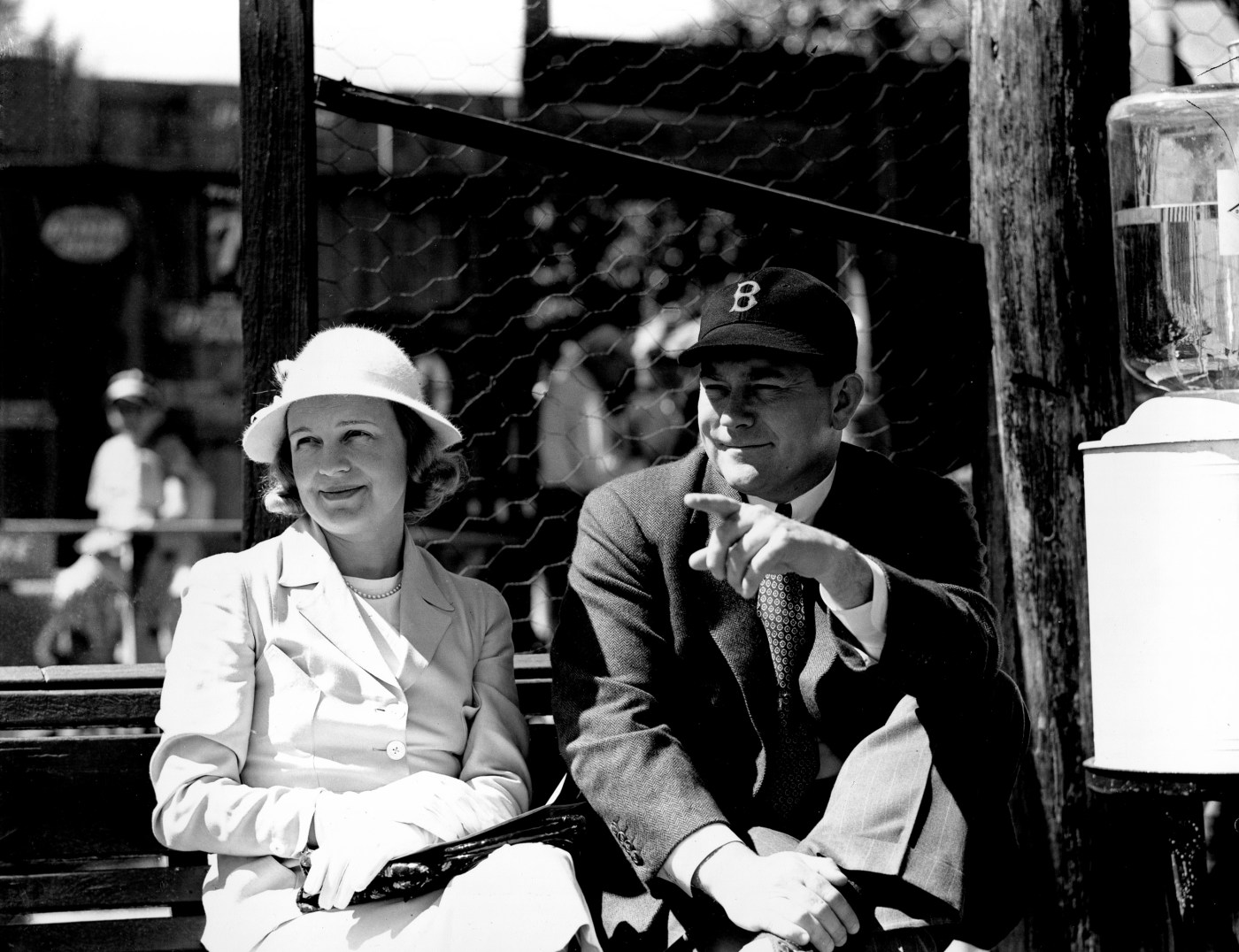
Still, Dirty Harry is not the worst owner in Red Sox history, at least in terms of wins and losses. That would be J.A. (Bob) Quinn. He bought the Red Sox in 1923. By the time he unloaded the Red Sox and Fenway Park to Tom Yawkey in 1933 for $1.5 million, the team was hemorrhaging money, losses, and fans.
Quinn would eventually sell the Boston Braves, as well.
Yawkey, his widow, and the trust in her name owned the Red Sox in one way or another for 69 seasons and won zero championships.
If you’re looking for the “Worst Owners In Boston History,” the Yawkey Family is a No. 1 seed.
Yawkey lavished wealth upon the best white players money could buy.
The cross-neighborhood Boston Braves integrated in 1950 with National League Rookie of the Year Sam Jethroe. The Yawkey Red Sox famously brushed off Jackie Robinson, Marvin Williams and Jethroe after a 1945 tryout.
By the time the Red Sox integrated in 1959, every other MLB team had done so, along with the entire NBA, and the Boston Bruins.
With the exception of Ted Williams and the post-war success of 1946, the Red Sox were a dormant and doormat franchise from 1933 to 1967. No one cared.
Yawkey stuffed his front office with racists and cronies. After he died, Haywood Sullivan and Buddy “The Coup” LeRoux joined Jean Yawkey in baseball’s all-time worst three-way. John Harrington did a laudable job of handling things after Jean Yawkey’s death.
Even the Jacobs Family has managed one Stanley Cup in its 49 years of frugality and ennui.
Charlie Jacobs told the Globe’s Michael Silverman that “we measure success in Stanley Cups.”
We couldn’t keep a straight face, either.
With the NHL salary cap, the Jacobs family can pretend to care. But for decades when it could have bought the best talent in the NHL, it was more concerned with milking the Bruins for every possible dime Blades could find in the woods.
George Preston Marshall christened his NFL team the “Boston Redskins” in 1933 after one year because “Braves” was too confusing for the locals. It moved to Washington in 1937. The overmatched Billy Sullivan brought the AFL to Boston in 1960. Victor Kiam was a one-man train wreck on Route 1 from 1988-92. His handling of the Lisa Olson incident lingers like radioactive nuclear waste.
The Celtics have had 14 official owners. Trans-National Communications bought the Celtics in 1969. Woody Erdman turned the team into an ATM to cover his personal debts. Red Auerbach called him “the absolute worst” owner he ever dealt with. TNC went broke and lost control of the team.
John Y. Brown (aka Y. John Brown?) was a Kentucky-fried clown who treated the Celtics like a KFC franchise. His malfeasance had Red headed to New York and fans out the door.
Paul “Thanks, Dad” Gaston was born with an entire silver service in his mouth while crossing home plate. He subsequently fired Dave Gavitt, hired Rick Pitino, alienated Larry Bird, and nearly ruined the franchise.
Lou Perini, meanwhile, moved the Braves from Boston to Milwaukee in 1953.
At least the Celtics are staying put. Here’s hoping they’re worth keeping.
Bill Speros (@RealOBF and @BillSperos on X) can be reached at bsperos1@gmail.com.

More Stories
Milton takes down Hingham to clinch trip to Tenney Cup girls hockey final
KINGSTON — Among the eight elite girls hockey teams that face off in the power-packed Tenney Cup, Milton was the...
Trump: Hamas must disarm for peace plan
President Donald Trump said “there has to be a disarming of Hamas” as he met with Israeli Prime Minister Benjamin...
National Guard to patrol New Orleans for New Year’s a year after deadly attack
By SARA CLINE and JACK BROOK NEW ORLEANS, La. (AP) — A National Guard deployment in New Orleans authorized by...
National Guard to patrol New Orleans for New Year’s a year after deadly attack
By SARA CLINE and JACK BROOK NEW ORLEANS, La. (AP) — A National Guard deployment in New Orleans authorized by...
Pipe bomb suspect ‘just snapped’
WASHINGTON — The man accused of placing two pipe bombs in Washington on the eve of the Jan. 6, 2021,...
Xaverian pulls off OT victory over Hingham to win Arrow Sports Holiday Classic
HINGHAM – Xaverian was faced with a two-goal deficit as it entered the third period of the Arrow Sports Holiday...