
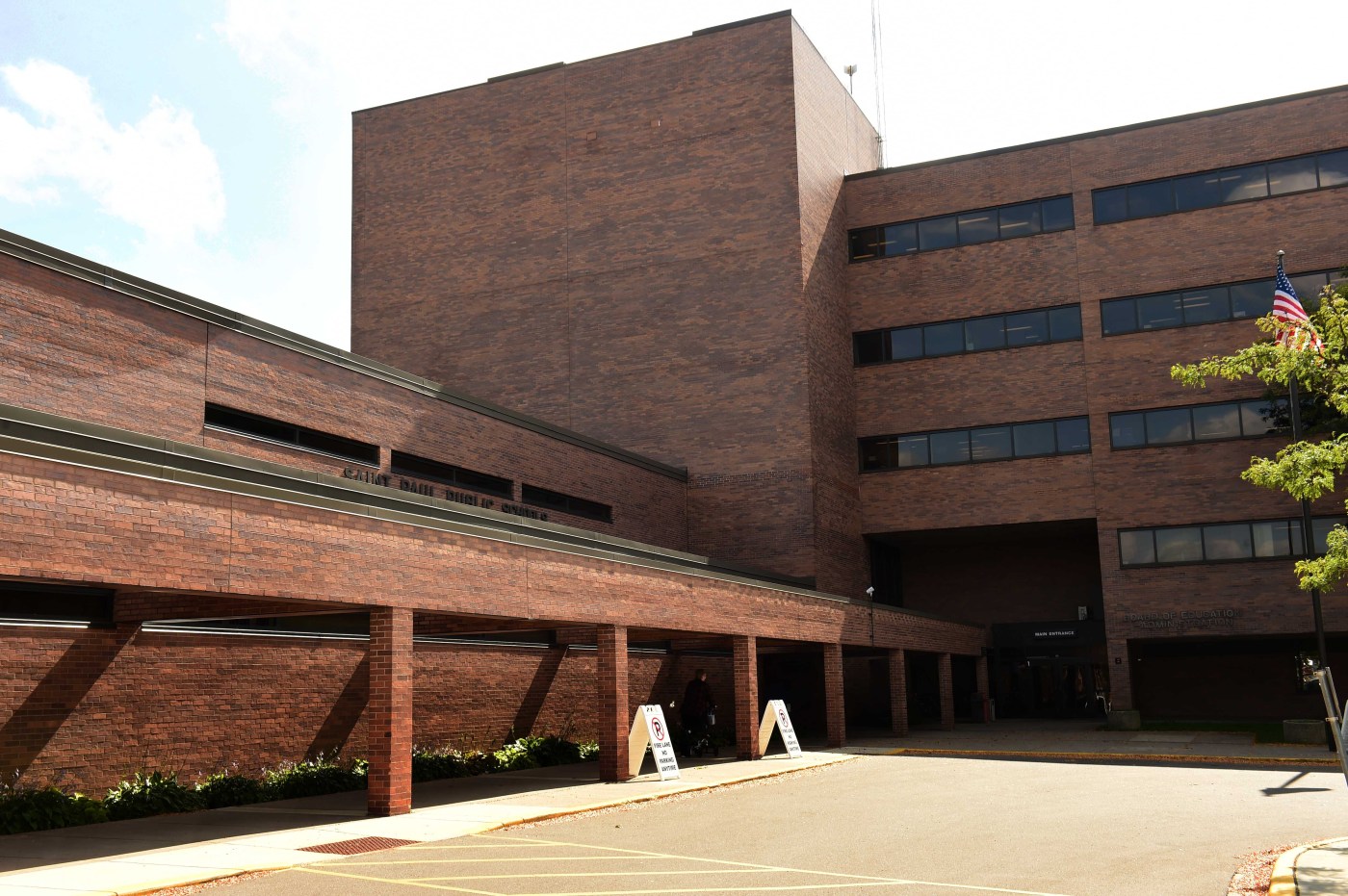
As St. Paul district develops a budget, music and interpreters face cuts

St. Paul Public Schools is in the final weeks of piecing together a budget for the upcoming year, and while it’s not yet complete, most schools already have an idea of which programs they will have to cut.
While the budget will end up being just more than a billion dollars again this year, there will be significant reductions. District officials earlier this spring said there was a roughly $108 million budget shortfall. That likely will result in less prep time for teachers, meaning specialist teaching programs, such as arts and music, will take a hit.
The district has identified roughly 110 full-time staff positions it plans to eliminate, 58 of which were elementary school specialists who teach subjects like art, gym and science. Schools have the final say, but they’re bound by allocations set by the district.
Past that, there likely will be budget reductions for school lunch that will result in menu changes, potential school bus route cancellations, and the elimination of interpreter positions, according to budget plans from SPPS.
Why the cuts?
Why the cuts? The expiration of pandemic-era federal aid, inflation and declining enrollment.
Years of shrinking enrollment leveled off this year, but the district has shrunk to around 33,000 students from more than 37,000 a decade ago. That means less state funding, which is tied to pupil numbers.
However, most of the shortfalls are linked to the end of American Rescue Plan money, which will dry up in September. That will leave SPPS with $114 million less than before, about 14% of the overall budget, according to district figures.
District officials say that extra federal money had allowed them to boost funding for many programs, which they now will no longer be able to support. Those programs that got a little more funding in some cases supported extra specialist teaching positions, said Andrew Collins, a top official with the school district.
“The menu of what you could provide and offer was much larger,” said Collins, executive chief of schools and learning. “We’re actually going back to what the allocations were pre-pandemic.”
Pushback from parents
It’s still hard to pinpoint all the ways cuts will affect students, but there’s already been pushback from parents with kids in arts and music programs and others who depend on language interpreters for special education.
Reductions next year are already expected to bring cuts to music and arts programs, including some programs with a history pre-dating the pandemic. Some parents have been making their concerns known to school officials.
At the May school board meeting, parents and students in programs at Capitol Hill Magnet School, St. Paul Music Academy and other schools, and others with concerns about interpreter cuts, asked the district to reconsider removing positions.
One of those parents is Stephanie Lein Walseth, who has two children in St. Paul schools. She, along with others, are pushing school administrators and the district to preserve elementary and middle school music funding at Capitol Hill.
“That’s just going to decimate the orchestra,” she said.
Walseth said the cuts raise concern about a lack of access to music education through public schools. “It just becomes an elitist activity for families that can afford lessons,” she said.
Cuts from the district mean there likely will no longer be funding for elementary school orchestra, and the middle school orchestra will become more exclusive due to fewer seats, parents say.
Capitol Hill parents are still discussing the future of the orchestra program with school leaders before it’s set in stone for the next school year. Other schools have negotiated changes to proposed cuts.
St. Paul Music Academy was set to lose a music teaching position but was able to preserve it by using money originally set aside for another paraprofessional position to help cover the cost. And the upper grades of Global Arts Plus, a pre-K through eighth grade arts magnet school, were able to shift resources to keep a dance class.
Arts programs aren’t the only cuts that drew public comment last month. More than 110 languages are spoken in St. Paul schools, and during the pandemic, the district used federal funding to hire extra special-education interpreters to assist with distance learning.
Now that the money is gone, Oromo and Amharic language staff are getting cut. In the future, the school district says it will contract with outside agencies as it does for languages other than Spanish, Somali, Hmong and Karen.
District finances
Several factors shape school budget allocations in St. Paul schools. Most of the money for Minnesota school districts, about 70%, comes from the state. Student enrollment levels and demographics shape how much funding a district gets, and schools have the final say on how to use allocations from the district.
St. Paul district and teachers union leaders reached an agreement to boost pay by 10% earlier this year. It’s an added expense for the district, which said it was only willing to increase pay by about $12.4 million and ultimately agreed to increases of more than $19 million.
St. Paul schools aren’t alone in seeing budget strain. Many districts across the state have budget shortfalls despite a significant bump in state funding for education last year. And that’s despite record state aid delivered in last year’s budget. The district is set to receive more than $56 million in additional ongoing state aid tied to inflation.
More than 70% of Minnesota’s metro school districts are expecting deficits, according to the Association of Metropolitan School Districts.
Related Articles
‘Not for school, but for life’: First full class of St. Paul Chinese-immersion program set to graduate
St. Paul schools could pass $1B budget again despite looming revenue shortfalls
Markus Flynn: Beyond Brown — the unfinished journey toward educational equity
‘So much to see right in our back yard’: Longtime St. Paul tour guide leads her last trip
St. Paul schools names John Thein as interim superintendent — again


More Stories
High school roundup/scores: Two hat tricks lift Medfield to 10-4 win over Grafton
In nonleague boys hockey action, Jason Drake and Michael Cortis each netted hat tricks as Medfield cruised over Grafton 10-4....
Massachusetts animal rights advocates alarmed after local PD kills ‘disoriented’ raccoon
Massachusetts animal rights advocates are sounding the alarm after a local police department in Worcester County euthanized a raccoon described...
Boston Fleet lose to Ottawa Charge after lengthy shootout, 3-2
OTTAWA, Ontario (AP) — Brianne Jenner scored in the eighth round of the shootout as the Ottawa Charge defeated the...
Patel says FBI headquarters to ‘permanently close’ with move
FBI Director Kash Patel said the agency’s historic-but-aging headquarters in Washington would be “shut down permanently” as he shifts personnel...
Google is letting users swap out embarrassing Gmail addresses without losing their data
Google has finally answered users’ cries, allowing Gmail users to swap out embarrassing teenage email addresses. Gmail account holders can...
How Gophers football plans to attack transfer portal next week
PHOENIX — Leaders of the Gophers football program discussed one of the biggest hot-button topics over dinner last week at...