
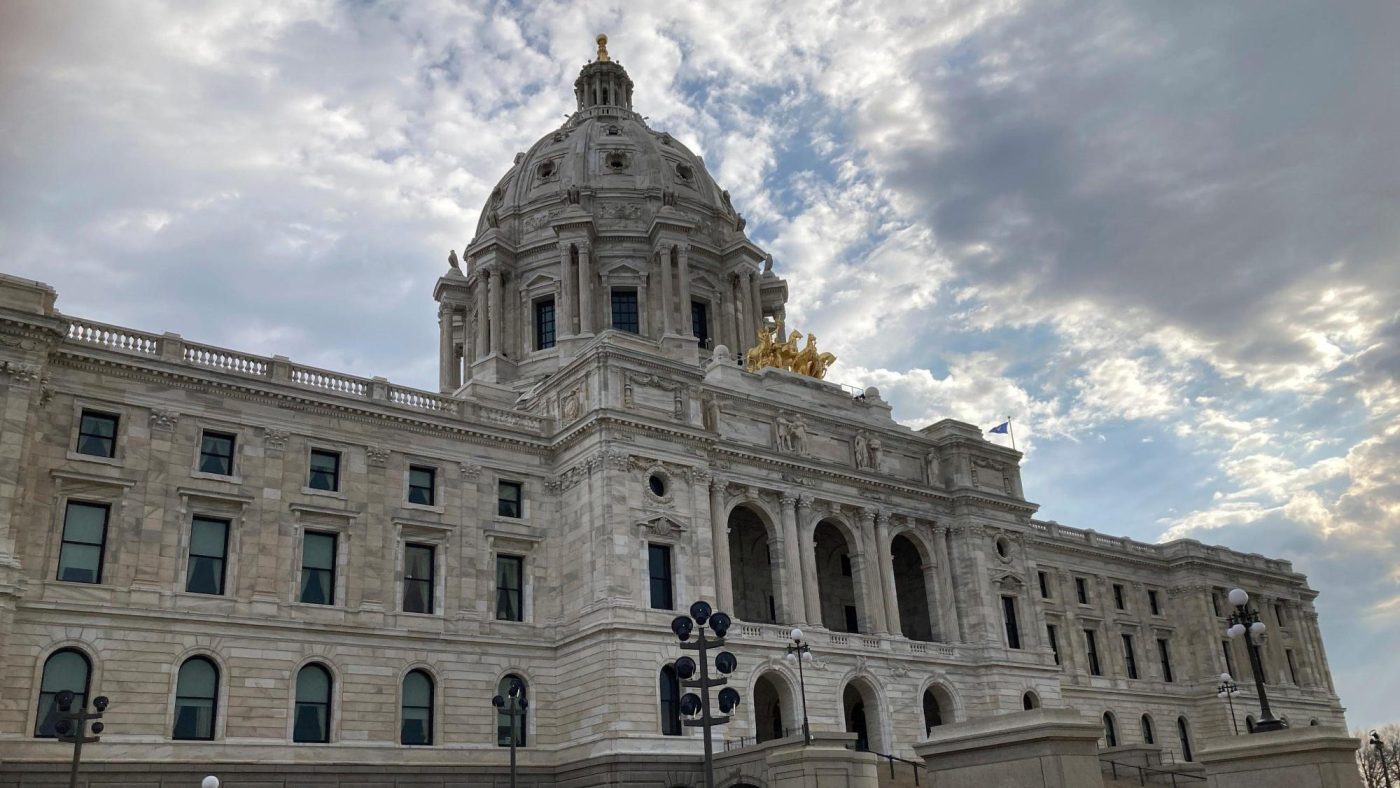
MN lawmakers return to Capitol on Monday. What’s on the agenda?

When lawmakers return to the Minnesota Capitol on Monday, they’ll probably find last year’s historic legislative session hard to match.
With the two-year budget set and many of the Democrats’ goals achieved in 2023’s whirlwind session, this year likely won’t produce the same overwhelming churn of legislative action. But that doesn’t mean there won’t be consequential bills.
In the next four months, the Senate and House will work on an infrastructure package that could come close to $1 billion, a fix to a tax bill that could save Minnesotans more than $300 million, and a proposal to legalize sports betting. DFL lawmakers also are working on expanding a state public health insurance option.
And there are sure to be clashes over rules regulating police officers’ use of force in schools and a bill to legalize physician-assisted suicide for terminally ill patients, or what advocates call “medical aid in dying.”
A year for ‘implementation’
Minnesota Gov. Tim Walz discusses the upcoming 2024 legislative session during an interview at his office in the state Capitol on Wednesday, Feb. 7, 2024. The Minnesota Legislature convenes for its 2024 session on Monday, Feb. 12. (AP Photo/Steve Karnowski)
Last year, Democratic-Farmer-Labor lawmakers and Democratic Gov. Tim Walz found themselves at the reins of state government after years of sharing control of the Legislature with Republicans. They wasted no time in enacting a wide slate of policies that had previously run into a wall during a decade of divided government.
By keeping their majority in the House and gaining a one-seat majority in the Senate, Democrats were able to create a paid family and medical leave program, legalize recreational marijuana, and enshrine the right to abortion in state law — just to name a few.
This year, legislative leaders and Walz still in control of the “trifecta” — the House, Senate and governor’s office — are saying a big part of their agenda is the final tweaks on bringing their big new policies into place.
“(We’ll be) building on what we started last year, protecting the gains that we made, and the values of Minnesotans and their rights,” said new Senate Majority Leader Erin Murphy, DFL-St. Paul.
Sen. Erin Murphy, DFL-St. Paul and now the new Senate Majority Leader, speaks at the state Capitol in St. Paul on Wednesday, Nov. 9, 2022 (Trisha Ahmed/Report for America via AP)
House Majority Leader Jamie Long, DFL-Minneapolis, said he expects movement on affordable housing and health care.
“We certainly will be doing work on the implementation side to get everything ready that we passed last year, but we have some important work to do this year, too,” he said.
Bonding is the big-money item of the session, but Long also said a public health insurance option through the state’s MinnesotaCare program, which is usually for people with low incomes, will see more work. Long is sponsoring a bill, which he introduced last session.
If the pace seems slower this year, Long says it has nothing to do with the fact that he and his House DFL colleagues are being shy about big goals in the face of an election this fall.
“We are doing the work that our constituents are sending us to the Capitol to do and, frankly, a lot of it is long overdue,” he said. “This year, our work will continue in that same vein … we know that Minnesotans want investments in their communities.”
Republican options limited
Senate Minority Leader Mark Johnson, R-East Grand Forks, left, and House Minority Leader Lisa Demuth, R-Cold Spring, respond to Gov. Tim Walz’s budget plans at the Capitol in St. Paul Jan. 24, 2023. (Pioneer Press)
As was the case last year, Republicans are in the minority and won’t be able to do much to stop DFLers from pursuing their agenda.
All 134 seats in the House are up for election in November, and the minority party hopes to convince voters that the DFL has overreached by expanding government spending and creating new programs with costs that will continue to grow in the future.
DFLers last spring passed a $72 billion two-year budget that grew spending by 38% over the last budget, and while much of the new spending is one-time, Republicans say the surplus should have meant more tax breaks for Minnesotans.
Tax rebate checks initially pitched by Walz as payments of $1,000 to $2,000 ended up going out as much smaller checks starting at a base of $260 per person, and a complete repeal of the Social Security income tax Republicans had hoped for ended up being a partial one favored by Democrats.
“I still hear from people saying, ‘Why didn’t I get my money back?’” said House Minority Leader Lisa Demuth, R-Cold Spring.
Senate Majority Leader Mark Johnson, R-East Grand Forks, expressed a similar sentiment.
“When you see what the trifecta has done in the state, and all of a sudden the effects of that are starting to trickle out into families, into schools into businesses, I think they’re looking at, well, who’s running the ship right now?” he said.
Spending constraints
Gov. Tim Walz holds the hand of Hildie Edwards, 12, of Eagan, after he signed an executive order to protect the rights of LGBTQ people from Minnesota and other states to receive gender affirming health care during a ceremony at the State Capitol in St. Paul on Tuesday, March 8, 2023. (John Autey / Pioneer Press)
DFLers had a record $17.6 billion budget surplus to work with and used much of that money for their extensive wish list, like creating a paid leave program and funding universal school meals. But this year, they may have some more constraints.
There’s still a $2.4 billion surplus remaining, according to December projections, but if the state spends any more, budget officials warn of shortfalls later this decade as the state is projected to spend more than it is taking in.
If Minnesota doesn’t expand spending, it will have $82 million in padding two years from now. But if spending grows, the state would face a budget shortfall, budget officials said late last year.
Early action?
Gov. Tim Walz and Peggy Mathews, left, a volunteer with Moms Demand Action from Apple Valley, share a laugh as they trade treats on the first day of Minnesota’s 2023 legislative session in the State Capitol in St. Paul on Tuesday Jan. 3, 2023. (John Autey / Pioneer Press)
It’ll take a while for the final picture to come together with the bonding bill and other legislation. But a few issues may see some quick early progress.
One item that already appears to have bipartisan support is a fix to an error in last year’s tax bill that could leave 2.3 million Minnesotans on the hook for $352 million more in taxes than they were meant to pay.
The problem comes from out-of-date standard deduction amounts for married and single tax filers in the 2023 tax bill language, according to the Department of Revenue. The error would affect Minnesotans filing taxes in 2025 if it isn’t fixed.
Early on, there also will be discussion of a new state law that threw the status of school-police partnerships into uncertainty last year.
New restrictions on police using prone restraints on students in schools created confusion for law enforcement agencies at the start of this school year, which led to many temporarily suspending partnerships with school districts.
DFL leaders including House Speaker Melissa Hortman and former Senate Majority Leader Kari Dziedzic said they were committed to holding a hearing on the issue in the first two weeks of the session.
Bonding year
Minnesota Gov. Tim Walz speaks at a news conference at the State Capitol on Tuesday, Jan. 16, 2024, in St. Paul, Minn. Walz proposed a $982 million public infrastructure plan that includes a new headquarters for the Minnesota State Patrol but focused mostly on the unglamorous task of preserving existing buildings and facilities. (AP Photo/Steve Karnowski)
In even-numbered years, the Minnesota Legislature typically passes a borrowing bill to pay for public infrastructure projects across the state, such as roads, bridges, water treatment plants and university buildings.
This year, DFL lawmakers are shooting for a bonding bill of about $800 million or a little more. Long noted a final number wouldn’t be available until the updated March budget forecast from the Minnesota Management and Budget office.
Meanwhile, Walz in January proposed a $982 million infrastructure package that includes about $830 million in borrowing, plus $152 million from other sources.
Republican leaders have not yet stated what size bonding bill they want to see. Johnson told reporters he wants to wait for the March forecast before discussing specific numbers.
The numbers currently proposed by DFL lawmakers and the governor are much lower than recent bonding proposals, the most recent of which passed last year after the Legislature failed to do so in 2022. That one was a capital investment package in the form of $1.6 billion in bonding and about a billion in cash from the record surplus.
Like last year, bonding is one of the few negotiating tools minority Republicans have in the Legislature. In both the Senate and the House, borrowing bills require a three-fifths majority to pass, meaning DFLers will have to attract some Republican support for a bill.
Republicans could hold up the bonding bill to push Democrats to support some of their priorities, as they did last session to obtain support for $300 million in nursing home aid.
But some GOP lawmakers may be doing so at their peril, as bonding projects can benefit their districts. A rural county government in a Republican-controlled district may struggle to finance a new water plant without state support.
Tracking the Legislature
The Minnesota State Capitol is seen the evening of Feb. 6, 2017. (Pioneer Press: Andy Rathbun)
Besides coverage and analysis in the Pioneer Press, you can find information on bills and committee hearings at leg.mn.gov. The website provides tools to look up your representatives and also provides a customized bill-tracking service.
The site also has links to livestreams of legislative hearings.
Related Articles
Natalie Hudson: On the importance of a fair and independent judiciary
As a lobbyist, he added flair to his envelopes. Now they’re his canvas.
Black Entrepreneurs Day returns to the Minnesota Capitol following first-year success
Letters: Willing and able to pay higher taxes for the St. Paul bike plan?
St. Paul lawmaker Erin Murphy named Minnesota Senate Majority Leader

More Stories
Sarkozy describe su estancia en prisión y aconseja cómo atraer a la ultraderecha en su nuevo libro
Por SYLVIE CORBET PARÍS (AP) — El expresidente francés Nicolas Sarkozy describió la prisión donde pasó 20 días como un...
Director del Instituto Nobel: la ganadora del premio de la Paz, María Corina Machado, no asistirá a ceremonia en Oslo
Associated Press OSLO, Noruega (AP) — Director del Instituto Nobel: la ganadora del premio de la Paz, María Corina Machado,...
La líder opositora venezolana Machado no asistirá a la ceremonia del Nobel de la Paz
Associated Press OSLO, Noruega (AP) — El jefe del Instituto del Nobel afirmó que la ganadora del premio de la...
Trump negó haber empleado un insulto sobre Haití y naciones africanas. Ahora se jacta de ello
Por JONATHAN J. COOPER El presidente de Estados Unidos, Donald Trump, admitió el martes que utilizó el término despectivo “países...
La élite gobernante de Corea del Norte se prepara para reunión del partido que ocurre cada 5 años
Por HYUNG-JIN KIM SEÚL, Corea del Sur (AP) — El líder norcoreano, Kim Jong Un, y otros altos funcionarios se...
El joropo venezolano, una popular mezcla de música y danza, ya es Patrimonio de la UNESCO
Associated Press CARACAS (AP) — El presidente venezolano Nicolás Maduro celebró que el joropo, una animada tradición que combina música,...